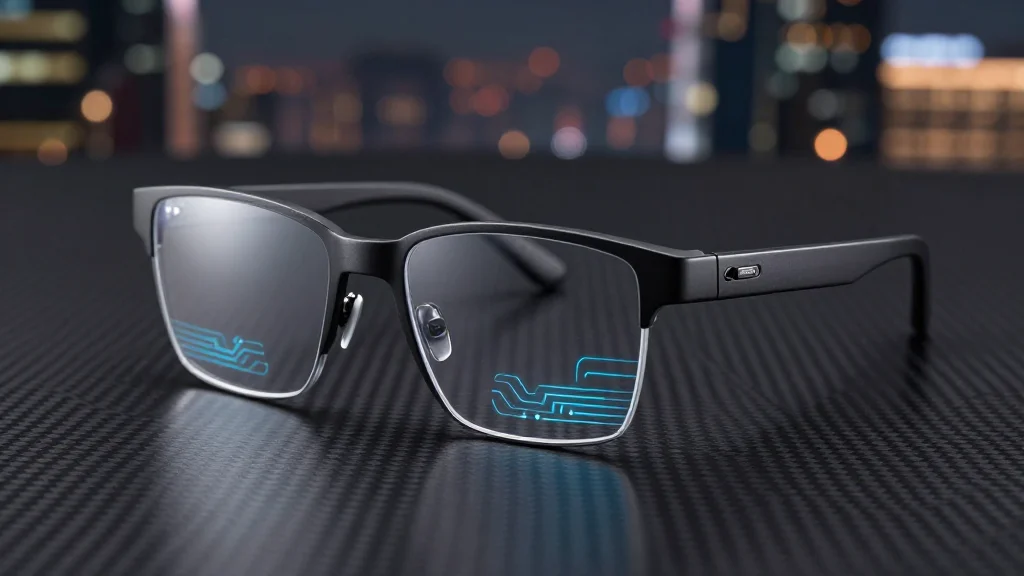
Homeland Security Reportedly Wants to Develop Smart Glasses for ICE
Companies Mentioned

Why It Matters
If deployed, the glasses could vastly expand ICE’s investigative reach, but they also set a precedent for pervasive biometric monitoring that threatens privacy rights and could trigger legal challenges across law‑enforcement agencies.
Key Takeaways
- •ICE Glasses aim for real‑time biometric ID by 2027
- •Devices use facial recognition and gait analysis on subjects
- •Civil‑rights groups fear ubiquitous surveillance of U.S. residents
- •Prior use of Meta AI glasses may have violated DHS rules
- •Congress aware but has not publicly responded to the project
Pulse Analysis
The push for wearable intelligence reflects a broader trend in federal agencies seeking to embed AI directly into frontline operations. DHS’s budget filings reveal a multi‑year investment in hardware that pairs high‑resolution cameras with on‑device processing, allowing agents to scan a crowd and instantly match faces against the vast biometric repositories built after 9/11. By targeting both immigrants and U.S. citizens, the program blurs the line between immigration enforcement and domestic policing, echoing earlier experiments with drones and predictive analytics.
Privacy advocates argue that such pervasive surveillance could erode constitutional protections, especially the Fourth Amendment’s safeguard against unreasonable searches. The technology’s ability to identify gait patterns adds a layer of biometric profiling that is harder to obscure than facial features, potentially enabling continuous tracking of individuals in public spaces. Legal scholars note that existing case law, such as Carpenter v. United States, may not yet cover the granular data harvested by smart glasses, leaving a regulatory gap that could be exploited until courts or Congress act.
Congressional oversight appears limited at this stage; while lawmakers have been briefed, no public hearings or legislative proposals have emerged. The commercial angle is equally significant: manufacturers of AR hardware stand to gain lucrative government contracts, but they also face reputational risk if their products are linked to civil‑rights infringements. As the September 2027 rollout deadline approaches, stakeholders—from tech firms to civil‑liberty NGOs—will likely intensify lobbying efforts, pushing for transparency, stricter data‑use limits, and perhaps a moratorium on biometric wearables in law‑enforcement contexts.
Homeland Security reportedly wants to develop smart glasses for ICE
Comments
Want to join the conversation?
Loading comments...