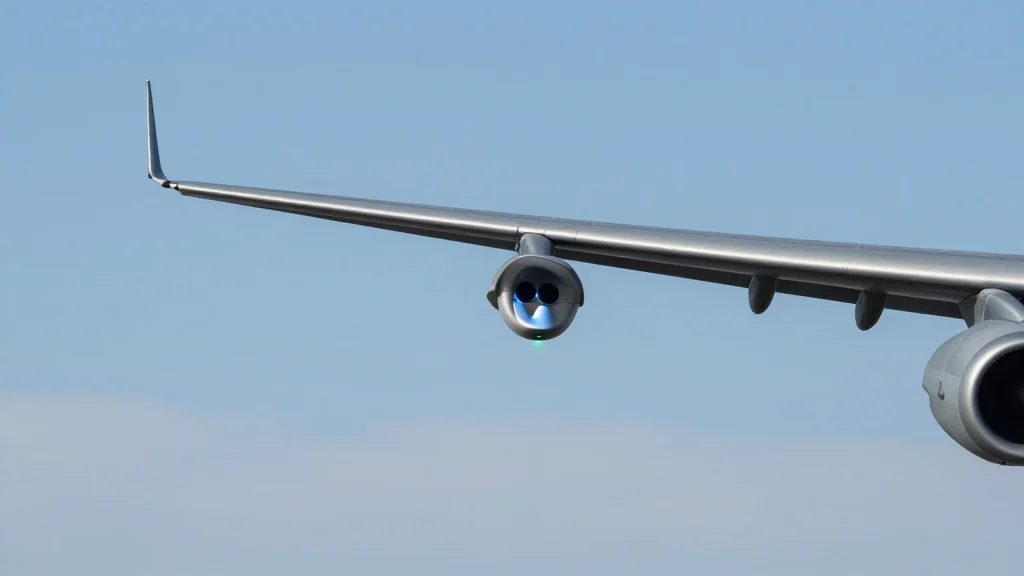
How The C-17 Globemaster's Radar Warning System Protects Crews During Combat Zone Approaches
Companies Mentioned
Why It Matters
The layered, automated protection enables the C‑17 to deliver heavy‑lift missions in high‑risk environments, preserving crew safety and mission success, and sets a survivability benchmark for future strategic airlifters.
Key Takeaways
- •AN/ALR‑69A digital RWR updates threat library in flight
- •AN/AAR‑47 detects MANPADS heat signatures, triggers automatic flares
- •ALE‑47 dispenses chaff, flares, and active decoys in three modes
- •LAIRCM laser jams infrared missiles, providing unlimited protection
- •Combat descent uses reverse thrust to minimize exposure to threats
Pulse Analysis
The C‑17 Globemaster III has become more than a workhorse for strategic airlift; it is a mobile survivability platform designed for the contested skies of modern warfare. As adversaries field sophisticated surface‑to‑air missiles and proliferated MANPADS, large transport aircraft cannot rely on altitude alone. Boeing’s integration of the AN/ALR‑69A radar warning receiver, AN/AAR‑47 infrared missile warning, ALE‑47 countermeasure dispenser, and Large Aircraft Infrared Counter‑Measures (LAIRCM) creates a layered defense that detects, classifies, and defeats threats within milliseconds. This sensor‑to‑shooter loop mirrors the defensive architecture of combat fighters, extending it to a 174‑ton airlifter.
Automation is the linchpin of the C‑17’s defensive edge. The digital RWR continuously updates its threat library from real‑time intelligence, while the AAR‑47’s passive electro‑optical sensors feed directly into the ALE‑47, which can launch chaff, flares, or active decoys in fully automatic mode. LAIRCM adds a virtually unlimited laser‑jamming capability, eliminating reliance on finite expendables. By compressing detection, decision, and response into sub‑second cycles, the system outpaces human reaction time and reduces crew workload during high‑stress combat descents. Compared with legacy platforms that required manual cueing, this automation translates into higher mission completion rates and lower attrition risk.
The C‑17’s survivability suite sets a template for the next generation of strategic airlifters that the Air Mobility Command envisions for the 2030s and beyond. Future designs will likely embed even tighter sensor fusion, artificial‑intelligence threat prediction, and scalable directed‑energy weapons, building on the proven LAIRCM and ALE‑47 concepts. For defense contractors, the demand for upgrade kits, software sustainment, and next‑generation countermeasure munitions represents a multi‑billion‑dollar market. Moreover, allied air forces operating C‑17s stand to benefit from shared threat libraries and joint training, reinforcing interoperability while ensuring that heavy lift capability remains viable in high‑threat environments.
How The C-17 Globemaster's Radar Warning System Protects Crews During Combat Zone Approaches
Comments
Want to join the conversation?
Loading comments...