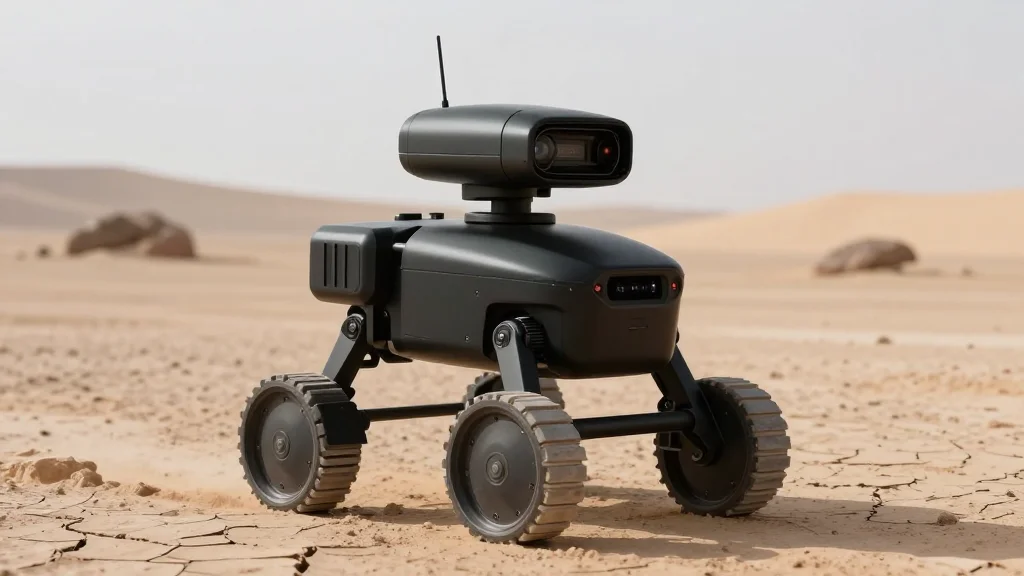
How US Special Operations Forces Are Using AI to Transform Modern Warfare
Why It Matters
AI adoption gives USSOCOM a decisive edge in speed and precision, reshaping how the U.S. conducts special‑operations missions and influencing broader defense procurement trends.
Key Takeaways
- •AI tools accelerate decision‑making on the tactical edge
- •Human‑machine teaming enhances situational awareness for operators
- •Autonomous systems extend operational reach in contested zones
- •USSOCOM plans broader AI deployment across special‑operations units
- •Demonstrations at SOF Week showcase near‑term combat readiness
Pulse Analysis
Artificial intelligence has moved from experimental labs to the battlefield, driven by the need for faster data processing and real‑time insight. In the U.S. military, special‑operations forces have historically been early adopters of cutting‑edge technology, from night‑vision goggles to precision‑guided munitions. Today, USSOCOM’s push to embed AI reflects a broader shift toward data‑centric warfare, where algorithms sift through sensor feeds, satellite imagery, and intelligence reports to surface actionable information within seconds. This acceleration shortens the OODA loop, giving operators a tactical advantage in fluid, high‑risk environments.
At SOF Week 2026 in Tampa, USSOCOM showcased a suite of AI‑enabled tools designed for the tactical edge. Autonomous drones equipped with onboard machine‑learning models can identify and track targets without direct human input, while wearable AI assistants provide operators with predictive threat assessments and mission‑relevant recommendations. Human‑machine teaming—where soldiers and algorithms share decision authority—enhances situational awareness, allowing teams to operate deeper in contested zones with reduced risk. These demonstrations signal that AI is transitioning from a support role to a core combat capability, with stand‑alone systems and integrated platforms both slated for rapid fielding.
The ripple effects extend beyond the battlefield. Defense contractors are accelerating AI research and procurement pipelines to meet USSOCOM’s demand, spurring investments in edge‑computing hardware, secure data architectures, and ethical AI frameworks. As other services observe the operational gains, inter‑service collaboration on AI standards is likely to increase, potentially reshaping the entire U.S. defense acquisition ecosystem. However, challenges remain, including algorithmic bias, cybersecurity vulnerabilities, and the need for robust training programs. Navigating these issues will determine how sustainably AI can transform modern warfare and maintain the United States’ strategic advantage.
How US Special Operations Forces are using AI to transform modern warfare
Comments
Want to join the conversation?
Loading comments...