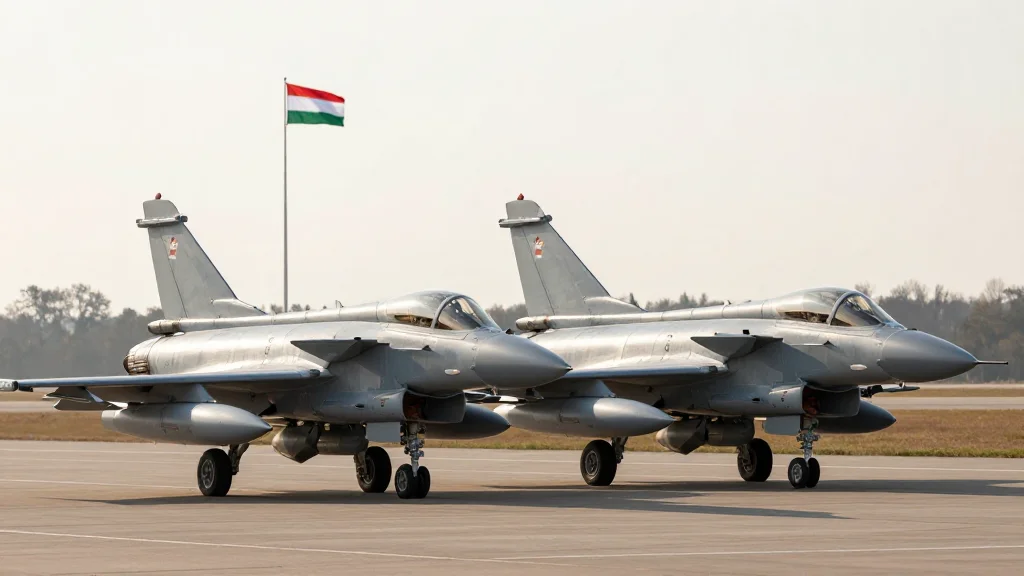
Hungary Takes Delivery of Two New Gripen C Fighter Jets
Why It Matters
The delivery bolsters Hungary’s air‑defence capacity and NATO interoperability, signalling sustained European defence investment amid regional security challenges.
Key Takeaways
- •Two Gripen C jets delivered, first of four ordered in 2024.
- •Hungary’s fleet rises to 18 upgraded Gripen C/D fighters.
- •Aircraft feature Link 16 datalink and sensor‑fused situational awareness.
- •Multi‑role design supports NATO‑standard missiles and guided bombs.
- •Deliveries enhance Hungary’s NATO readiness and regional air‑defence posture.
Pulse Analysis
Hungary’s latest acquisition of two Saab Gripen C fighters marks the first delivery under a February 2024 contract that will ultimately add four aircraft to the nation’s air arm. The jets arrived at Kecskemét Air Base and will join the 101st Aviation Wing, bringing the total number of Gripen C/D platforms in Hungarian service to 18. Since the first Gripen entered service in 2006, the fleet has become a cornerstone of the country’s air‑defence strategy, offering a cost‑effective alternative to heavier Western fighters while maintaining NATO compatibility.
The Gripen C’s modern avionics suite distinguishes it from earlier variants. Integrated Link 16 tactical datalink enables real‑time data sharing with allied assets, while sensor‑fusion software presents pilots with a consolidated picture of the battlespace. Its single‑seat, multi‑role design supports air‑to‑air, air‑to‑surface and reconnaissance missions, and the aircraft can be equipped with a broad spectrum of U.S. and European missiles, guided bombs and reconnaissance pods. Air‑to‑air refuelling capability further extends its operational radius, making it a versatile tool for both national defence and coalition operations.
The delivery underscores Hungary’s commitment to deepening its integration within NATO’s collective security framework, especially as Eastern Europe faces heightened geopolitical tension. By standardising on a platform that shares common data links and weapon interfaces with other NATO members, Budapest enhances interoperability and contributes to a more cohesive air‑defence network. Moreover, the procurement supports the European defence industrial base, reinforcing Saab’s position as a leading supplier of lightweight fighters. Continued upgrades and future deliveries are likely to keep the Hungarian fleet aligned with evolving threat environments and alliance requirements.
Hungary takes delivery of two new Gripen C fighter jets
Comments
Want to join the conversation?
Loading comments...