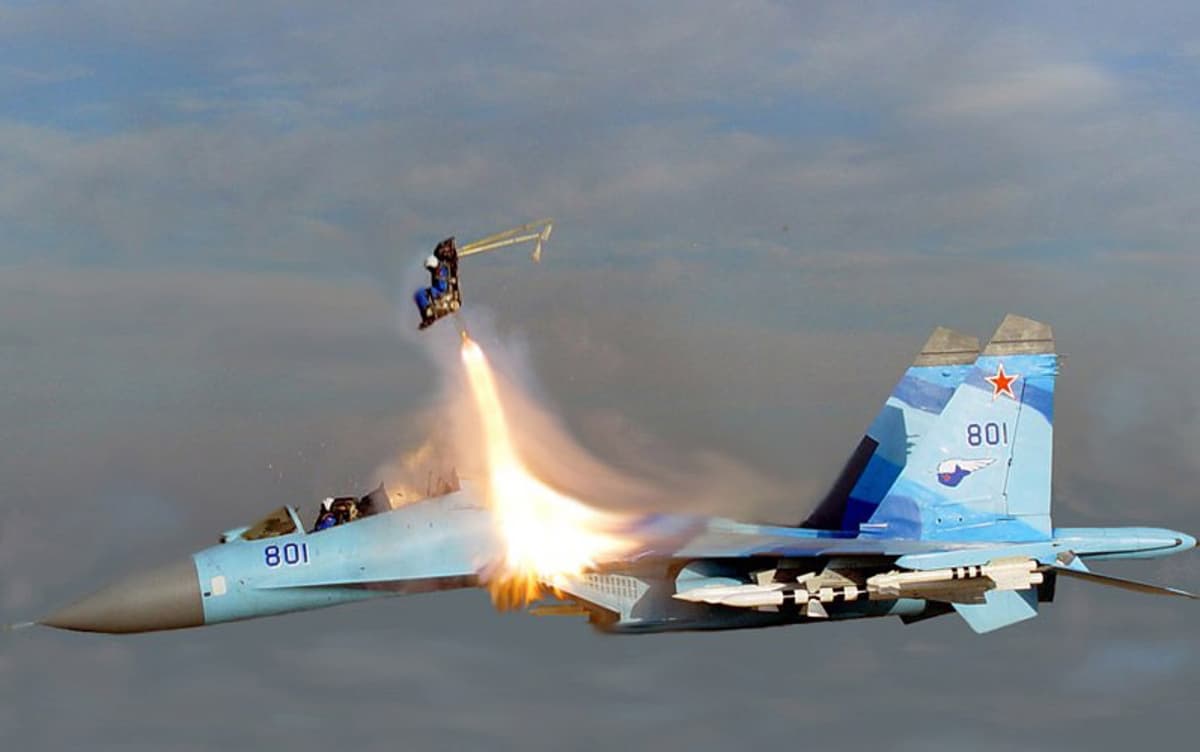
IAF Pilot Down in Pakistan (Hypothetical): Unveiling India’s Playbook for US-Style CSAR Ops To Hunt Missing Aviator
Why It Matters
The operation demonstrates the US’s ability to conduct high‑risk rescues deep in hostile territory, while India’s UAV program signals a shift toward autonomous, low‑risk CSAR capabilities in the region.
Key Takeaways
- •US rescued F-15E crew in Iran using MC-130J, HH-60W, fighter escort
- •Operation involved hundreds of troops, dozens of aircraft, no US casualties
- •Iran claimed shoot‑down of A‑10, two C‑130s, four MH‑6s during rescue
- •India plans unmanned CSAR aircraft with 400 kg payload, 200 km radius
- •Modern CSAR depends on satellite beacons, ISR drones, night‑vision equipment
Pulse Analysis
The 2026 Iran‑war CSAR episode underscores how modern air forces blend legacy platforms with cutting‑edge ISR to retrieve downed aircrew. Within minutes of the F‑15E’s loss, satellite‑linked beacons triggered the Cospas‑SARSAT network, allowing U.S. assets—including Global Hawk drones and AWACS—to pinpoint the pilot’s location. The rapid launch of an MC‑130J and HH‑60W duo, shielded by fighter escorts, illustrates the layered protection doctrine that emerged from Vietnam’s costly rescue lessons, where multiple aircraft were lost to hostile fire. By integrating real‑time data links and autonomous refueling, the U.S. minimized exposure while ensuring a swift extraction, a model other militaries are studying closely.
India’s CSAR trajectory mirrors this evolution, moving from early parachute rescues in World War II to sophisticated helicopter‑based missions today. The IAF’s investment in advanced night‑vision, FLIR, and satellite‑aided beacons equips pilots to survive and signal in hostile terrain. Yet the most notable shift is the announced unmanned CSAR aircraft, a Make‑I initiative that aims to deliver a 400‑kilogram payload, 200‑kilometer operational radius, and 45‑minute loiter time without endangering crew. By leveraging AI‑driven autonomy and GNSS‑denied navigation, the platform promises to operate from austere, high‑altitude sites, filling a capability gap where conventional helicopters struggle.
The broader strategic implication is a re‑balancing of risk versus reward in personnel recovery. For the United States, the Iran operation validates a high‑cost, high‑reward approach that can deter adversaries from exploiting captured aircrew as bargaining chips. For India, the push toward unmanned CSAR reflects a desire to maintain rescue capability while reducing the political fallout of cross‑border incursions. As satellite communications, AI, and autonomous flight mature, both nations are likely to see CSAR become a more precise, less hazardous element of power projection, shaping future doctrines across the Indo‑Pacific and beyond.
IAF Pilot Down in Pakistan (Hypothetical): Unveiling India’s Playbook for US-Style CSAR Ops To Hunt Missing Aviator
Comments
Want to join the conversation?
Loading comments...