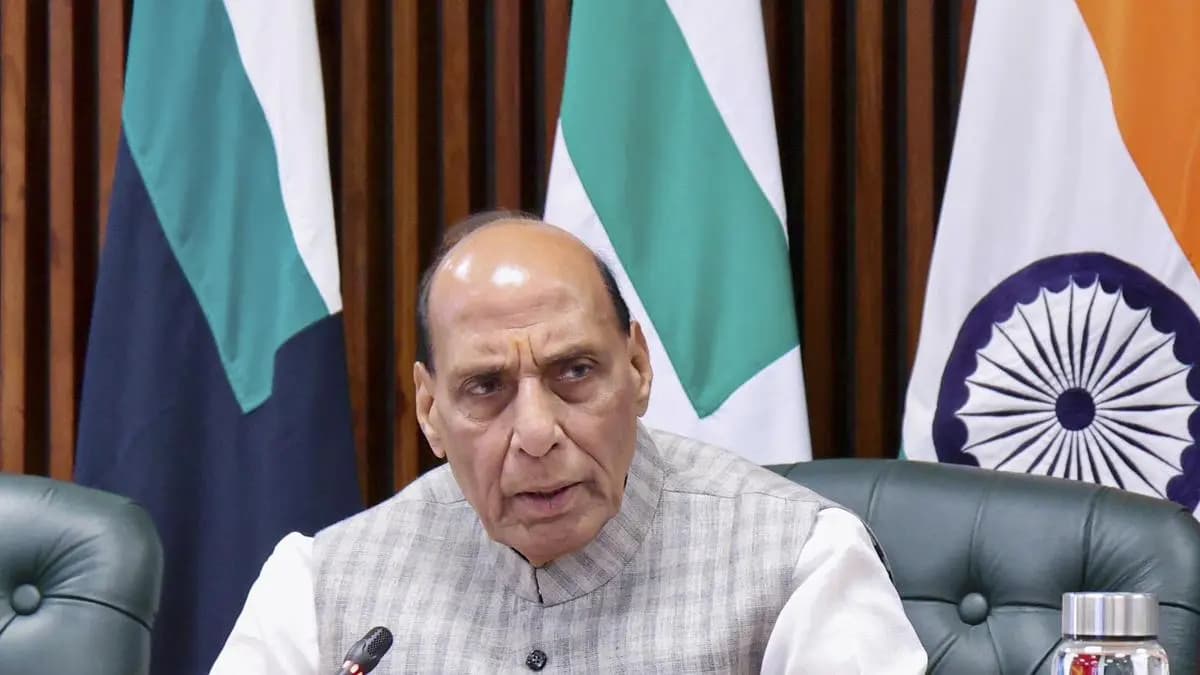
India Must Remain Ready for West Asia Fallout, Says Rajnath Singh
Why It Matters
Ensuring uninterrupted maritime insurance and robust fuel reserves shields India’s trade and energy security from geopolitical shocks in the Middle East, preserving economic stability.
Key Takeaways
- •India approved a $1.6 bn maritime insurance pool with sovereign guarantee
- •Fuel stocks cover over 60 days for crude, petrol, diesel; LNG 50 days
- •Diversified energy imports from US, Australia, Latin America reduce Hormuz risk
- •Defence minister urges readiness for both de‑escalation and escalation
- •IGoM meeting united key ministers to monitor West Asia volatility
Pulse Analysis
India’s decision to create a sovereign‑guaranteed maritime insurance pool reflects a strategic move to insulate its trade routes from the turbulence of the West Asian conflict. By allocating roughly $1.6 billion, the government ensures that vessels can obtain affordable coverage even when navigating high‑risk corridors such as the Strait of Hormuz. This proactive step not only safeguards cargo values but also signals to global insurers that India is committed to maintaining a resilient logistics ecosystem, encouraging continued foreign investment in its shipping sector.
Energy security forms the second pillar of India’s contingency plan. The defence ministry’s latest figures show more than 60 days of domestic fuel reserves for crude, petrol and diesel, while LNG and LPG stocks stretch to 50 and 40 days respectively. By sourcing crude, LNG and LPG from diversified partners—including the United States, Australia and Latin America—New Delhi reduces its exposure to supply disruptions that could arise from a sudden escalation in the Middle East. This diversification strategy mitigates the strategic vulnerability of over‑reliance on the Hormuz corridor and supports stable pricing for Indian consumers and industries.
The high‑level Informal Group of Ministers (IGoM) meeting underscores a coordinated, whole‑government approach to geopolitical risk. With the defence, external affairs, oil, chemicals, aviation, shipping and power ministries at the table, India can swiftly align diplomatic, economic and operational responses. Such inter‑ministerial collaboration enhances decision‑making speed, ensuring that both de‑escalation opportunities and potential escalations are managed without jeopardizing trade flows or energy supplies. For businesses, this translates into greater predictability and confidence when planning imports, exports, and supply‑chain investments amid an uncertain regional landscape.
India must remain ready for West Asia fallout, says Rajnath Singh
Comments
Want to join the conversation?
Loading comments...