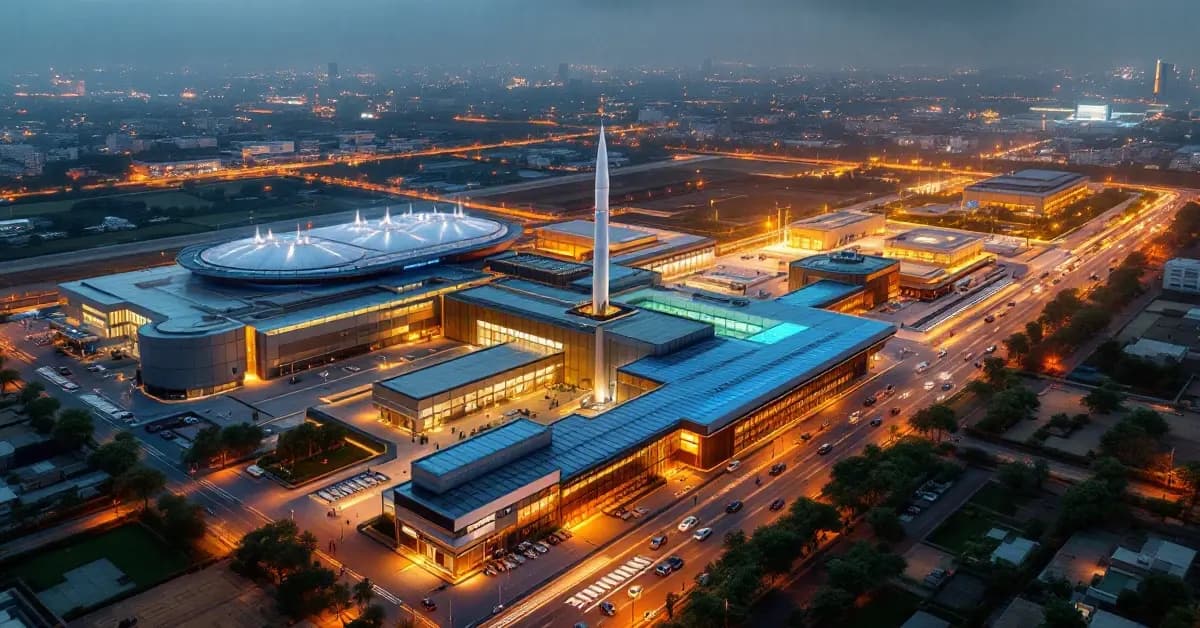
India Opens Advanced Weapons Systems Complex at DRDL Missile Facility in Hyderabad
Why It Matters
The complex strengthens India’s strategic autonomy and speeds delivery of home‑grown missile defenses, reshaping regional security dynamics and defence‑industry supply chains.
Key Takeaways
- •DRDL complex aims to fast‑track indigenous missile development
- •Mission Sudarshan Chakra targets a three‑tiered national missile shield
- •Integration push links DRDO labs, industry, and armed forces for rapid deployment
- •Emphasis on hypersonic, AI, and autonomous tech reflects evolving threat landscape
- •Domestic production capacity prioritized to shorten design‑to‑field timelines
Pulse Analysis
India’s inauguration of an advanced weapons systems complex at the Defence Research and Development Laboratory in Hyderabad marks a decisive step toward self‑reliance in high‑tech defence. Situated within the DRDL‑Dr APJ Abdul Kalam Missile Complex, the facility consolidates research, system integration and testing under one roof, shortening the cycle from concept to prototype. By housing cutting‑edge labs for missile propulsion, guidance and materials science, the complex bolsters the country’s ability to field indigenous platforms without relying on foreign suppliers. This move aligns with New Delhi’s broader “Make in India” defence agenda and signals a shift from import‑heavy procurement to domestic innovation.
The complex also underpins Mission Sudarshan Chakra, a three‑tiered missile‑defence architecture announced in 2025. The program envisions a layered shield that combines short‑range air‑defence, medium‑range interceptors such as the Akash system, and long‑range exo‑atmospheric interceptors capable of countering ballistic and hypersonic threats. Integrating these layers with advanced radar, AI‑driven threat assessment and rapid decision‑making tools will enhance protection of critical infrastructure and forward bases. Successful deployment would place India among the few nations possessing a comprehensive, indigenously‑produced missile‑defence network.
Beyond technology, the DRDL complex is a catalyst for tighter collaboration between DRDO laboratories, public‑sector manufacturers, private start‑ups and academia. By embedding production considerations early in the design phase, the initiative aims to shrink the design‑to‑field timeline and scale up manufacturing of missiles, drones and autonomous platforms. The emphasis on hypersonic propulsion, artificial‑intelligence guidance and electronic‑warfare resilience reflects the evolving threat environment in South Asia. For global defence markets, India’s accelerated indigenous capability could reshape supply chains, attract foreign investment in joint ventures, and increase competition for export contracts in the missile‑defence segment.
India Opens Advanced Weapons Systems Complex at DRDL Missile Facility in Hyderabad
Comments
Want to join the conversation?
Loading comments...