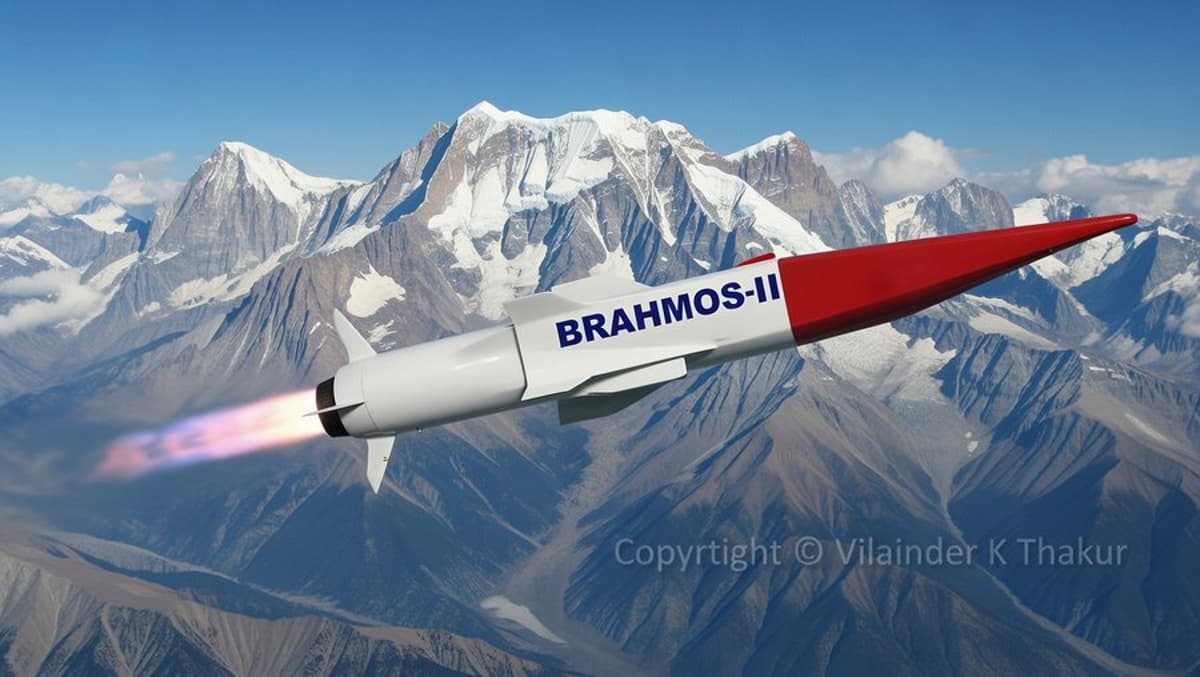
India “Pauses” BrahMos-2 Missile Program? 3 Reasons Why Delhi May Be Holding Its Hypersonic Dream: OPED
Why It Matters
Delaying BrahMos‑2 reshapes India’s hypersonic roadmap, preserving budget while fostering domestic missile expertise, and influences the strategic balance with neighboring nuclear powers.
Key Takeaways
- •BrahMos‑2 costs $12.5 M, three‑times BrahMos‑1 price
- •Marginal speed gain doesn’t justify higher expense
- •Russia blocks full scramjet technology transfer
- •DRDO’s scramjet tests pave way for indigenous missiles
- •Focus shifts to BrahMos‑NG and dual‑mode ramjet development
Pulse Analysis
The hypersonic missile race has become a benchmark of strategic modernisation, and India entered the arena through the BrahMos partnership with Russia. Since the early 2000s, the joint venture has delivered the high‑supersonic BrahMos‑1, a staple of the Indian Navy and Air Force. Initial plans for a hypersonic successor, BrahMos‑2, were announced in 2008, promising speeds beyond Mach 6 and enhanced penetration. However, the global push for cheaper, more deployable systems has forced Delhi to reassess the economics of a missile that would cost roughly $12.5 million per unit—far above the $3‑4.5 million price of its predecessor.
Three intertwined factors explain the program’s suspension. First, the marginal increase in speed and penetration does not translate into a proportionate tactical advantage, especially when existing BrahMos‑1 already boasts high accuracy and can evade many air‑defence networks. Second, Russia’s reluctance to fully share its 3M22 Zircon scramjet know‑how limits India’s ability to develop a truly indigenous hypersonic engine, preserving Russia’s own strategic edge. Third, the soaring unit cost threatens to curtail fleet size, undermining the principle of massed deterrence. In response, India is channeling resources into DRDO’s proven ramjet and scramjet projects, including the successful long‑duration tests at the Scramjet Connect Pipe Test facility, and a new dual‑mode ramjet (DMRJ) programme with IISc Bengaluru. These efforts aim to secure a home‑grown hypersonic capability without external dependencies.
The shift has broader implications for the Indian defence industry and regional security dynamics. By prioritising the BrahMos‑NG—a lighter, conventional‑speed variant compatible with platforms like the Tejas and MiG‑29UPG—India can expand its missile inventory while keeping costs manageable. Simultaneously, indigenous hypersonic research could open export opportunities and reduce reliance on Russian technology, reshaping the Indo‑Russian defence partnership. For neighbouring nuclear‑armed states, a slower rollout of hypersonic weapons may temper escalation pressures, but it also signals that India remains committed to advancing next‑generation strike capabilities through domestic innovation. The outcome will likely influence procurement timelines, joint‑venture negotiations, and the strategic calculus across South Asia.
India “Pauses” BrahMos-2 Missile Program? 3 Reasons Why Delhi May Be Holding Its Hypersonic Dream: OPED
Comments
Want to join the conversation?
Loading comments...