Why It Matters
Replacing the BMP‑2 fleet with an indigenous IFV reduces reliance on foreign suppliers and modernises the Army’s mechanised forces, bolstering operational readiness.
Key Takeaways
- •India plans to replace 2,000+ BMP‑2 IFVs with Vikram AAP
- •Vikram AAP offers both tracked and 8×8 wheeled configurations
- •DRDO leads development, emphasizing indigenous defense capability
- •New IFVs boost mobility and survivability for Indian Army
- •Potential export market as regional powers seek modern IFVs
Pulse Analysis
India’s defence agenda has long prioritized indigenisation, and the recent unveiling of the Vikram Advanced Armoured Platform (AAP) marks a pivotal step. The BMP‑2, a legacy Soviet‑design, has served the Indian Army for decades but now lags behind contemporary threat environments. By fielding a home‑grown IFV family, India not only addresses a capability gap but also curtails long‑term procurement costs tied to foreign parts and maintenance contracts. The shift aligns with the government’s "Make in India" strategy, promising job creation and technology transfer across the domestic defence supply chain.
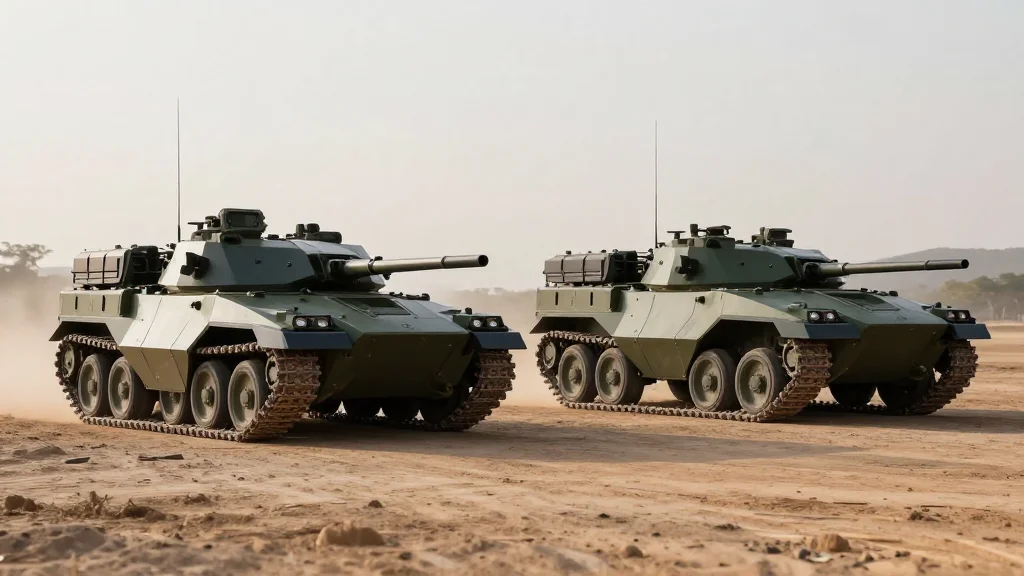
The Vikram AAP distinguishes itself through a dual‑track approach: a tracked variant for high‑intensity, off‑road combat and an 8×8 wheeled version that offers superior road speed and strategic mobility. Both models incorporate modular armor packages, a remote‑controlled weapon station, and advanced situational‑awareness sensors, delivering survivability levels comparable to Western counterparts. DRDO’s involvement ensures that critical subsystems—engine, transmission, and electronic warfare suites—remain under Indian control, reducing vulnerability to export restrictions. Early performance trials suggest a 20‑30% improvement in power‑to‑weight ratio over the BMP‑2, translating to faster maneuvering and better fuel efficiency.
Strategically, the Vikram AAP could reshape South Asian force balances. A modern IFV fleet enhances India’s rapid‑deployment capability along contested borders, while the platform’s export‑ready design opens avenues to nations seeking cost‑effective alternatives to Euro‑American IFVs. If successful, the program may catalyse a new wave of indigenous armoured vehicle projects, fostering a self‑sustaining ecosystem that could eventually challenge established global defence manufacturers. The rollout therefore carries implications not just for India’s battlefield readiness, but also for the broader dynamics of defence trade and regional security.
India showcase latest tracked and wheeled IFVs
Comments
Want to join the conversation?
Loading comments...