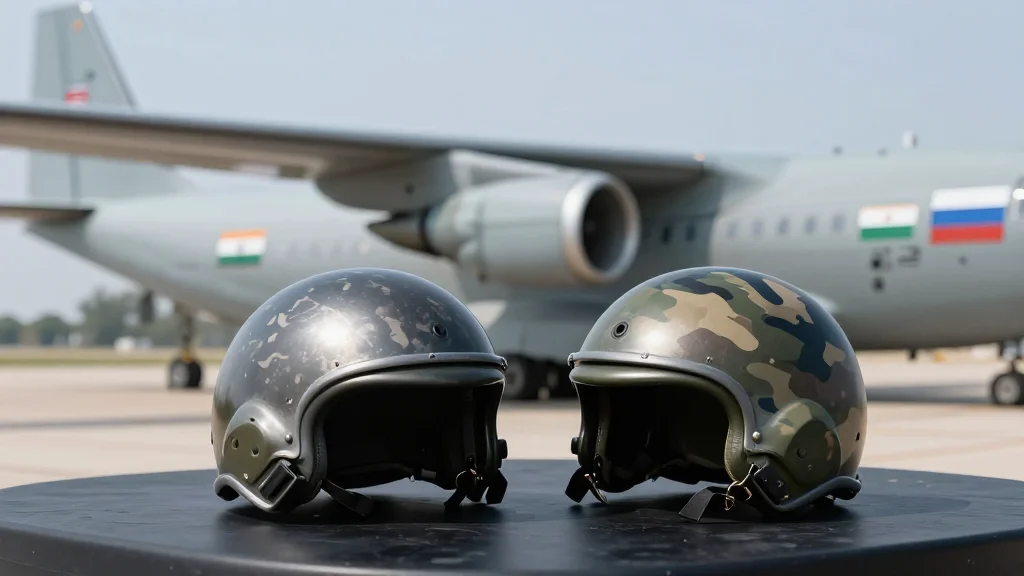
India‑Russia RELOS Pact Takes Effect, Allowing Mutual Troop and Warship Deployments

Why It Matters
The RELOS pact marks a concrete step in the re‑orientation of India’s defence strategy toward greater self‑reliance and diversification of partners. By institutionalising the reciprocal deployment of troops, warships and aircraft, the agreement reduces logistical friction and expands operational reach for both New Delhi and Moscow. In a geopolitical climate where supply‑chain security and strategic autonomy are paramount, the pact could influence regional balance, prompting neighboring states to reassess their own defence postures. Furthermore, the deal underscores the resilience of the India‑Russia defence relationship despite Western sanctions on Moscow. It provides Russia with a foothold in the Indo‑Pacific, while granting India access to Russian ports and logistical networks that could prove valuable in Arctic or Pacific operations. The pact may also affect U.S. policy calculations in South Asia, potentially accelerating diplomatic efforts to keep India within the broader Western security architecture.
Key Takeaways
- •India‑Russia RELOS pact entered into force Jan. 12, 2026, allowing up to 3,000 troops, five warships and ten aircraft on each other's territory.
- •The agreement covers logistical support for joint exercises, training, humanitarian missions and deployments in conflict situations.
- •India gains access to Russia’s northern sea route ports, enhancing its Arctic and Pacific naval reach.
- •The pact is seen as a strategic shift amid growing Indo‑Pacific tensions and Western sanctions on Russia.
- •First joint RELOS exercises are planned for late 2026, with implementation guidelines expected soon.
Pulse Analysis
The RELOS pact is more than a bureaucratic logistics swap; it is a strategic hedge for both India and Russia. For New Delhi, the ability to station forces and use Russian ports mitigates the risk of over‑reliance on Western supply chains, especially as U.S. arms sales to India face congressional scrutiny. The pact also dovetails with India’s ‘Act East’ policy, offering a northern maritime corridor that complements its existing access to the Indian Ocean.
For Moscow, RELOS provides a lifeline to the Indo‑Pacific, a region where its naval presence has been constrained by sanctions and diplomatic isolation. By embedding Indian assets within its Arctic infrastructure, Russia can project a semblance of partnership that may deter further Western encirclement. The agreement also signals to Beijing that Russia is willing to deepen ties with a major Asian power, potentially complicating the China‑Russia strategic calculus.
Looking ahead, the real test will be how the RELOS framework is operationalised. If India and Russia conduct high‑visibility joint exercises, the pact could evolve into a de‑facto security arrangement that reshapes regional power dynamics. Conversely, if bureaucratic hurdles or political pressure in Washington limit the scope of deployments, the agreement may remain a symbolic gesture. Either way, RELOS adds a new layer to the intricate tapestry of great‑power competition in Eurasia and the Indo‑Pacific, and its ripple effects will be closely watched by NATO, the Quad and regional actors alike.
India‑Russia RELOS Pact Takes Effect, Allowing Mutual Troop and Warship Deployments
Comments
Want to join the conversation?
Loading comments...