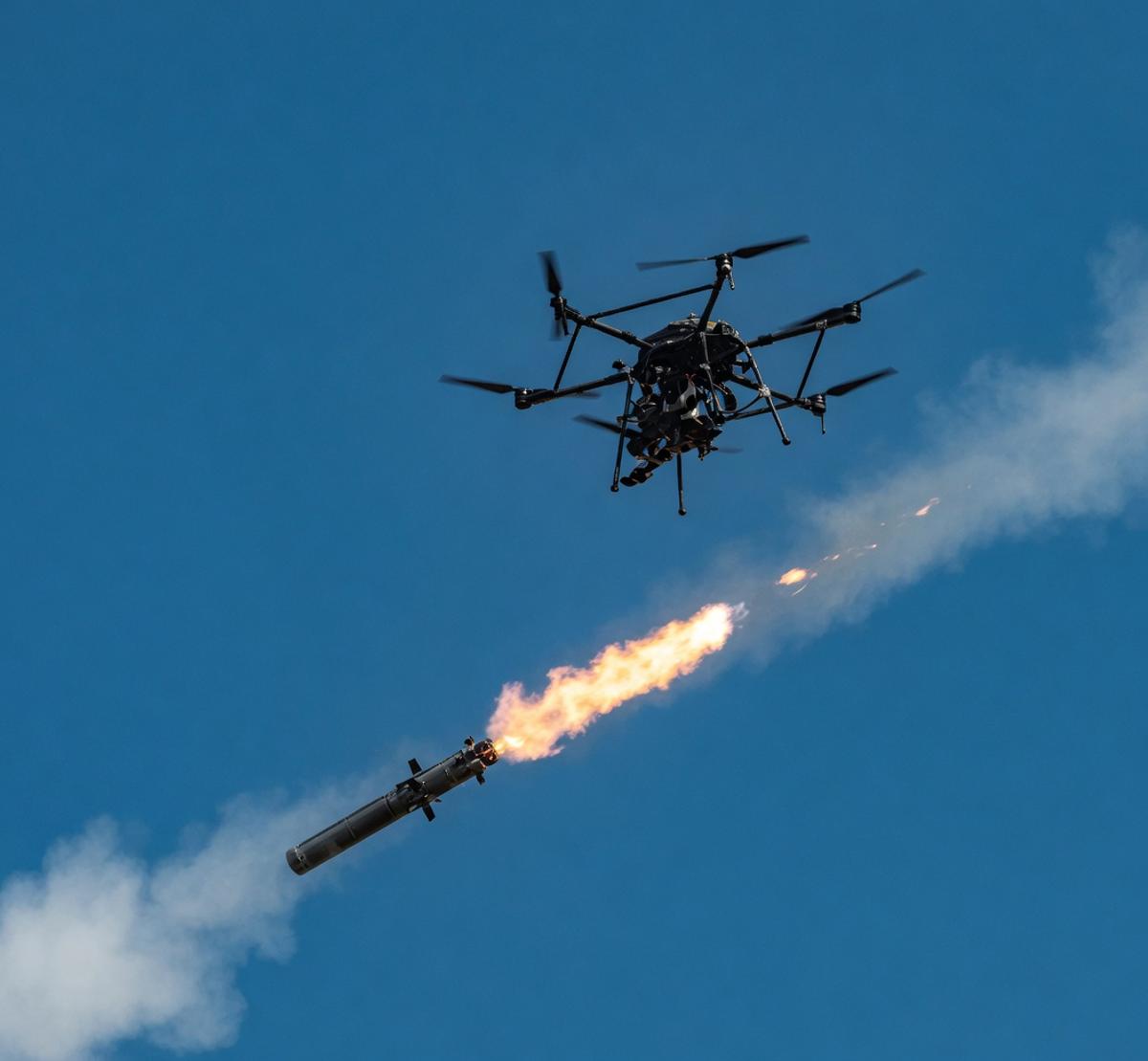
India’s DRDO Hails Successful Trials of ULPGM-V3 Counter-Drone System Ignoring Key Lessons From Ukraine War: OPED
Why It Matters
If fielded, ULPGM‑V3 could reshape India’s counter‑drone posture, but its reliance on ground‑based control and high‑cost architecture may limit effectiveness against modern swarm and AI‑driven threats.
Key Takeaways
- •ULPGM‑V3 completed development trials in air‑to‑ground and air‑to‑air modes
- •Missile carries ~2 kg warhead with ~1 m CEP, specs undisclosed
- •Tested on a multicopter platform, likely to shift to winged drone
- •System depends heavily on ground control, exposing it to electronic attack
- •Analysts warn high cost and manpower needs clash with Ukraine‑era drone tactics
Pulse Analysis
India’s push to field the ULPGM‑V3 reflects a broader ambition to secure a domestic, high‑tech counter‑drone capability. The missile’s loitering design promises to engage hostile UAVs and low‑flying helicopters, offering a dual‑mode strike envelope that could protect forward‑deployed forces and critical infrastructure. By leveraging a mature Indian supply chain, DRDO positions the system for rapid serial production, a strategic advantage given regional security pressures. However, the trial’s reliance on a commercial‑off‑the‑shelf multicopter hints at a transitional platform, suggesting further development toward a stealthier, winged launch vehicle is likely.
Critics argue the ULPGM‑V3 architecture repeats lessons ignored from the Ukraine conflict, where inexpensive, swarm‑based drones have outpaced traditional air‑defence concepts. The system’s heavy dependence on a ground control station (GCS) creates a single point of failure vulnerable to electronic warfare, jamming, or direct attack. Moreover, the combined cost of missile, launch platform, and GCS may exceed the value of the targets—often low‑cost drones—making the solution economically inefficient. The need for trained personnel near the front line further raises operational risk, contrasting with autonomous, low‑cost interceptor drones that can disperse across a battlefield with minimal human oversight.
For Indian defence planners, the ULPGM‑V3 underscores a strategic crossroads: invest in high‑technology, manpower‑intensive systems, or pivot toward scalable, AI‑driven autonomous interceptors built on indigenously produced sensors and chips. Global trends favor modular, network‑centric drone swarms that can both attack and defend with minimal logistical footprints. Aligning procurement with these trends could deliver cost‑effective resilience against evolving aerial threats, while preserving the domestic industrial base that DRDO has cultivated. Balancing innovation with practicality will determine whether the ULPGM‑V3 becomes a cornerstone of India’s air‑defence or a costly footnote.
India’s DRDO Hails Successful Trials of ULPGM-V3 Counter-Drone System Ignoring Key Lessons From Ukraine War: OPED
Comments
Want to join the conversation?
Loading comments...