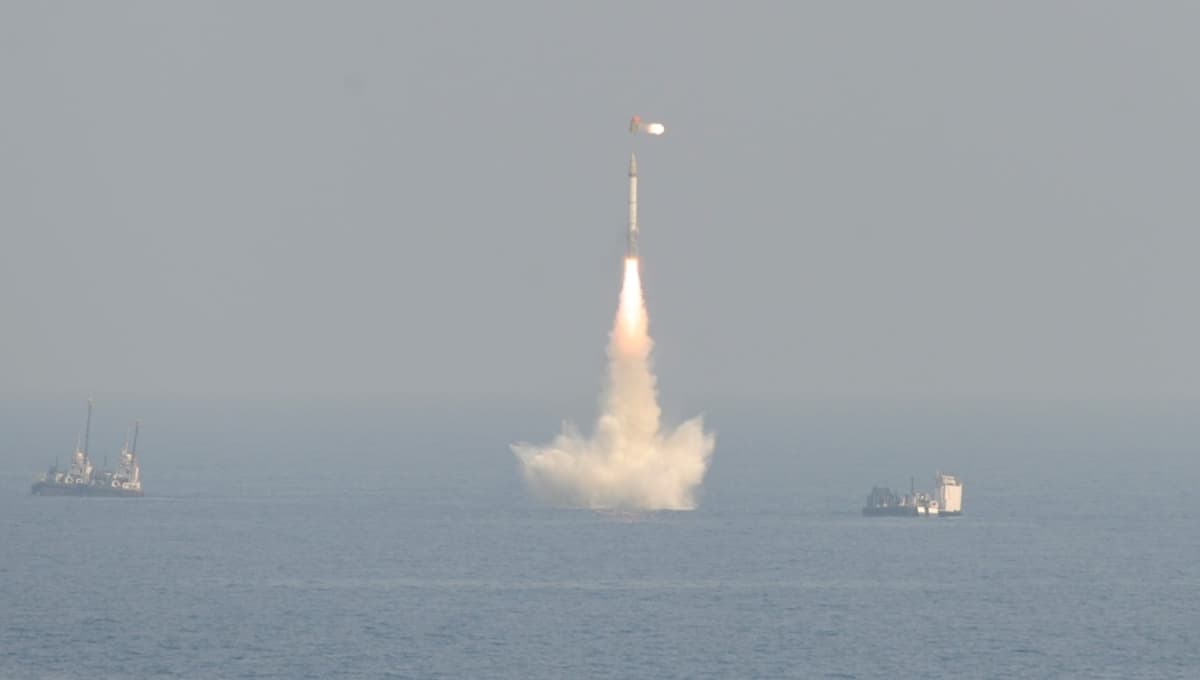
India’s Nuclear Triad Operational, Still Lags Far Behind China
Why It Matters
The operational triad strengthens India’s strategic credibility but the limited missile range and smaller fleet leave it vulnerable to a growing Chinese undersea advantage.
Key Takeaways
- •INS Aridhaman commissioned, giving India three operational SSBNs.
- •K‑4 missile range 3,500 km, still short of intercontinental reach.
- •China fields over 12 nuclear‑powered submarines, far outpacing India.
- •India plans K‑5 (5,000 km) and larger SSBNs for 2020s.
- •First nuclear attack submarines slated for service around 2036‑37.
Pulse Analysis
India’s latest addition to its nuclear‑powered submarine fleet marks a milestone in achieving a continuous at‑sea deterrent, a cornerstone of its second‑strike doctrine. By fielding three operational SSBNs, New Delhi can rotate vessels for patrol while maintaining two in maintenance or transit, fulfilling the minimum requirement for an uninterrupted underwater presence. This development reinforces India’s strategic posture amid regional tensions, signaling to adversaries that a credible retaliatory capability exists even without a formal announcement.
Despite the operational gain, the current undersea arsenal remains constrained by missile reach. The K‑4 SLBM, with a 3,500‑km range, forces Indian SSBNs to operate relatively close to potential targets, exposing them to anti‑submarine warfare assets. The forthcoming K‑5, projected to match the 5,000‑km range of China’s JL‑2, is still years away, leaving a gap in true intercontinental deterrence. China’s advantage is stark: over a dozen nuclear‑powered submarines and a rapidly expanding attack‑submarine fleet, positioning it to dominate the Indian Ocean and challenge India’s maritime security.
Looking ahead, India’s roadmap includes larger SSBNs—designated S4 and S5—featuring advanced reactors and greater payload capacity, as well as the first nuclear‑powered attack submarines slated for the mid‑2030s. These programs aim to close the quantitative and qualitative divide with China, but they require sustained investment and technological breakthroughs. In the interim, India may rely on a mix of conventional submarines, surface vessels, and air‑launched nuclear platforms to bolster its deterrent posture while the next‑generation undersea systems mature.
India’s nuclear triad operational, still lags far behind China
Comments
Want to join the conversation?
Loading comments...