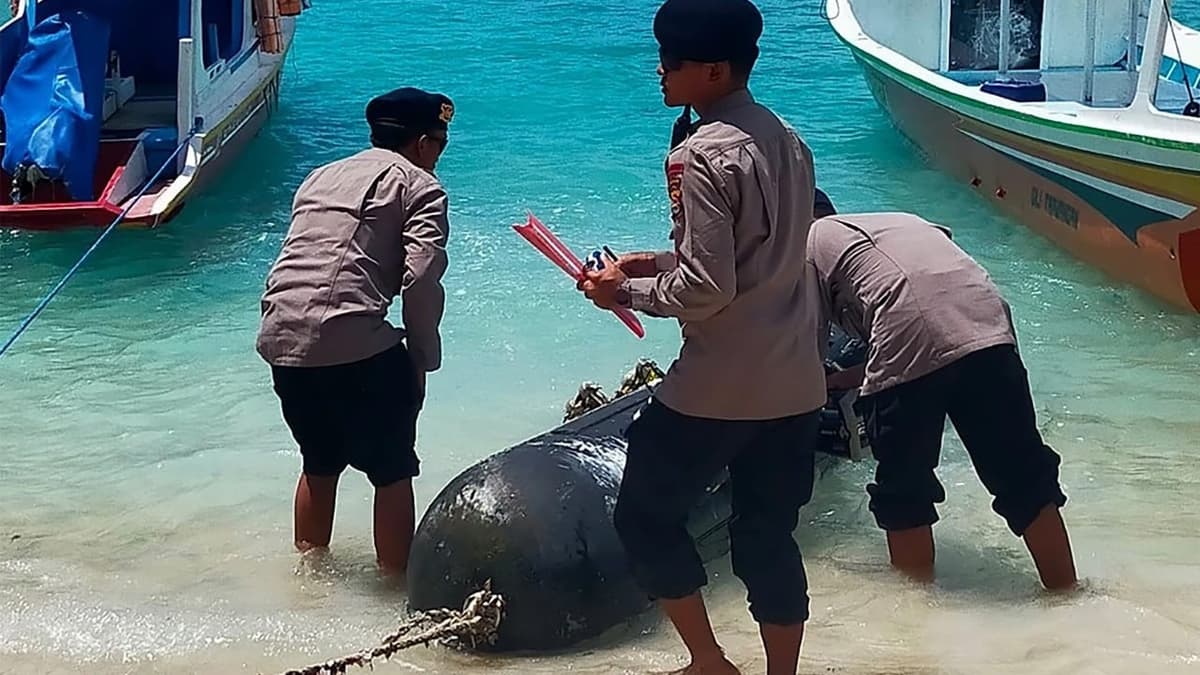
Indonesian Fisherman Nets Surprise Catch – a Chinese Underwater Drone
Why It Matters
The incident signals a potential escalation of Chinese intelligence activities in a strategic chokepoint, prompting regional powers to reassess maritime security postures. It underscores the need for tighter oversight of unmanned underwater systems in international waters.
Key Takeaways
- •Drone recovered near Lombok Strait, a vital shipping lane
- •Device likely used for maritime surveillance or intelligence gathering
- •Incident raises concerns over Chinese naval presence in Indo‑Pacific
- •US and Australia intensify monitoring of Chinese underwater assets
- •Indonesia may tighten maritime security and enforce territorial laws
Pulse Analysis
China has accelerated the deployment of autonomous underwater vehicles (AUVs) as part of its broader maritime strategy. These drones can operate at depths exceeding 1,000 meters, conduct long‑range reconnaissance, and transmit data to surface ships or satellite links. Recent patents and state‑funded research reveal a focus on stealth hull designs and low‑acoustic signatures, allowing them to linger undetected in contested waters. While Beijing frames the technology as civilian scientific research, analysts argue that the same platforms can be repurposed for intelligence‑gathering, anti‑submarine warfare, and mapping of undersea infrastructure.
The Lombok Strait, a narrow 35‑kilometer passage between Bali and Lombok, channels roughly 15 percent of global maritime trade, including energy shipments to Japan and South Korea. Its proximity to Australia’s northern approaches makes it a focal point for the United States and its allies, who maintain a constant surveillance footprint. The unexpected capture of a Chinese AUV by an Indonesian fisherman underscores how quickly these devices can infiltrate critical chokepoints. The incident validates the concerns of regional navies that Beijing is extending its undersea reach beyond the South China Sea.
For Indonesia, the find presents both a security challenge and an opportunity to assert sovereignty over its exclusive economic zone. Authorities are likely to tighten inspection regimes, collaborate with U.S. and Australian intelligence, and develop domestic counter‑AUV capabilities. The episode may also prompt diplomatic dialogues on the responsible use of unmanned maritime systems under existing international law. As more nations invest in underwater drones, the Indo‑Pacific could see a new layer of covert competition, reshaping naval doctrine and alliance dynamics.
Indonesian fisherman nets surprise catch – a Chinese underwater drone
Comments
Want to join the conversation?
Loading comments...