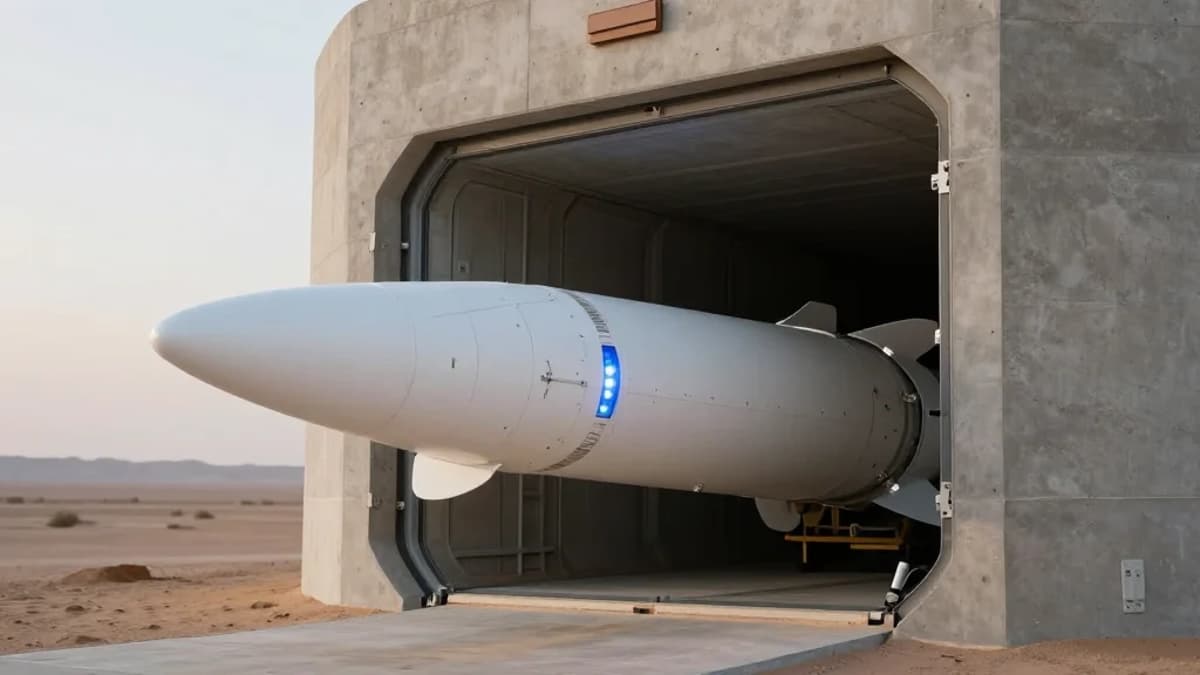
Inside America's Nuclear Sponge and the Three Areas Set to Absorb First Wave of Attack
•March 3, 2026
0
Why It Matters
Silo vulnerability threatens civilian populations and agricultural stability, making modernization a national security imperative.
Key Takeaways
- •US land leg comprises ~450 aging silos
- •Groundburst detonations spread more radioactive debris than airbursts
- •Fallout could affect Denver, Chicago, Detroit, millions
- •Agricultural regions risk contaminated livestock and food supply
- •Modernizing silos may deter adversaries, reduce use‑or‑lose pressure
Pulse Analysis
The nuclear triad’s land leg has long been the quiet backbone of America’s strategic deterrent, yet its aging silo network—often called the “nuclear sponge”—is increasingly viewed as a liability. While bomber fleets and submarine‑launched missiles enjoy continuous upgrades, the underground ICBM bases sit on remote plains with minimal hardening against modern precision weapons. Advocates for a robust land leg argue that rapid‑launch capability and dispersed locations complicate an adversary’s first‑strike calculus, whereas critics contend that the silos’ vulnerability could force a catastrophic “use‑or‑lose” decision under false alarms.
If an adversary were to employ ground‑burst warheads against these silos, the resulting plume of radioactive dust would far exceed the fallout from historic airbursts like Hiroshima. Modeling by USA Today suggests that wind‑driven fallout could blanket the Front Range of the Rocky Mountains, reaching Denver’s five‑million‑plus population, and on extreme weather days could extend to the Chicago metro area, endangering nine million people. Downwind agricultural zones—from Minnesota’s dairy farms to Ohio’s corn belts—would face contamination of livestock and crops, potentially sparking a food‑safety crisis and long‑term famine scenarios that extend the conflict’s impact beyond immediate casualties.
Policy makers now grapple with a stark choice: invest billions to modernize and harden the silo fleet, or accept the strategic risk of an obsolete land leg. Modernization promises improved missile accuracy, hardened launch facilities, and integrated command‑and‑control systems that could lower the pressure on the commander‑in‑chief to launch pre‑emptively. Conversely, arms‑control advocates warn that expanding the land leg may trigger a new arms race, prompting rivals to develop counter‑measures. Balancing deterrence, fiscal constraints, and humanitarian concerns will shape the next chapter of U.S. nuclear strategy, with the fate of the “nuclear sponge” at its core.
Inside America's nuclear sponge and the three areas set to absorb first wave of attack
0
Comments
Want to join the conversation?
Loading comments...