Defense News and Headlines
  • All Technology
  • AI
  • Autonomy
  • B2B Growth
  • Big Data
  • BioTech
  • ClimateTech
  • Consumer Tech
  • Crypto
  • Cybersecurity
  • DevOps
  • Digital Marketing
  • Ecommerce
  • EdTech
  • Enterprise
  • FinTech
  • GovTech
  • Hardware
  • HealthTech
  • HRTech
  • LegalTech
  • Nanotech
  • PropTech
  • Quantum
  • Robotics
  • SaaS
  • SpaceTech
AllNewsDealsSocialBlogsVideosPodcastsDigests

Defense Pulse

EMAIL DIGESTS

Daily

Every morning

Weekly

Sunday recap

NewsDealsSocialBlogsVideosPodcasts
DefenseNewsInside Seoul’s Bid for Canada Submarine Contract
Inside Seoul’s Bid for Canada Submarine Contract
Defense

Inside Seoul’s Bid for Canada Submarine Contract

•February 10, 2026
0
POLITICO – Morning Defense
POLITICO – Morning Defense•Feb 10, 2026

Why It Matters

Winning the contract would give Canada a modern under‑sea fleet while cementing South Korea’s status as a global arms exporter and deepening bilateral economic ties.

Key Takeaways

  • •South Korea's Hanwha-Ocean teams with Hyundai for Canadian bid
  • •Germany's ThyssenKrupp competes with state-backed offer
  • •Canada seeks long‑term partner, not just submarine supplier
  • •Seoul emphasizes broader economic cooperation beyond defence
  • •National pride fuels Korean public support for the contract

Pulse Analysis

Canada’s submarine replacement program reflects a strategic shift toward securing Arctic and Indo‑Pacific maritime routes, prompting Ottawa to seek a platform that can operate in harsh, icy waters while integrating advanced sensor suites. The procurement’s scale—potentially exceeding $10 billion—makes it a flagship opportunity for foreign shipbuilders, and the decision will influence Canada’s defence posture for decades. Germany’s ThyssenKrupp brings a legacy of proven diesel‑electric designs, but the German government’s recent direct involvement signals a rare state‑driven push to win the contract, adding political weight to its technical credentials.

South Korea’s bid leverages more than submarine technology; it packages a multi‑sector partnership that includes automotive, steel and renewable‑energy collaborations. By framing the offer as a “vision‑driven” alliance rather than a simple sale, Seoul aims to capture Canadian political goodwill and showcase its growing defence export capability. This approach aligns with the country’s broader export strategy, which has seen Korean firms secure contracts across Europe and the Middle East by bundling defence hardware with industrial cooperation, thereby mitigating the risk of being perceived as a low‑cost supplier.

The competition highlights a new era of defence procurement where middle powers use comprehensive economic packages to out‑maneuver traditional suppliers. For Canada, the choice will affect not only its naval capabilities but also the depth of future trade ties with either Europe or East Asia. A Korean win could accelerate technology transfer and diversify Canada’s supply chain, while a German victory would reinforce existing NATO‑aligned industrial links. Either outcome will set a precedent for how nations structure large‑scale defence deals, emphasizing partnership value over pure price competition.

Inside Seoul’s bid for Canada submarine contract

With help from Phelim Kine, Eric Bazail‑Eimil, John Sakellariadis and Daniel Lippman

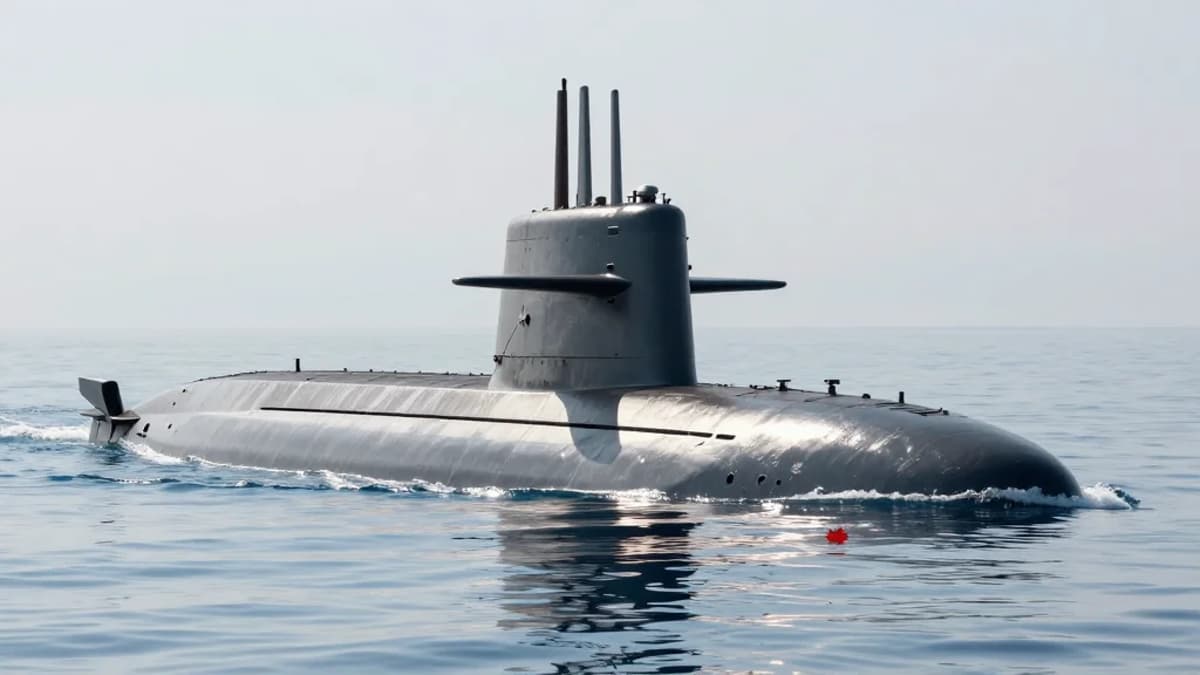
SEOUL, South Korea — Here in this city of nearly 10 million souls, submarine‑building deals would hardly seem top of mind for most people. But, in fact, many Koreans care a great deal — particularly when it becomes a matter of national pride.

It all starts with a bid for Canadian defence business. Ottawa is looking to shore up its naval capabilities amid rising security concerns in the Indo‑Pacific and Arctic by replacing its aging Victoria‑class submarines — a deal that could become the country’s largest defence acquisition.

At the moment, there are two leading contenders: South Korea’s Hanwha Ocean, with additional support from HD Hyundai Heavy Industries, and Germany’s ThyssenKrupp Marine Systems.

More than just a contract battle, though, the competition has turned into a full‑blown competition between nations. Canada wants a long‑term economic partner out of this submarine deal, and the governments of both South Korea and Germany have now gone all out to present themselves as the perfect match, promising to help create jobs in the Great White North and to cooperate in areas like energy, raw materials, automobile manufacturing and technology.

“In Germany’s case, until now, it has never really stepped in when selling submarines. It was all left to the companies. But this time, the state has stepped forward and is making a nationwide effort, so we’re feeling the pressure too — thinking we can’t afford to lose this. That’s why it’s turned into a competition between countries,” said MOON GEUN‑SIK, a naval submarine expert and professor at Hanyang University. “The public desire to win is tremendous.”

Every day, local news shows include at least one segment on the progress of negotiations. Online, Koreans are all‑in on national pride: “I can hardly believe how much the times have changed. Korea is now going head‑to‑head with Germany based on technological strength,” one top comment said in a YouTube clip on the news. “I can’t believe how our country has come to stand so tall on the world stage,” another wrote.

For many Koreans, it’s the classic tale of up‑start versus an old‑time titan: South Korea has become a major global arms exporter in recent years, while Germany has long been a key submarine manufacturer in Europe, alongside France.

And it’s clear that the deal is seen as an exceptional opportunity by many: “A once‑in‑a‑generation opportunity to change the fate of the nation lies before us,” PARK IN‑KOOK, a former U.N. representative for South Korea, wrote in a column published in Chosun Ilbo, one of the largest conservative papers in the peninsula.

The competition between the two countries also highlights the changing nature of defence deals — especially those among “middle powers,” as Prime Minister MARK CARNEY referred to in his viral Davos speech. Multi‑dimensional packages are a way for middle powers to build resilience by establishing as many strategic alliances as they can across all sectors.

The South Korean government seems to grasp this changing reality of deal‑making, recently promising Canada cooperation in fields like the automobile and steel industries. That’s a relief to insiders here, including defence expert YANG HYUN‑SANG, who wrote in a December column that South Korea’s strategy had to be “selling partnerships instead of products, visions instead of delivery schedules, diplomacy instead of sales.” Nearly two months after the column’s publication, he told the host he sees positive change.

“If we kept going with selling just a product, we wouldn’t have been able to score points for the economic benefits or financial support we could provide to Canada, and it would have been a losing game for us. In that sense, it’s now become an equal fight,” Yang said.

FEIGNING INTEREST: Moscow is only making a show of cooperating with U.S.–led talks to end the war in Ukraine while it endeavors to get on the Trump administration’s good side, according to a new Estonian intelligence report released today.

The intel shows that while the Russians are engaging in peace talks with U.S. special envoy STEVE WITKOFF and presidential son‑in‑law JARED KUSHNER in Abu Dhabi, the Kremlin’s real motive is to advance its military and foreign‑policy objectives, including getting the U.S. to lift sanctions and formalise Ukraine’s battlefield losses.

“Moscow uses negotiations over ending the war in Ukraine as a means to [normalize] its bilateral relations with the United States,” the report says. “Despite this illusory thaw, Russia’s aims remain unchanged: it seeks to [marginalise] the United States and NATO and to reshape Europe’s security architecture according to Moscow’s vision.”

The report, issued by the small NATO eastern‑flank state, supports prior U.S. intelligence assessments that Russian leader VLADIMIR PUTIN has no intention of changing his war objectives of controlling Ukraine.

But while Moscow aims to use the talks to normalise relations with the U.S., it’s speeding its military buildup at the same time, according to the report. Russia has upped artillery ammunition production by 17 times since 2021 and is producing massive numbers of drones and other uncrewed systems, which the report says “indicates that Russia is highly likely preparing for future conflict even as its war against Ukraine continues.”

ICE FACES CONGRESSIONAL HEAT: The acting head of ICE faced sharp questions from Democrats about the killings of RENEE GOOD and ALEX PRETTI by immigration officers in Minneapolis last month.

Our own Eric Bazail‑Eimil was in the packed House Homeland Security Committee room, where Democrats pushed acting ICE Director TODD LYONS and other senior DHS officials for more information about the shootings, as well as aggressive, controversial ICE practices. There were plenty of rhetorical fireworks, but there were also key policy insights for NatSec Daily readers.

ICE and Border Patrol said they made some progress in deploying body cameras to officers in the field. While Lyons and Customs and Border Protection chief RODNEY SCOTT did not have the specifics, they told lawmakers that roughly a quarter of ICE officers and half of the Border Patrol officers in the field already have cameras.

Lyons also insisted that ICE is prioritising unauthorised immigrants with criminal records, but provided only rough figures to back that up, and highlighted the efforts of Homeland Security Task Forces and other units within his agency tasked with addressing terror and transnational criminal threats to the United States. He also denied that ICE is building a database of U.S. citizens interfering with their work, contradicting claims by ICE officers in the field.

Democrats were frustrated when Lyons and Scott declined to comment on ongoing investigations into their agents’ alleged use of excessive force. They also raised concerns about ICE being allowed to enter homes without judicial warrants and the deportation and detention of U.S. citizens.

LUTNICK LATEST: The White House backed up Commerce Secretary HOWARD LUTNICK today as he faces scrutiny for continuing contact with JEFFREY EPSTEIN years after the late sex offender had been convicted in 2008.

White House spokesperson KAROLINE LEAVITT said Lutnick “remains a very important member of Trump’s team and the president fully supports the secretary.”

Lutnick has significant influence on national security, and has defended selling advanced AI chips to Gulf countries and to China, prompting scrutiny from China hawks.

In response to questions today from Sen. CHRIS VAN HOLLEN (D‑Md.), Lutnick told a Senate Appropriations subcommittee that he had lunch with Epstein in 2012. He said he was with his wife and children during the meeting. He told a podcast last October that he had distanced himself from the disgraced financier in 2005.

Democrats are calling for Lutnick to resign, a call echoed by Rep. THOMAS MASSIE (R‑Ky.). Other Republicans have hesitated to join him. Asked today by CNN’s Manu Raju whether Lutnick should leave the administration, House Speaker MIKE JOHNSON said “of course not.”

The Epstein files released by the Justice Department are also roiling dignitaries overseas. British PM KEIR STARMER is facing calls from within his party to step down. Norwegian diplomat MONA JUUL is giving up her post due to “serious failure of judgement” in her connection to Epstein, according to Reuters.

IT’S TUESDAY: Thanks for tuning in to NatSec Daily! This space is reserved for the top U.S. and foreign officials, the lawmakers, the lobbyists, the experts and the people like you who care about how the natsec sausage gets made. Aim your tips and comments at the editors and follow them on X.

TRICKLE‑DOWN TARGETS: A new report from cyber firm Intel 471, which our own Dana Nickel reported first for Morning Cybersecurity, outlines how hackers are using a maximum‑disruption tactic that targets the global supply chain with ransomware attacks.

The number of data‑extortion intrusions, including ransomware attacks, has increased in recent years, Dana writes. Hackers are now maximising damage by exploiting security weaknesses in the supply chain, targeting entities high in the supply chain to gain access to victims lower down, allowing them to hit multiple targets at once.

Many of those ransomware groups are based in Russia, the report found.

Russia “has become almost a safe haven” for ransomware groups to avoid accountability, PHIL HARRISON, vice president of analysis at Intel 471, told Dana.

U.S. officials, including National Cyber Director SEAN CAIRNCROSS and vocal lawmakers, have pushed for a stronger approach to combating ransomware groups, Dana writes.

LIMITED DAMAGE: The long‑awaited American troop drawdown in Europe may be smaller than the U.S.’ transatlantic allies have feared even as the Trump administration pulls back from the continent, our own Paul McLeary, Victor Jack and Jack Detsch report today.

U.S. officials are telling their European counterparts that any troop withdrawals would be limited. Officials from seven separate European countries told our colleagues the Trump administration will instead opt for targeted changes and minor pullbacks of rotational forces, while the bulk of American combat troops and material will remain where they are.

“We’ve received mixed signals,” one NATO military officer said, pointing to smaller redeployments like a U.S. Army infantry unit in Romania that won’t be replaced, along with some commands left by the United States. “But at the same time, this administration has realised that a stable Europe is important for them, and the signals we are receiving are not that there’s going to be a major withdrawal, not now.”

The topic is likely to come up during the Thursday defence‑minister meeting at NATO headquarters in Brussels — which Pentagon policy chief ELBRIDGE COLBY is set to attend, instead of Defence Secretary PETE HEGSETH.

WHITE HOUSE TO DISCUSS FISA 702: President Trump, several top advisers and some lawmakers are meeting today to discuss the renewal of a powerful but controversial foreign‑spy statute, a senior White House official confirmed to NatSec Daily.

The high‑level confab is a sign that the White House could be nearing a decision on the fate of Section 702 of the Foreign Intelligence Surveillance Act, which sunsets April 20. The official was granted anonymity as a condition of sharing details about the meeting, first reported by The Record.

The meeting comes amid growing angst on the Hill about Trump’s reluctance to stake out a clear policy position on the powerful spy statute, which allows the government to collect the text, calls and emails of foreigners abroad — but can also sweep up Americans’ data.

The Trump administration cancelled a Monday briefing to the House Intelligence Committee on Section 702 after a parallel briefing to the Senate Intelligence Committee last week turned contentious, two people familiar with the matter told NatSec Daily. Several Senators expressed frustration at Trump‑administration officials last week for refusing to state whether the White House wants to re‑up the spy law, CNN reported.

The Record specified that White House Chief SUSIE WILES, CIA Director JOHN RATCLIFFE, Director of National Intelligence TULSI GABBARD, White House deputy chief of staff STEPHEN MILLER, and Joint Chiefs Chair DAN CAINE will be there, along with Reps. JIM JORDAN (R‑Ohio) and RICK CRAWFORD (R‑Ark.).

The White House did not respond to a request for comment on the HPSCI briefing. A spokesperson for the GOP on the House Intelligence Committee declined to comment.

DO BETTER: With the DHS shutdown deadline just four days away, lawmakers are still far from reaching a deal to avert a funding halt for the agency.

A GOP counter‑proposal on DHS funding is “woefully inadequate” and demonstrates that the White House “is clearly not open to” key Democratic demands, House Minority Leader HAKEEM JEFFRIES said today, our own Mia McCarthy reports.

The Republican offer didn’t properly address a need for judicial warrants, detention‑center standards, independent investigations and excessive‑force standards, Jeffries said. As for whether the Trump administration would be willing to support a ban on masks for federal agents, “that’s an open question,” he said.

While he acknowledged there are things on “both sides that are non‑negotiables,” Senate Majority Leader JOHN THUNE said today that he thinks there could still be room for compromise. Republicans would need support from at least seven Senate Democrats to move forward a stopgap measure to avoid a shutdown.

KHANNA’S TAIWAN DEFENSE: The top Democrat on the House Select Committee on China plans to make the panel’s first hearing of the year tomorrow a partisan face‑off over the Trump administration’s Taiwan policy.

RO KHANNA (D‑Calif.) told our own Phelim Kine that he intends to make the hearing — titled Lies, Lawfare, and Leverage: The CCP’s Gaslighting and Manipulation to Marginalise Taiwan — a public indictment of what he calls the administration’s “failed China policy.”

Khanna noted Trump’s ambivalent response to a New York Times question last month about whether Chinese leader XI JINPING might attempt a “decapitation” strike on Taiwan’s leadership (“That’s up to him what he’s going to be doing,” Trump said). He also pointed to the administration’s move to abort Taiwan President LAI CHING‑TE’s planned stop‑over in New York en route to a state visit to three of the self‑governing island’s Latin‑American diplomatic allies in July.

“Trump’s saying that Taiwan can be a bargaining chip,” in negotiations with Beijing, Khanna said. “He’s really jeopardising our commitment to making sure Taiwan doesn’t face military aggression.”

Khanna said his targeting of the administration’s policies doesn’t mean that the committee’s fabled bipartisanship is dead. “We’ll be cooperating in places where it makes sense, on certain investigations, but we’ll also remind people — and many Republicans will agree with me — that the administration shouldn’t sell out Taiwan,” he added.

Neither the White House nor Committee chair JOHN MOOLENAAR (R‑Mich.) immediately responded to requests for comment.

FOLLOW THE MONEY: A House Ways and Means Committee hearing on Foreign Influence in American Nonprofits became a partisan slugfest that pitted GOP accusations of Chinese and pro‑Palestinian influence operations in the U.S. against Democratic allegations of questionable foreign donations to Trump‑linked organisations.

“Certain tax‑exempt organisations funded by foreign donors are exploiting their lucrative U.S. tax benefits to incite violence and unrest in our communities and destabilise our political process,” Committee chair JASON SMITH (R‑Mo.) said in his opening statement. Smith singled out the Samidoun Palestinian Prisoner Solidarity Network — a group the Treasury Department designated a “sham charity” in 2024 — and the allegedly CCP‑aligned The People’s Forum as two entities that have reaped U.S. tax breaks despite espousing propaganda harmful to U.S. interests. Neither Samidoun nor The People’s Forum responded to a request for comment.

Committee ranking member RICHARD NEAL (D‑Mass.) countered by calling attention to what he called inappropriate foreign donations to Trump and organisations that he supports.

Neal zeroed in on “hundreds of millions of dollars” in allegedly opaque foreign money that has flowed to entities including the Presidential Library Foundation, Trump’s Inaugural Committee and Trump’s acceptance of a private jet donated to him by the Qatari government in May. “This administration has put up a ‘for sale’ sign, and many countries are apparently responding,” Neal said.

“The only special interest guiding the Administration’s decision‑making is the best interest of the American people. The Trump administration is focused on cementing American dominance while Democrats are focused on playing stupid politics. What else is new?” White House spokesperson DAVIS INGLE told NatSec Daily in a statement.

TWITTER FINGERS: A short‑lived post on the official X account of Vice President JD VANCE today is likely to prompt some damage‑control efforts by the White House with NATO ally Turkey.

A now‑deleted post declared that the vice president and Second Lady USHA VANCE, who were travelling in Armenia, laid wreaths to commemorate lives lost during what the message described as the “1915 Armenian genocide.” The post quickly disappeared, and, according to a press‑pool report, an official with the vice president’s office said it was posted in error by a staff member not travelling with Vance.

The post is likely to rankle officials in Istanbul. Trump has avoided calling the mass killings a genocide as he seeks to maintain close ties with Turkish President RECEP TAYYIP ERDOĞAN. Former President JOE BIDEN broke with years of precedent under both Republican and Democratic administrations to recognise the killings as a genocide in 2021.

Read Original Article
0

Comments

Want to join the conversation?

Loading comments...