Why It Matters
Integrating forecasting into wargaming gives defense planners a quantifiable, calibrated toolset, enhancing strategic insight and reducing reliance on intuition alone.
Key Takeaways
- •Framework merges narrative wargaming with probabilistic forecasting
- •Improves calibration and measurement of scenario outcomes
- •Enables transparent, evidence‑based decision making in security
- •Leverages RAND Forecasting Initiative expertise
- •Independent funding ensures unbiased research
Pulse Analysis
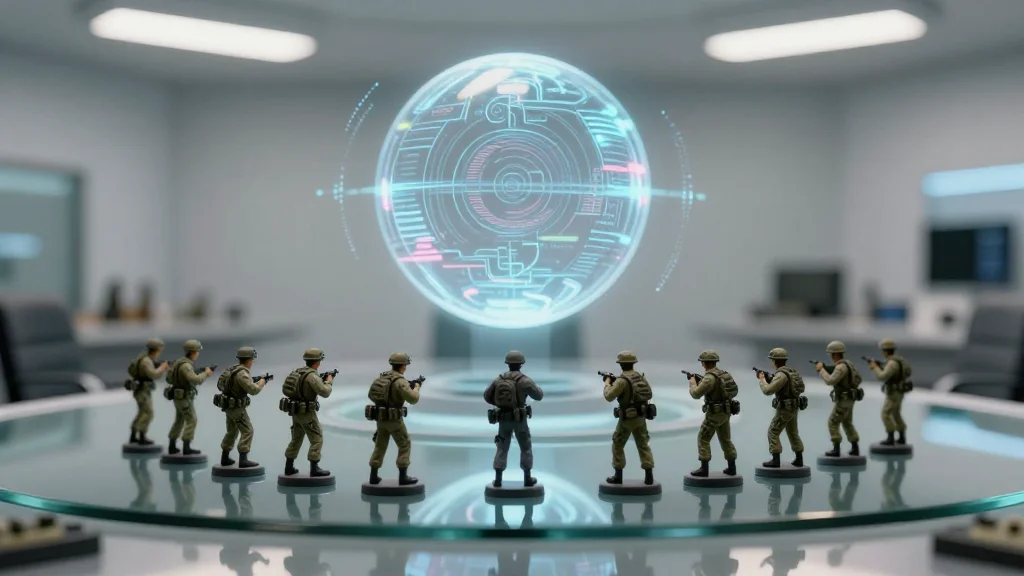
Wargaming has long been a staple of defense planning, allowing analysts to explore complex conflict scenarios in a controlled, immersive environment. However, traditional exercises often rely on qualitative judgments that can be difficult to validate. By introducing structured forecasting techniques—such as probability distributions and calibration metrics—organizations can inject quantitative rigor into these narratives, bridging the gap between creative scenario design and empirical analysis. This hybrid approach aligns with a broader industry shift toward data‑driven decision support tools.
The RAND study outlines a concrete interoperability framework that ties forecasting models directly into the gaming workflow. Forecasting inputs inform scenario probabilities, while gaming outcomes feed back into model calibration, creating a closed loop of learning and improvement. This synergy enhances evaluability, allowing decision makers to track how well predictions align with actual outcomes and adjust strategies accordingly. Moreover, the framework provides a common language for analysts, policymakers, and operational planners, fostering cross‑functional collaboration and reducing siloed interpretations of risk.
For U.S. defense and national‑security agencies, the implications are significant. A calibrated, transparent methodology can improve resource allocation, risk assessment, and strategic foresight, ultimately leading to more resilient policy choices. As adversaries adopt increasingly sophisticated tactics, the ability to quantify uncertainty and test assumptions in a simulated yet data‑rich setting becomes a competitive advantage. The paper’s independent funding underscores its credibility, suggesting that the proposed model could serve as a benchmark for future wargaming and forecasting integrations across the security sector.
Integrating Forecasting with Gaming
Comments
Want to join the conversation?
Loading comments...