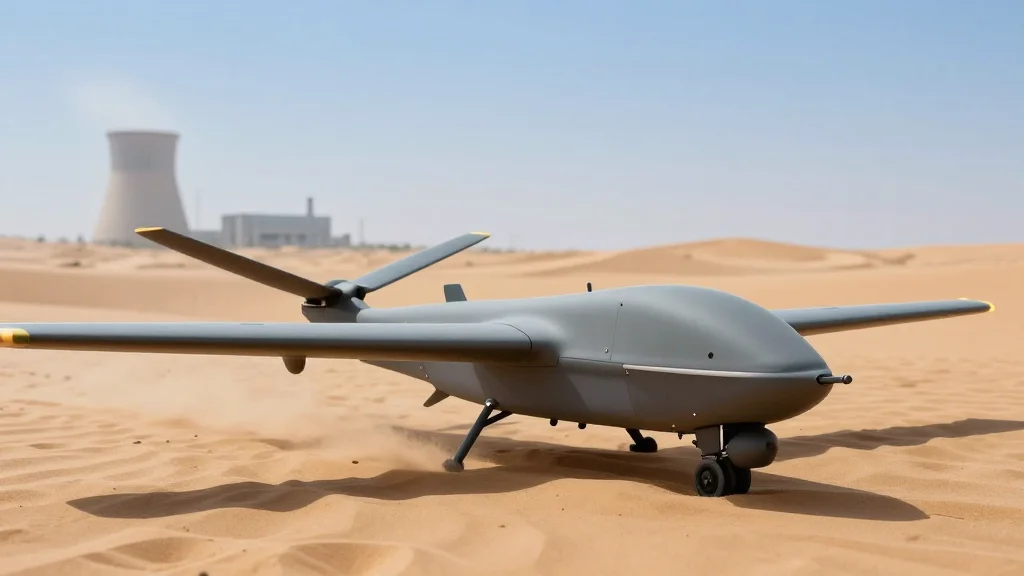
Iran-Linked Drone Strikes Hit Saudi Arabia, UAE Nuclear Plant, Escalate Gulf Tensions

Companies Mentioned
Why It Matters
The drone strikes expose a new vulnerability in the Gulf’s defense architecture: small, inexpensive unmanned systems can threaten high‑value civilian and military assets, from oil pipelines to nuclear reactors. This forces regional governments to rethink air‑defense priorities, invest in counter‑UAV radar and electronic warfare, and deepen intelligence sharing with the United States and Israel. Beyond the immediate security concerns, the attacks exacerbate an already fragile economic environment. Disruptions to energy production and transport threaten global oil supply, while soaring jet‑fuel costs and reduced air traffic strain the tourism sector that underpins much of the Gulf’s diversification strategy. The convergence of military escalation and economic pressure could accelerate a shift toward greater self‑reliance on domestic defense industries and alternative energy routes, reshaping the strategic calculus of the region for years to come.
Key Takeaways
- •Three Iran‑linked drones entered UAE airspace; two intercepted, one hit Barakah nuclear plant’s generator
- •Saudi Arabia also intercepted three drones launched from Iraqi airspace
- •Barakah plant, a $20 billion facility, suffered a fire but no radiological release
- •Energy infrastructure damage across the Gulf estimated at $58 billion
- •Jet fuel prices up 90% YoY; Gulf airlines canceled >30,000 flights in the war’s first month
Pulse Analysis
The May 17 drone attacks signal a tactical evolution in the Iran‑U.S.‑Israel conflict, where low‑cost unmanned systems are used to achieve strategic effects that previously required missiles or manned aircraft. This trend mirrors the broader global shift toward asymmetric air warfare, where state and non‑state actors exploit the blind spots of legacy air‑defense architectures. For the Gulf, the immediate lesson is clear: traditional layered missile defenses, designed for ballistic threats, are insufficient against swarms of small UAVs that can slip through radar horizons and strike critical nodes.
In the medium term, we can expect a surge in procurement of counter‑UAV technologies—electro‑optical sensors, directed‑energy weapons, and AI‑driven detection platforms. The United States and Israel are likely to accelerate the integration of their air‑defense assets with Saudi and Emirati systems, creating a more cohesive regional shield. Politically, the attacks will harden Riyadh’s and Abu Dhabi’s stance toward Tehran, potentially prompting a recalibration of the ceasefire terms and a more aggressive posture in the Persian Gulf.
Economically, the $58 billion in estimated damage to energy facilities underscores how quickly a conventional conflict can morph into a systemic crisis for global oil markets. The Gulf’s ability to reroute oil via pipelines has mitigated some supply shocks, but the sustained closure of the Strait of Hormuz and the vulnerability of nuclear infrastructure could drive oil prices higher, reinforcing inflationary pressures worldwide. Investors will be watching defense contractors that specialize in UAV countermeasures, as well as firms that can provide resilient energy logistics, for upside potential in the coming months.
Iran-Linked Drone Strikes Hit Saudi Arabia, UAE Nuclear Plant, Escalate Gulf Tensions
Comments
Want to join the conversation?
Loading comments...