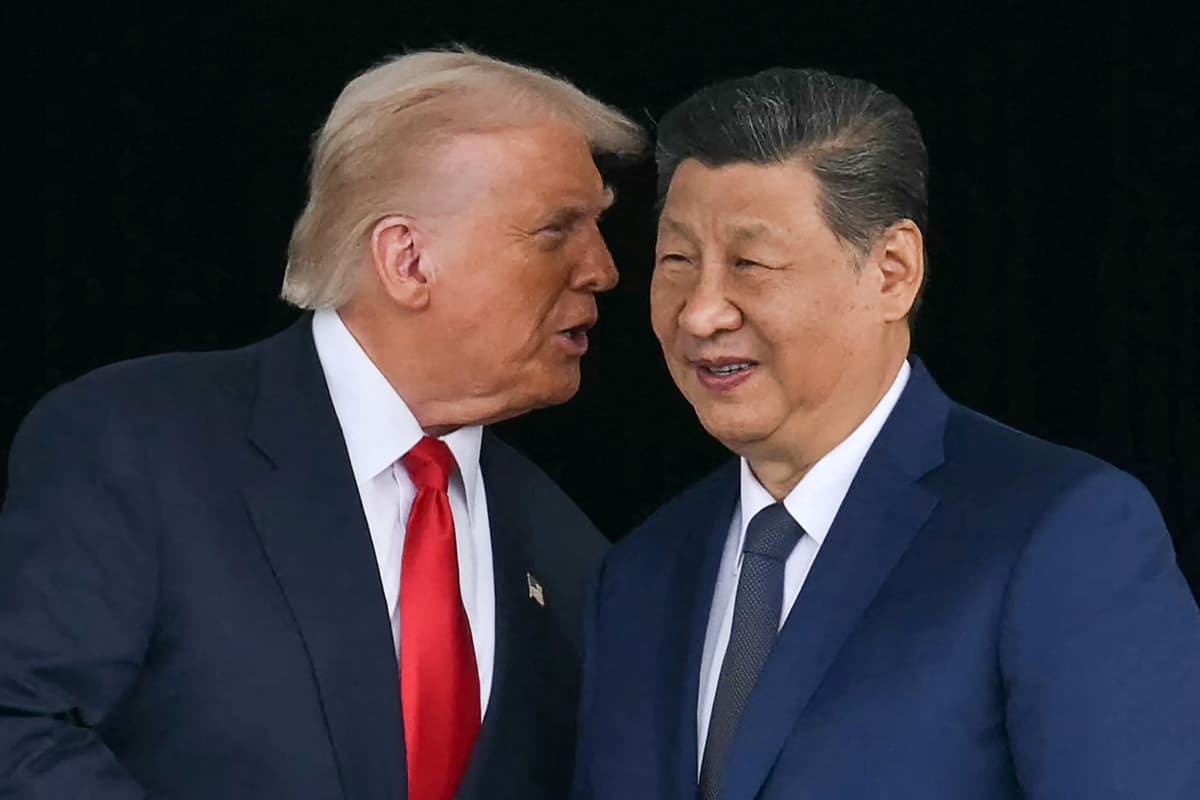
Iran on Table, Taiwan on Radar: Can Taiwan’s Porcupine Strategy Survive Chinese Blitz as Trump Meets Xi?
Why It Matters
The summit could reshape U.S.–China engagement on Iran and trade while directly influencing the security balance across the Taiwan Strait, where Taiwan’s survival hinges on credible deterrence and allied resolve.
Key Takeaways
- •Trump‑Xi summit targets Iran sanctions relief and trade de‑escalation
- •China’s $230 bn defense budget dwarfs Taiwan’s $16.8 bn spend
- •Taiwan relies on “porcupine” asymmetric weapons and decentralized command
- •PLA drills include mock‑ups of Taiwanese government sites
- •U.S. credibility remains decisive for Taiwan’s deterrence posture
Pulse Analysis
The upcoming Trump‑Xi state visit marks the first high‑level dialogue between the two leaders in six years, and it arrives at a volatile moment for three intertwined issues: Iran’s nuclear and regional posture, lingering U.S.–China trade frictions, and the ever‑present flashpoint of Taiwan. By convening in Beijing, Trump aims to extract concessions on Iranian oil sanctions and signal a willingness to ease tariff pressures, while Xi seeks to showcase China’s diplomatic clout. Analysts view the summit as a litmus test for whether Washington can re‑assert influence in Asia without triggering a broader confrontation.
Taiwan faces a stark material imbalance, with China fielding roughly ten times the personnel, aircraft and naval vessels of the island. In response, Taipei has embraced a “porcupine” defense doctrine that prioritizes precision anti‑ship missiles, low‑cost interceptors, and a layered air‑defense architecture known as the Taiwan Shield. Decentralized command structures aim to keep the force fighting even after a potential decapitation strike, a lesson drawn from Iran’s experience with parallel IRGC and regular‑army hierarchies. Recent PLA drills that replicate Taiwanese command centers underscore Beijing’s focus on rapid, surgical attacks, forcing Taiwan to invest heavily in resilience measures.
The broader strategic calculus hinges on U.S. credibility and the willingness of regional partners such as Japan to back Taiwan. If Washington can demonstrate a consistent security guarantee, Beijing’s cost‑benefit analysis for an invasion may shift toward restraint. Conversely, any perception of U.S. unreliability could embolden PLA planners, raising the risk of miscalculation. The Trump‑Xi talks, therefore, are not merely about trade or Iran; they are a pivotal moment that could either stabilize or destabilize the Indo‑Pacific security environment.
Iran on Table, Taiwan on Radar: Can Taiwan’s Porcupine Strategy Survive Chinese Blitz as Trump Meets Xi?
Comments
Want to join the conversation?
Loading comments...