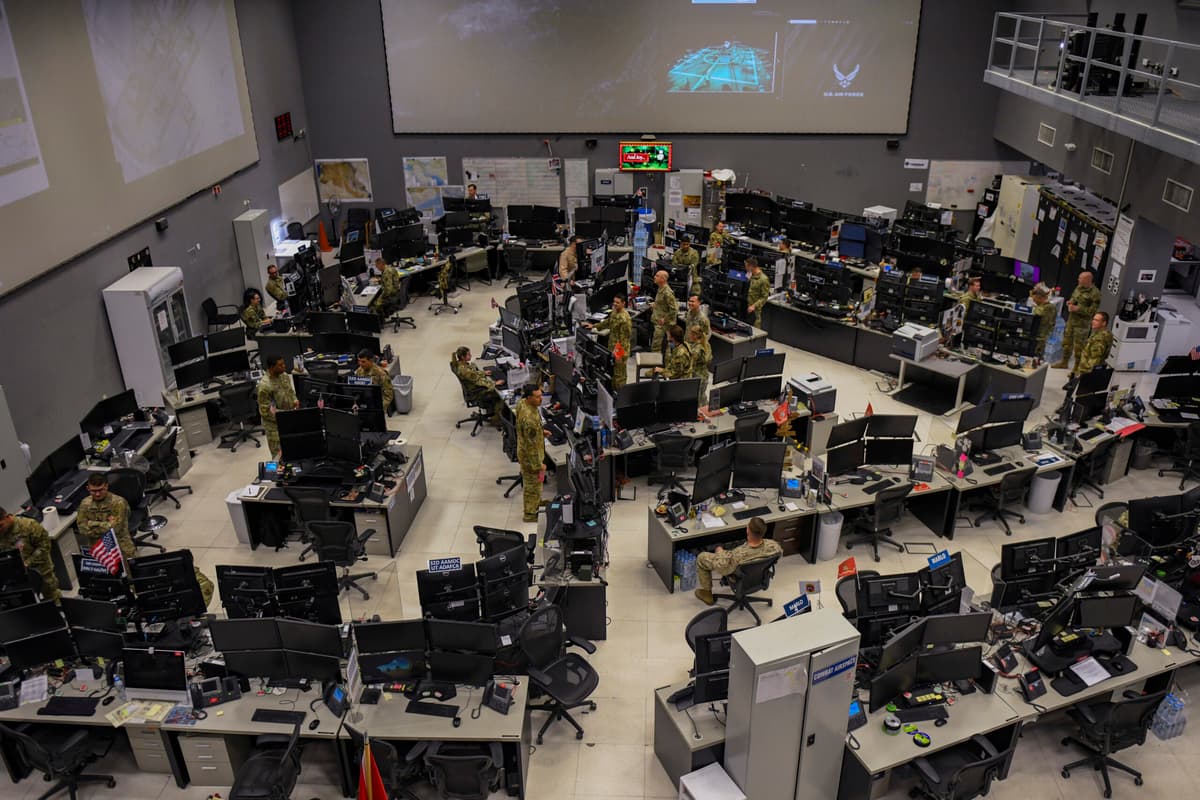
Iran Severely Damaged US Air Ops Center in Qatar Soon After War Began
Why It Matters
The strike exposes the vulnerability of forward‑deployed command nodes, prompting a strategic pivot toward more dispersed, hardened command structures that could reshape U.S. military posture in the Middle East.
Key Takeaways
- •Iranian missiles rendered Al Udeid CAOC inoperable within weeks
- •U.S. had already moved command to Shaw AFB, avoiding casualties
- •$60 million Qatar bunker suffered damage despite being unused
- •Shift to dispersed, underground command nodes now a strategic priority
- •Future Middle East base footprint uncertain after Iran’s attacks
Pulse Analysis
The Combined Air Operations Center at Al Udeid has long been the nerve center for U.S. air power across the CENTCOM theater, coordinating campaigns from Desert Storm to recent operations against the Houthis. Its $60 million, bunker‑style facility, equipped with 67 miles of fiber‑optic cable, was designed for resilience, yet Iranian missile strikes in the war’s opening weeks rendered it inoperable. Because the center was already offline—personnel and critical systems had been relocated to Shaw Air Force Base—the attack caused no casualties and did not disrupt the ongoing Operation Epic Fury air campaign.
The incident underscores a growing consensus among senior military planners that forward‑deployed, above‑ground command nodes are increasingly exposed to sophisticated missile and drone threats. The U.S. had anticipated this risk, moving a substantial portion of CAOC staff to Shaw and investing in a $3 million upgrade to the Qatar site in 2020. Nonetheless, the damage has accelerated discussions about hardening and undergrounding future command facilities, as well as dispersing critical functions across multiple, geographically separated sites to ensure continuity of operations under contested conditions.
Strategically, the attack may catalyze a re‑evaluation of the United States’ footprint in the Gulf. Pentagon officials now face decisions about whether to rebuild the Al Udeid CAOC, relocate it entirely, or adopt a hybrid model that blends hardened regional hubs with robust, cloud‑based command architectures. Such a shift could influence allied basing agreements, defense spending priorities, and the overall balance of power in a region where adversaries are rapidly expanding their missile arsenals. The outcome will likely shape how the U.S. projects air power and maintains command resilience in future high‑intensity conflicts.
Iran Severely Damaged US Air Ops Center in Qatar Soon After War Began
Comments
Want to join the conversation?
Loading comments...