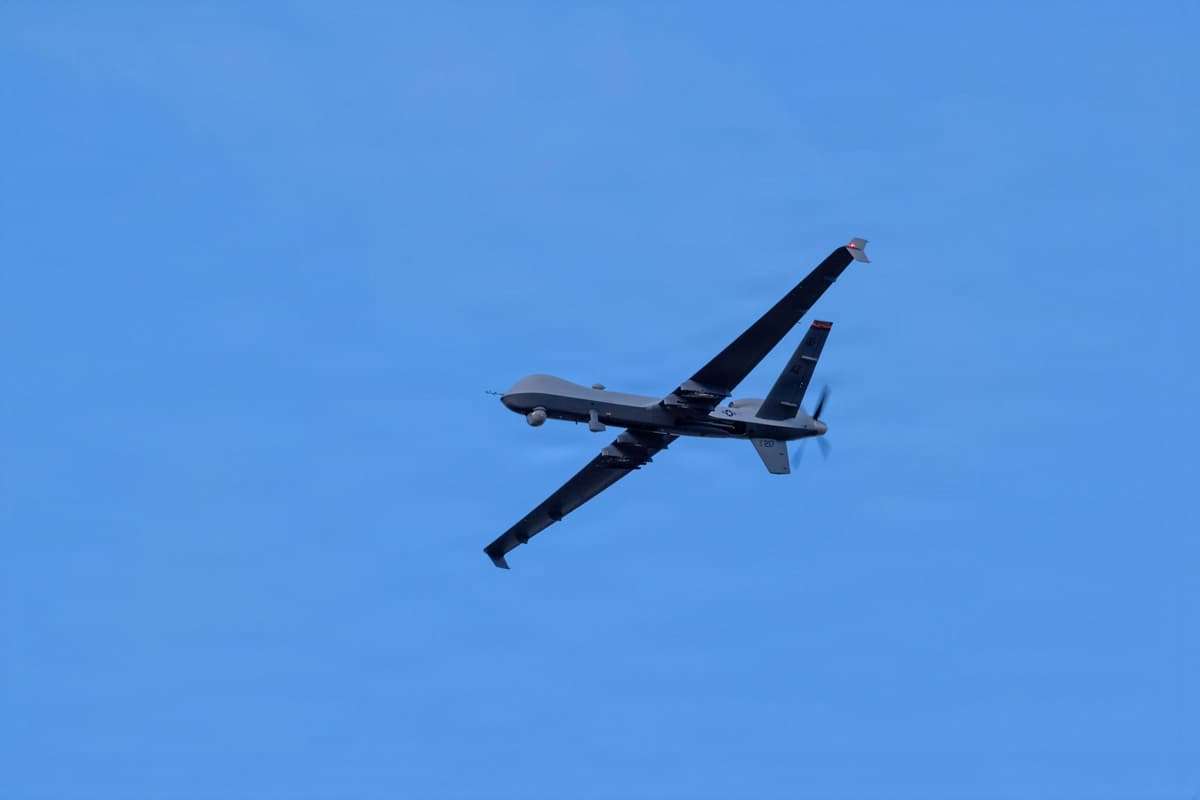
Iran War Highlights the Value of Unmanned Aircraft
Why It Matters
The Iran operation proves unmanned aircraft can provide persistent strike capability while reducing crew risk, shaping future force structure and procurement priorities for the U.S. defense establishment.
Key Takeaways
- •MQ-9 Reapers were first over Iranian airspace in Operation Epic Fury
- •Reapers loitered 24+ hours, locating and destroying mobile missile launchers
- •Several MQ-9s were shot down, but no pilot rescue needed
- •Losses highlight need for next‑gen collaborative combat aircraft (CCA)
- •Accelerating MQ‑9B production ensures unmanned capability for future conflicts
Pulse Analysis
The recent Iran conflict put the MQ‑9 Reaper in the spotlight, showcasing how a remotely piloted aircraft can fill gaps left by retiring legacy platforms. Operating from secure ground stations, Reapers stayed aloft for more than a day, scanning vast swaths of terrain and engaging fleeting targets that manned jets might miss. Their sensor‑shooter blend proved especially effective against Iran’s concealed missile and drone launchers, delivering a decisive blow to the adversary’s strike capacity while keeping U.S. pilots out of harm’s way.
However, the campaign also exposed the Reaper’s vulnerabilities. Sophisticated Iranian air defenses succeeded in downing a handful of drones, reminding planners that endurance does not equal invulnerability. The loss of unmanned assets is less politically charged than a crewed aircraft shoot‑down, yet each loss erodes combat capability and raises questions about survivability. These trade‑offs are driving the Air Force’s push toward collaborative combat aircraft (CCA), which aim to combine the Reaper’s persistence with advanced autonomy, open‑architecture payloads, and tighter integration with fifth‑ and sixth‑generation fighters.
Looking ahead, policymakers are urged to fast‑track MQ‑9B production while simultaneously funding CCA research. The MQ‑9B’s upgraded engines and sensors promise higher performance and lower operating costs, ensuring the U.S. retains a cost‑effective, high‑endurance platform for contested environments. Pairing such drones with next‑gen fighters creates a layered air strategy that leverages human cognition and machine endurance, delivering flexible, survivable options across tactical, operational, and strategic levels. Investing now safeguards the United States’ aerial edge against evolving threats.
Iran War Highlights the Value of Unmanned Aircraft
Comments
Want to join the conversation?
Loading comments...