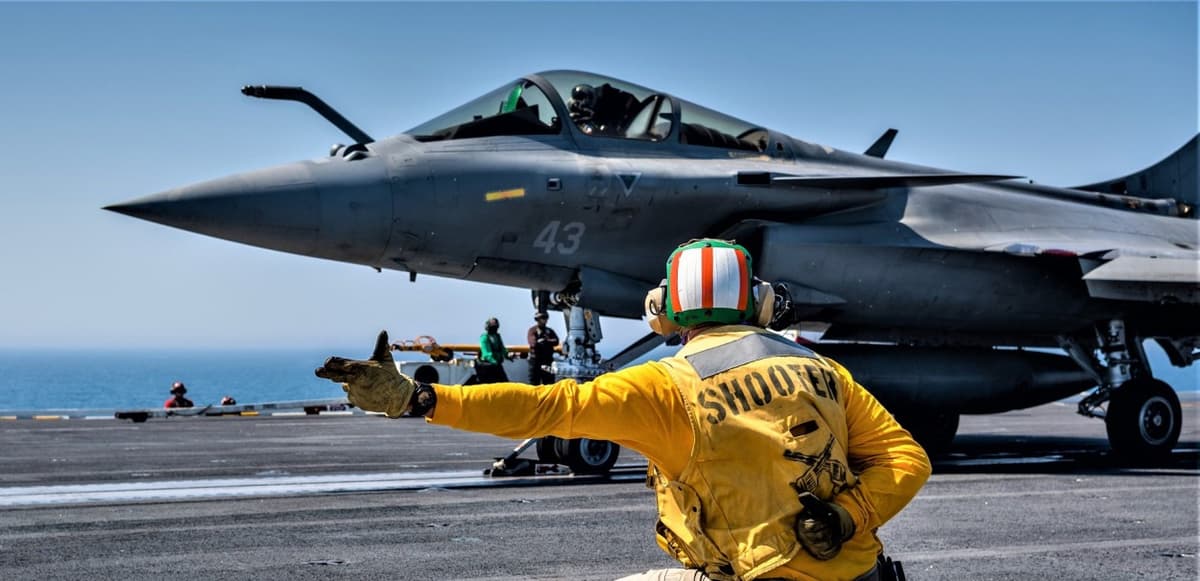
Iran War: Rafale Fighters Mobilized Over UAE: France Defends Air & Naval Bases Amid Iranian Threats
•March 3, 2026
0
Why It Matters
The deployment shows France’s commitment to protect overseas assets and signals a deeper European security role in the Middle East, while Macron’s nuclear posture shift could reshape NATO’s deterrence architecture.
Key Takeaways
- •Rafale jets patrol UAE skies protecting French bases.
- •Drone hit French hangar, prompting heightened air defenses.
- •Iran warned Europe against supporting Israel, threatens retaliation.
- •Macron plans forward-deployed nuclear deterrence with European partners.
- •NATO welcomes France's expanded nuclear consultation amid US uncertainty.
Pulse Analysis
The recent Iranian drone strike on a French hangar in the United Arab Emirates has prompted Paris to mobilise its Rafale fighter fleet from Al‑Dhafra. The move reflects heightened security concerns for the hundreds of French military personnel stationed in the Gulf and underscores the broader risk of spill‑over from the Iran‑Israel conflict. By projecting air power directly over its bases, France aims to deter further attacks and reassure regional partners of its commitment to protect strategic assets far from home.
Beyond the immediate tactical response, the incident dovetails with President Emmanuel Macron’s announced shift in France’s nuclear doctrine. Paris is exploring forward‑deployment of nuclear‑armed aircraft and deeper consultation with NATO, a step that could alter the balance of deterrence in Europe. While France maintains an independent nuclear force, its willingness to integrate more closely with alliance planning signals a response to perceived wavering of U.S. security guarantees, especially under recent American political turbulence.
Looking ahead, the Rafale deployment and nuclear posture expansion may intensify diplomatic friction with Tehran, which has warned European states against any defensive action. The escalation risks drawing additional NATO members into a regional flashpoint, potentially prompting a broader coalition response. For European policymakers, balancing deterrence, alliance cohesion, and the avoidance of a wider war will be paramount as the Middle East remains a volatile arena for great‑power competition.
Iran War: Rafale Fighters Mobilized Over UAE: France Defends Air & Naval Bases Amid Iranian Threats
0
Comments
Want to join the conversation?
Loading comments...