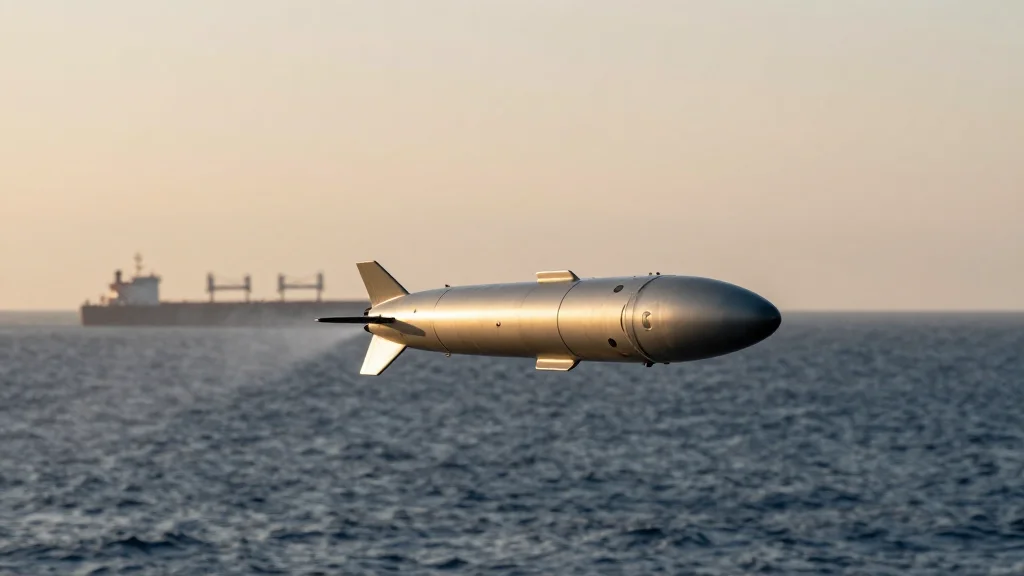
Iranian‑Linked Noor Missiles Hit South Korean Ship in Hormuz, Seoul Says

Companies Mentioned
Why It Matters
The confirmed use of Iranian‑origin Noor missiles against a commercial vessel signals a shift from proxy‑mediated attacks to direct state‑backed aggression in one of the world’s most vital oil transit corridors. This raises the risk profile for global supply chains, potentially prompting shippers to reroute cargo, increase insurance costs, and demand greater naval protection. Moreover, the incident tests the resolve of the U.S. and its allies to enforce freedom of navigation in the face of escalating missile threats. For regional security, the episode underscores Tehran’s willingness to leverage its missile arsenal as a coercive tool, complicating diplomatic efforts to de‑escalate the broader U.S.–Iran confrontation. It also provides a real‑world data point for defense planners assessing the effectiveness of existing ship‑board counter‑measures against fast‑moving anti‑ship missiles, likely spurring procurement of upgraded radar and point‑defence systems.
Key Takeaways
- •May 4: HMM Namu struck by two airborne objects in the Strait of Hormuz
- •South Korea’s foreign ministry attributes missiles to Iran’s Noor series
- •One crew member suffered minor injuries; vessel now under repair in the UAE
- •Seoul to summon Iran’s ambassador and demand preventive steps
- •Incident heightens security concerns for commercial shipping in Hormuz
Pulse Analysis
The Noor missile attribution marks a rare instance where a state‑linked weapon system is directly tied to a commercial shipping incident, blurring the line between conventional warfare and economic coercion. Historically, Iran has relied on proxy groups to disrupt maritime traffic; this overt use of its own arsenal could be a calculated escalation aimed at forcing concessions in ongoing diplomatic negotiations. The move also tests the credibility of deterrence postures employed by the U.S. Fifth Fleet, which has increased patrols but has yet to field ship‑based missile defense systems capable of intercepting low‑altitude, sea‑skimming threats like the Noor.
From a market perspective, insurers are likely to revise war‑risk premiums for vessels transiting Hormuz, potentially adding $10,000–$15,000 per voyage for high‑value cargoes. Shipping lines may accelerate the adoption of hard‑kill counter‑measure kits, such as the SeaRAM or Rolling Airframe Missile, to protect against similar attacks. The incident also provides a data point for defense contractors seeking contracts to retrofit existing merchant fleets with electronic warfare suites and decoy launchers.
Looking ahead, the diplomatic fallout could shape the next round of sanctions or retaliatory measures. If Seoul secures a multilateral condemnation, it may pave the way for a coordinated naval presence involving Japan, the United Arab Emirates and European partners, reinforcing the principle of freedom of navigation. Conversely, a muted response could embolden Tehran to repeat or expand missile strikes, further destabilizing a chokepoint that handles roughly 20% of global oil shipments.
Iranian‑Linked Noor Missiles Hit South Korean Ship in Hormuz, Seoul Says
Comments
Want to join the conversation?
Loading comments...