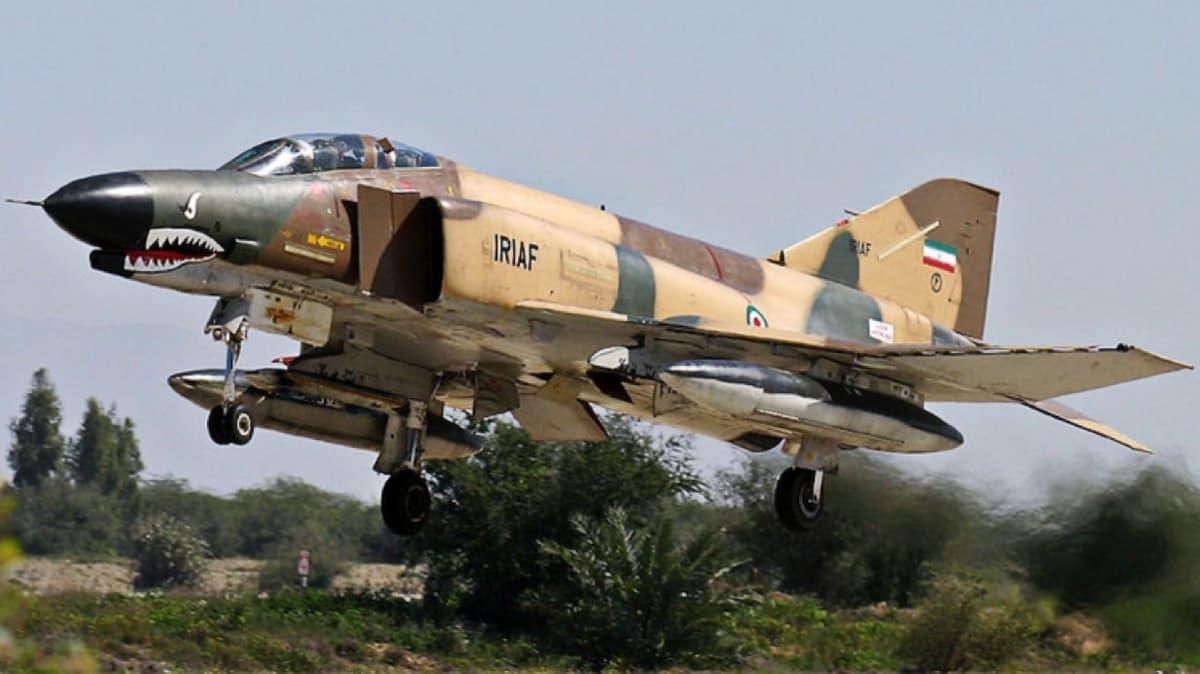
Iran’s F-4 Phantom Escorts Asim Munir to Tehran — Relic Aircraft Once Used by USAF as Target Drone
Why It Matters
The escort signals Iran’s ability to keep legacy U.S. fighters operational, offering a symbolic show of force that influences diplomatic signaling and regional security calculations. It also reveals the limits of Iran’s air power against modern fifth‑generation platforms.
Key Takeaways
- •Iran’s F‑4 Phantom escorted Pakistan’s army chief to Tehran
- •The jet proves Iran still fields operational Cold‑War fighters
- •Prior Israeli and U.S. strikes destroyed many Iranian Phantoms and Tomcats
- •Iran maintains Phantoms via reverse‑engineering and indigenous upgrades
- •Legacy jets are vulnerable against modern air defenses and fifth‑gen fighters
Pulse Analysis
Iran’s decision to use a 66‑year‑old F‑4 Phantom as an escort for Pakistan’s top military commander was more than a ceremonial flourish. The flight arrived amid a tentative U.S.–Iran ceasefire and a renewed push for diplomatic talks, providing Tehran an opportunity to showcase a tangible, if antiquated, element of its air power. By pairing the Phantom with a MiG‑29, Iran signaled that its mixed fleet—combining Western Cold‑War platforms with Soviet‑era jets—remains capable of coordinated operations, a subtle reminder to regional partners of its continued aerial presence.
The F‑4’s survival is a testament to Iran’s extensive reverse‑engineering program. After the 1979 revolution, Western sanctions forced the Islamic Republic to develop domestic supply chains for spare parts, avionics upgrades, and weapon integration. Engineers have fitted the Phantoms with locally produced glide bombs, anti‑ship missiles, and upgraded radar, allowing the aircraft to perform air‑intercept, ground‑attack, and close‑air‑support missions. Dispersed basing and hardened shelters helped many airframes evade the destructive Israeli and U.S. strikes that eliminated large portions of Iran’s fleet, including its famed F‑14 Tomcats.
Nevertheless, the operational value of the Phantom is limited. While it can still deliver conventional ordnance, its avionics, speed, and survivability lag far behind modern air‑defense systems and fifth‑generation fighters such as the F‑22 or Su‑57. The visible use of the Phantom therefore serves more as a political statement than a decisive combat asset, highlighting Iran’s reliance on legacy platforms while underscoring the strategic gap it faces in any high‑intensity conflict. Observers will watch how Tehran balances these symbolic displays with ongoing modernization efforts.
Iran’s F-4 Phantom Escorts Asim Munir to Tehran — Relic Aircraft Once Used by USAF as Target Drone
Comments
Want to join the conversation?
Loading comments...