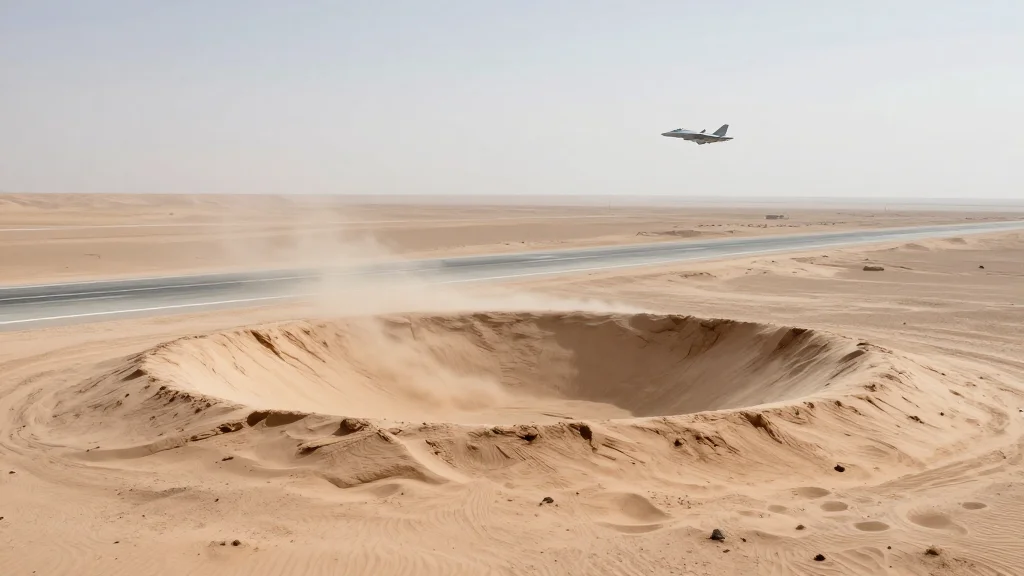
Iran’s Underground Air Force Base Had Been Hit Earlier in the War
Why It Matters
Disabling the underground base hampers Iran’s ability to project air power from a hardened location, altering the military calculus in a region critical to global oil flows. The strike also signals heightened covert engagement by external actors, raising tensions in an already volatile Middle East.
Key Takeaways
- •Eagle 44 underground base struck in late March, disabling runway access
- •Satellite imagery revealed craters at tunnel entrances, trapping aircraft inside
- •Iranian forces placed earth mounds on runway to deter enemy landings
- •Construction of Eagle 44 began 2013; airstrip added eight years later
- •US and Israel declined comment, highlighting secrecy around regional strikes
Pulse Analysis
The emergence of underground air facilities like Iran’s Eagle 44 reflects a broader trend among regional powers to shield critical assets from precision strikes. Built in the remote mountains of Hormozgan province, the base was designed to house fighter jets and drones beneath a fortified ridge, offering protection against conventional bombing while maintaining proximity to the strategic Strait of Hormuz—a chokepoint through which a significant share of world oil passes. Its construction, initiated in 2013 and expanded with an airstrip eight years later, illustrates Iran’s long‑term investment in survivable air capabilities.
The March air strikes, captured only by high‑resolution satellite imagery, reveal a decisive blow to the base’s operational readiness. Craters at tunnel entrances and damaged taxiways effectively seal the runway, preventing aircraft from taking off or landing. Iranian crews responded by scattering earth mounds across the strip, a rudimentary but effective method to impede any follow‑up incursions. The loss of a concealed launch point curtails Iran’s ability to rapidly deploy air assets in the Persian Gulf, potentially shifting the balance of power toward naval forces and allied air units operating from neighboring states.
Beyond the immediate tactical impact, the incident underscores the opaque nature of modern conflict in the Middle East. Neither the United States nor Israel confirmed involvement, yet the precision of the strike and the timing suggest coordinated intelligence efforts. As satellite monitoring becomes more accessible, covert facilities may face increasing exposure, prompting a reassessment of underground construction as a viable defense strategy. Stakeholders in energy markets and defense planning will be watching closely to gauge how this development influences regional stability and the security of vital shipping lanes.
Iran’s underground Air Force base had been hit earlier in the war
Comments
Want to join the conversation?
Loading comments...