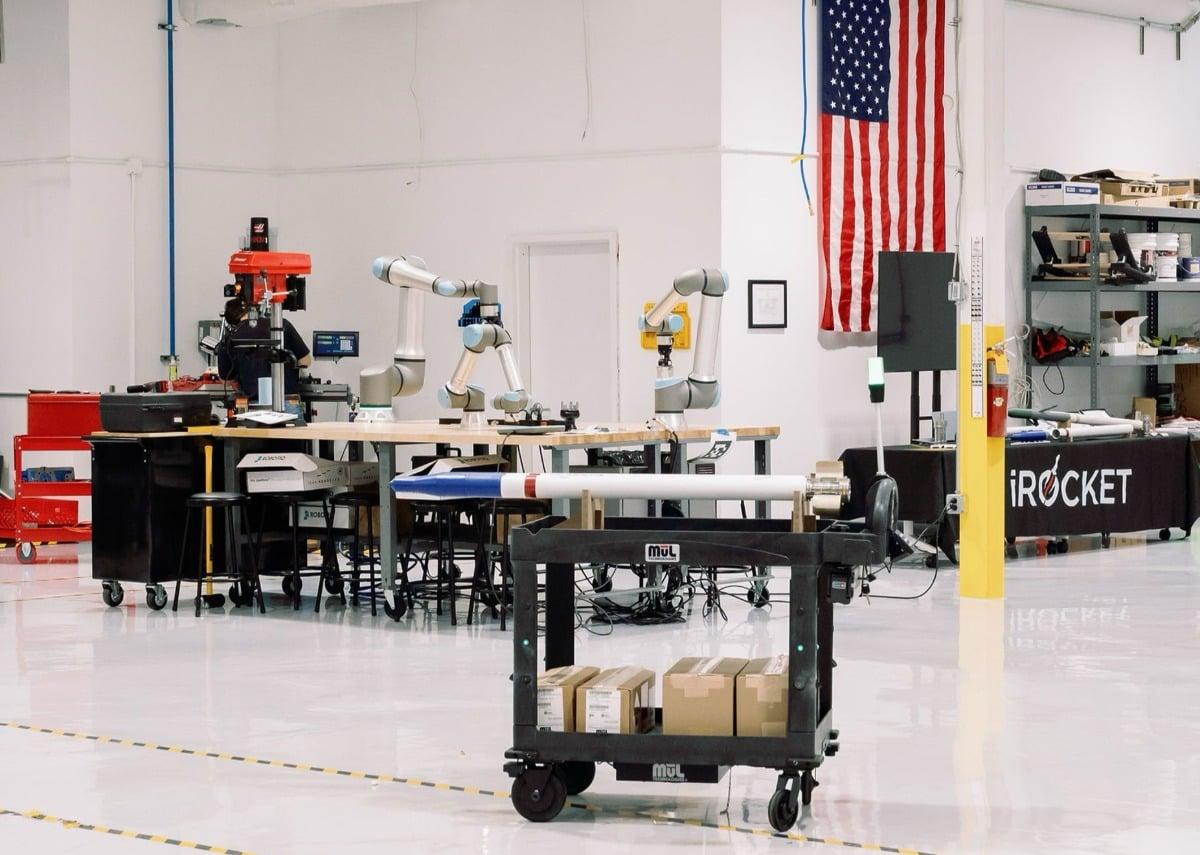
IRocket Wins $150M US Army Deal to Mass-Produce Guided Rockets
Why It Matters
The program gives the Army a scalable, low‑cost precision munition, preserving expensive missile stocks while enhancing counter‑UAS capability. It also showcases a new manufacturing paradigm that could reshape the defense industrial base’s surge capacity.
Key Takeaways
- •iRocket contract valued between $30M and $150M for guided rockets.
- •Factory ONE aims to produce one propellant every five minutes.
- •Annual output target of up to 97,000 laser‑guided Hydra‑70 units.
- •Guided rockets cost far less than $150k‑$200k Hellfire missiles.
- •Initiative supports U.S. shift toward affordable, high‑volume counter‑drone munitions.
Pulse Analysis
The U.S. military’s recent engagements have exposed a glaring cost imbalance: cheap, proliferating drones are being neutralized with precision weapons that cost tens of times more. In the Iran theater and Ukraine’s protracted fight, each Hellfire missile—priced between $150,000 and $200,000—has been expended to destroy a target that may cost a few thousand dollars at most. This disparity erodes stockpiles and inflates operational budgets, prompting senior Army planners to prioritize munitions that deliver pinpoint accuracy without the premium price tag.
iRocket’s solution repurposes the decades‑old Hydra‑70 70 mm rocket, a workhorse that has seen service since the 1940s, by adding a laser‑guidance kit that transforms it into a precision counter‑UAS weapon. The guidance package locks onto a laser designator, enabling reliable hits on small aerial platforms that an unguided rocket would miss. What sets the program apart is the “Factory ONE of the Future” production line, which integrates robotics, digital twins, and real‑time quality analytics to churn out a propellant every five minutes, scaling to roughly 97,000 units annually.
The contract, estimated at $30‑$150 million, signals a broader procurement shift toward affordable, high‑volume munitions across the services. By demonstrating that automated, surge‑ready factories can meet the tempo of modern conflicts, iRocket may influence future acquisition strategies and encourage other defense firms to adopt similar lean manufacturing models. For the industry, the deal underscores the growing market for laser‑guided retrofit kits and the strategic importance of supply‑chain resilience, potentially reshaping how the United States equips its forces for the drone‑saturated battlefields of the 2020s.
iRocket wins $150M US Army deal to mass-produce guided rockets
Comments
Want to join the conversation?
Loading comments...