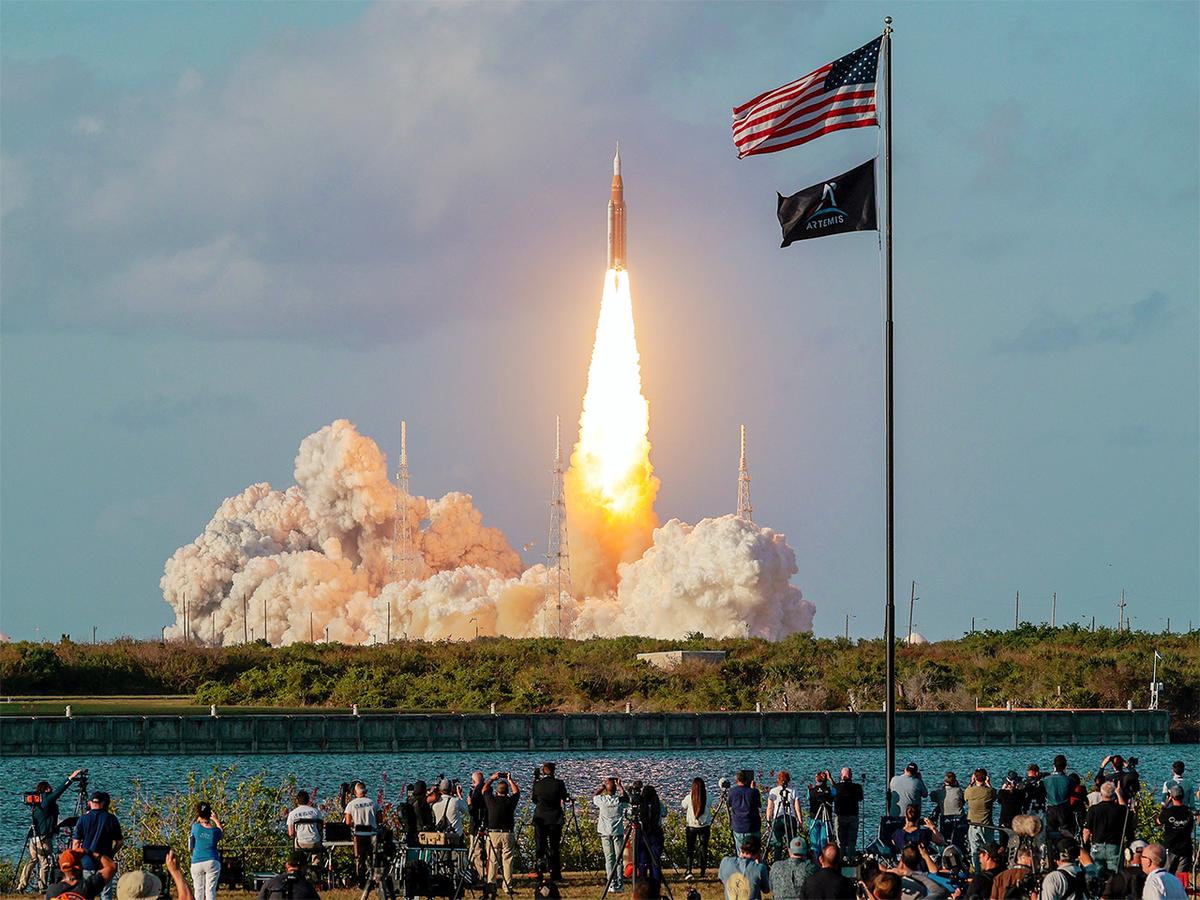
Is It a Bird? Is It a Plane? No, It’s a Rapidly Evolving Space Race
Why It Matters
Escalating competition in orbit threatens the safety of critical communications, navigation and intelligence services, and could spark inadvertent conflict as debris and electronic attacks proliferate. Policymakers and industry leaders must address the security‑congestion nexus before low‑Earth orbit becomes unusable.
Key Takeaways
- •Artemis II highlights cooperative ambition but space security tension rises
- •US, China, Russia, India test anti‑satellite weapons, increasing debris risk
- •Europe invests in patrol satellites, laser sensors, encrypted constellations
- •Iran employs spy satellite to target US sites, linking space to ground
- •Over 14,000 satellites and 120 million debris fragments crowd low‑Earth orbit
Pulse Analysis
The post‑Artemis II era has exposed a stark contrast between the romantic notion of a shared frontier and the hardening reality of a militarized orbital domain. While the 1967 Outer Space Treaty still bans weapons of mass destruction in space, it offers no guidance on conventional anti‑satellite systems or cyber‑enabled attacks. As the United Nations grapples with an open‑ended working group to recommend safeguards, the gap between diplomatic rhetoric and on‑the‑ground security planning widens, prompting U.S. Space Command to draft war‑fighting doctrines for the first major conflict beyond Earth.
Recent years have seen a surge in kinetic and non‑kinetic tests: China’s coordinated "orbital dogfights," Russia’s two‑year shadowing of a U.S. reconnaissance platform, and India’s anti‑satellite demonstrations. Europe is not idle; France is fielding patrol satellites, the United Kingdom is funding laser‑threat sensors, and Germany is building an encrypted military constellation. The integration of space assets into conventional warfare is starkly illustrated by Iran’s acquisition of a Chinese spy satellite to monitor U.S. bases, a move that blurs the line between orbital surveillance and ground‑level strike coordination.
Orbit congestion compounds the security dilemma. With more than 14,000 operational satellites and roughly 120 million debris fragments in low‑Earth orbit, even a centimetre‑sized object can cripple multi‑billion‑dollar platforms. Commercial operators like Starlink are already reconfiguring constellations to lower collision risk, yet the prevailing response among great powers is to harden assets—deploying redundant constellations, expanding electronic‑warfare suites, and building resilient ground stations. Without a robust, multilateral framework that couples arms control with debris mitigation, the orbital commons risk becoming a battlefield where competition eclipses cooperation, jeopardizing the very services that underpin the global economy.
Is it a bird? Is it a plane? No, it’s a rapidly evolving space race
Comments
Want to join the conversation?
Loading comments...