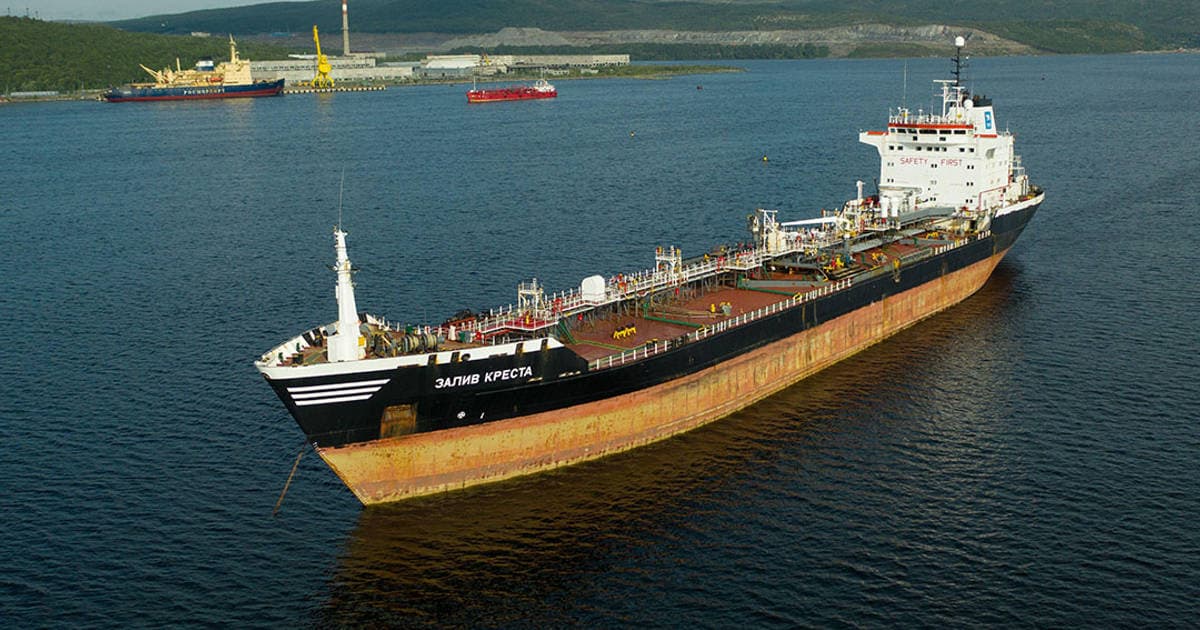
Is the Shadow Fleet Rallying ‘Round the Russian Flag?
Why It Matters
Direct Russian flag registration reduces the effectiveness of Western sanctions tools, making it harder to disrupt oil exports and increasing environmental and geopolitical risks.
Key Takeaways
- •Shadow fleet moves ~70% of Russia's seaborne crude, generating $85 bn annually
- •Direct Russian flag registration rose sharply in late‑2025, then slowed early‑2026
- •EU/UK expanded oil‑price cap and vessel listings, increasing enforcement costs
- •Flag‑hop to weak registries adds costly intermediaries and detention risk
- •Proposed high‑risk flag registry list could tighten financial‑sector sanctions compliance
Pulse Analysis
The shadow fleet has become Russia’s lifeline, shuttling nearly three‑quarters of its crude and delivering an estimated $85 billion in annual revenue. Western attempts to choke this flow—most notably the G7 oil‑price cap—relied on Russia’s dependence on Western insurance, financing and port services. As Moscow built a parallel ecosystem of weak‑flag registries and shell companies, enforcement grew increasingly complex, prompting the EU and UK to broaden vessel listings and tighten price‑cap mechanisms. Yet the core challenge remains: without a clear jurisdictional hook, sanctions lose their teeth.
In late 2025, pressure from U.S. and EU interdictions forced a segment of the fleet to hoist the Russian flag, a move that momentarily heightened the Kremlin’s control but also exposed vessels to direct state protection and potential diplomatic fallout. The high‑profile boarding of the *Bella 1* (later *Marinera*) illustrated the legal gray zone surrounding mid‑pursuit re‑flagging. While the spike in Russian‑flagged ships has since tapered—suggesting Moscow’s reluctance to shoulder full liability—the episode underscores a critical vulnerability: once vessels fly a state flag, traditional tools like detentions and insurance denials become far riskier.
Policymakers are now eyeing a two‑pronged approach. First, integrating flag‑registry oversight into FATF evaluations could close loopholes by pressuring jurisdictions that enable sanctions evasion. Second, the EU and UK could publish a high‑risk flag registry list, giving banks and maritime service providers a concrete compliance trigger. Such measures would re‑inject leverage into the sanctions toolkit, curtail the shadow fleet’s operational flexibility, and mitigate the environmental hazards posed by aging, poorly inspected tankers. Continued diplomatic pressure on permissive registries, combined with targeted financial restrictions, offers the most viable path to constraining Russia’s illicit oil shipments.
Is the Shadow Fleet Rallying ‘Round the Russian Flag?
Comments
Want to join the conversation?
Loading comments...