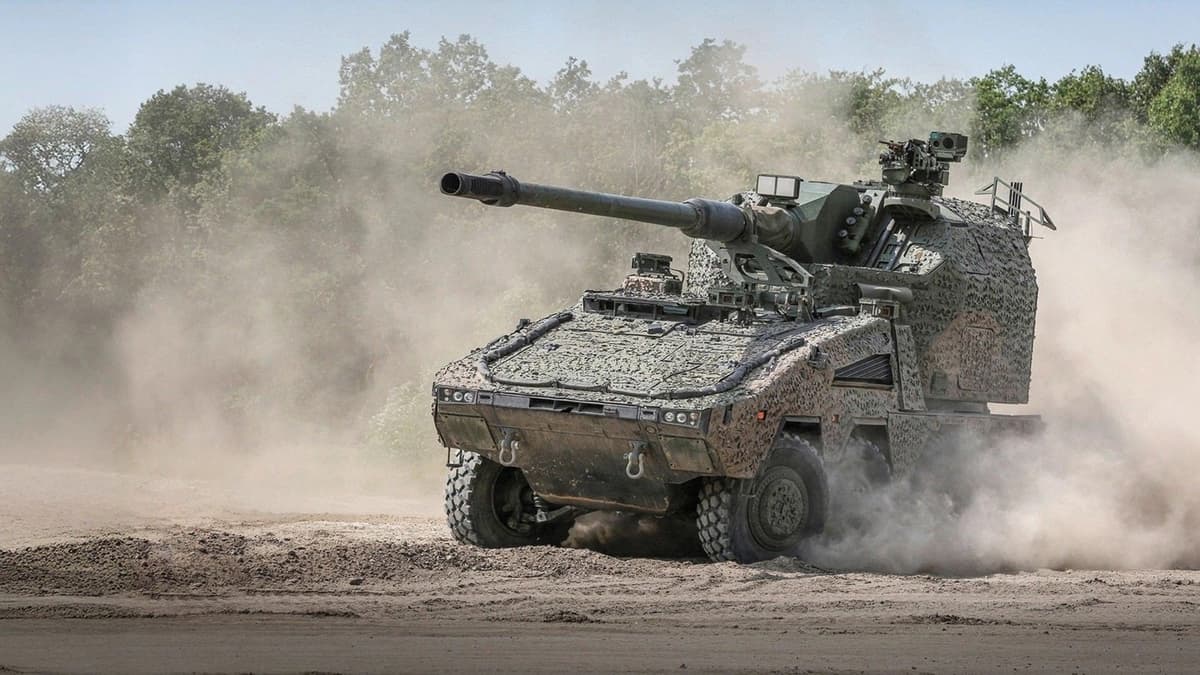
Is There a Risk with the UK’s Expedited RCH 155 Artillery Order?
Companies Mentioned
Why It Matters
Accelerating the RCH 155 rollout fills a critical long‑range fire gap but risks operational delays if testing and production overlap, impacting the UK’s artillery readiness and defence‑industry timelines.
Key Takeaways
- •UK orders 72 RCH 155 howitzers for $1.35 bn
- •Delivery slated for 2028, overlapping testing phase
- •Unit cost $16.9 m, higher than Archer’s $10.1 m
- •Two‑crew design eases recruitment pressures
- •AS90 donation leaves gap, Archer interim retired
Pulse Analysis
The UK’s fast‑track acquisition of the RCH 155 reflects a broader shift toward modular, wheeled artillery that can keep pace with modern, high‑tempo operations. By mounting an unmanned gun module on the Boxer 8×8 chassis, the system offers up to 70 km range and eight rounds per minute while requiring only two crew members—a notable advantage for a force grappling with recruitment shortfalls. The contract’s $1.35 bn price tag underscores a willingness to invest in next‑generation firepower, even as each unit costs roughly $16.9 m, noticeably above the $10.1 m price of the interim Archer platform it will replace.
However, the decision to forego the previously scheduled early‑capability demonstrators introduces a risk profile reminiscent of the Ajax programme, where production continued amid unresolved technical issues. Simultaneous delivery and testing compresses the feedback loop, potentially leading to fielding delays, software glitches, or logistical bottlenecks. For the Ministry of Defence, the trade‑off is between regaining long‑range fire capability quickly and ensuring the platform’s reliability before it reaches frontline units.
Strategically, the RCH 155 purchase signals the UK’s intent to maintain a robust, export‑friendly artillery portfolio, leveraging domestic manufacturing at Rheinmetall’s Telford facility and steel from Sheffield Forgemasters. The partnership with KNDS also deepens European defence collaboration, positioning the UK to supply allied forces or future donors. As NATO allies reassess artillery modernization, the RCH 155 could become a benchmark for cost‑effective, high‑mobility fire solutions, provided the UK can navigate the accelerated rollout without compromising operational readiness.
Is there a risk with the UK’s expedited RCH 155 artillery order?
Comments
Want to join the conversation?
Loading comments...