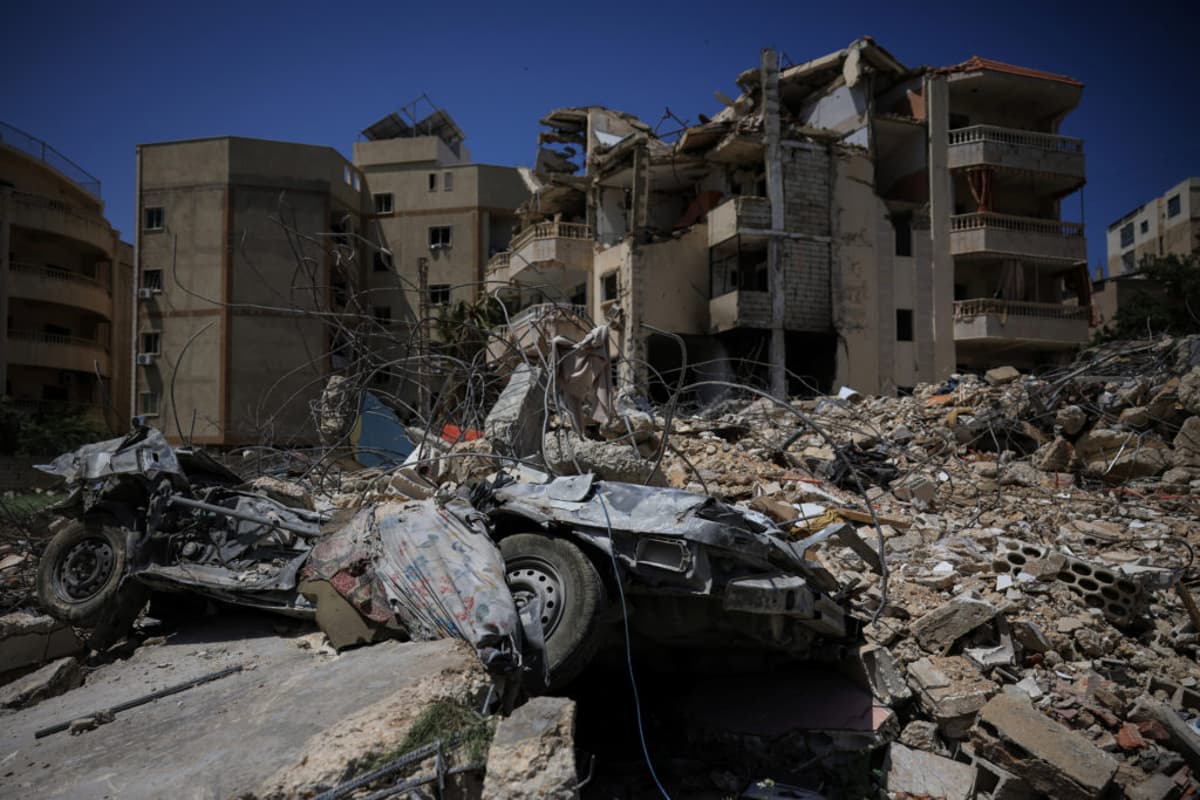
Israel Agrees to 10-Day Ceasefire in Lebanon as U.S. Pushes for Broader Peace Deal
Companies Mentioned
Why It Matters
The cease‑fire could de‑escalate a volatile front and test U.S. diplomatic leverage in the Middle East, while any disruption to the Strait of Hormuz threatens worldwide oil markets.
Key Takeaways
- •Trump brokered 10‑day Israel‑Hezbollah ceasefire.
- •Hezbollah has not confirmed compliance with ceasefire.
- •Netanyahu demands Israeli presence remain; rejects Hezbollah conditions.
- •U.S. pushes first Israeli‑Lebanese leaders meeting in 44 years.
- •Ceasefire coincides with heightened Iran‑related Strait of Hormuz tensions.
Pulse Analysis
The ten‑day cease‑fire announced by President Trump marks a rare diplomatic overture in a conflict that has lingered for decades. By positioning the United States as the intermediary, Washington hopes to reshape its role from a regional back‑stop to a peace‑broker, leveraging the unprecedented Israeli‑Lebanese leaders’ summit. While the truce offers immediate humanitarian relief—allowing medical aid to reach bomb‑hit towns and restoring a critical bridge—it remains fragile without Hezbollah’s explicit commitment, leaving the risk of renewed hostilities high.
Beyond the immediate battlefield, the cease‑fire intersects with broader strategic calculations. Netanyahu’s refusal to withdraw Israeli forces and his vision of a permanent security zone signal a long‑term occupation stance, complicating any comprehensive settlement. Tehran’s continued influence, especially its capacity to threaten the Strait of Hormuz, adds another layer of pressure. The United States’ “Operation Economic Fury” and its naval presence aim to deter Iranian aggression, yet the resulting bottleneck of roughly 800 commercial vessels underscores the delicate balance between coercive diplomacy and global trade stability.
Energy markets feel the ripple effects acutely. With the Strait of Hormuz—a chokepoint for a fifth of world oil—under threat, the International Energy Agency warns of a looming jet‑fuel shortage in Europe, potentially compressing a six‑week supply window. A sustained cease‑fire could provide a window for diplomatic de‑escalation, easing shipping constraints and tempering price spikes. However, if the truce collapses, the region could plunge deeper into an energy crisis that would reverberate across U.S. and global economies, reinforcing the high stakes of this diplomatic gamble.
Israel agrees to 10-day ceasefire in Lebanon as U.S. pushes for broader peace deal
Comments
Want to join the conversation?
Loading comments...