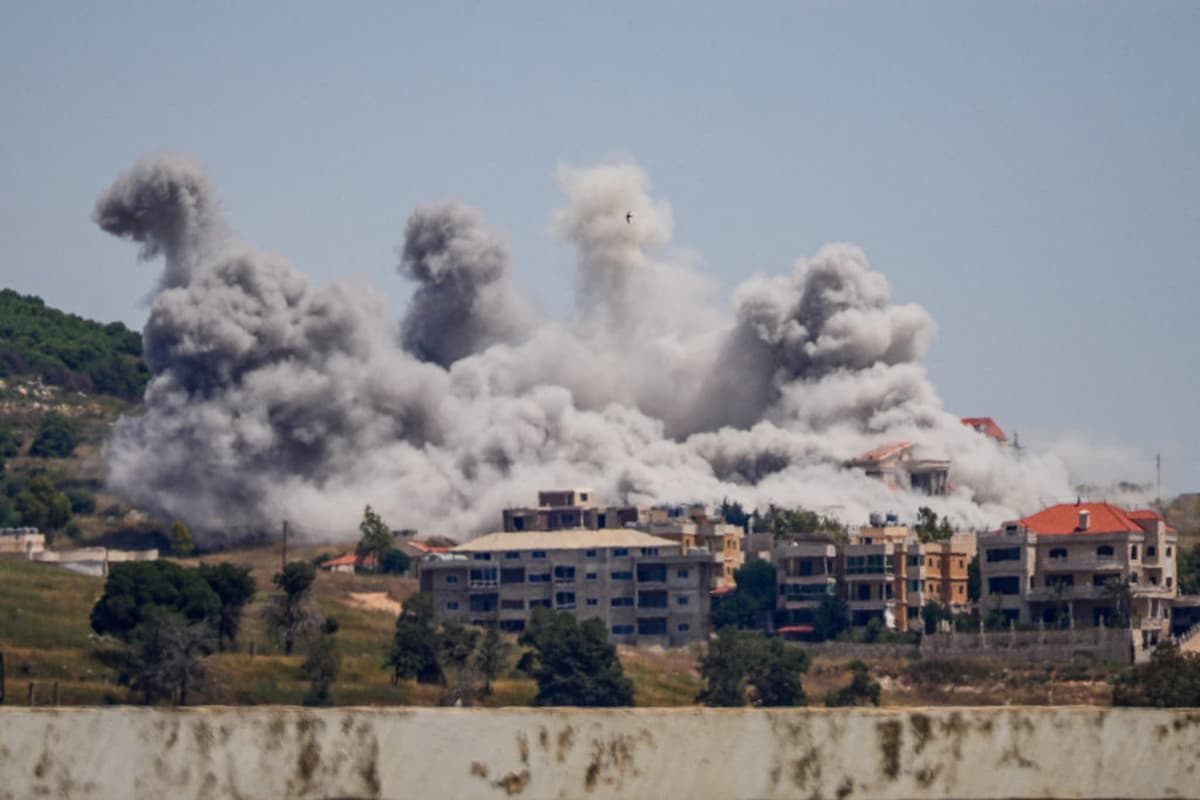
Israel and Lebanon Agree to Renew Fragile Ceasefire, Create Lebanese Security Zones
Why It Matters
The renewal ties regional stability to Hezbollah’s behavior, offering a potential de‑escalation pathway that could curb Iranian leverage and improve security for businesses operating in the volatile Levant.
Key Takeaways
- •Ceasefire renewal hinges on Hezbollah halting fire south of Litani
- •Lebanese army to assume control of newly created pilot security zones
- •U.S. mediated talks mark fourth round of diplomatic engagement
- •Iran excluded from talks but remains influential through Hezbollah support
- •Agreement aims to prevent external actors from holding Lebanon’s future hostage
Pulse Analysis
The Israel‑Lebanon frontier has long been a flashpoint, with periodic skirmishes threatening to ignite broader regional conflict. Renewing the cease‑fire after months of intermittent exchanges signals a rare diplomatic opening, especially given the complex web of state and non‑state actors that have historically fueled hostilities. By anchoring the truce to a concrete condition—Hezbollah’s cessation of fire south of the Litani River—both sides aim to transform a fragile pause into a more predictable security environment, a prerequisite for any long‑term peace framework.
Central to the agreement are the newly proposed pilot security zones, which will be placed under the exclusive authority of the Lebanese armed forces. This arrangement seeks to marginalize Hezbollah’s operational freedom while preserving Lebanese sovereignty, a delicate balance that the United States has brokered through four intensive rounds of talks. Although Iran is not a direct participant, its patronage of Hezbollah remains a strategic wildcard; the deal’s success will hinge on Tehran’s willingness to restrain its proxy without direct involvement, a scenario that could reshape Tehran’s regional calculus.
For investors and multinational corporations, the cease‑fire renewal offers a tentative but meaningful reduction in geopolitical risk across the Eastern Mediterranean. Stability in Lebanon and southern Israel can lower insurance premiums, encourage tourism, and revive cross‑border trade initiatives that have been dormant for years. Moreover, a de‑escalated security landscape may accelerate reconstruction funding and foreign direct investment, especially in Lebanon’s battered infrastructure sectors. While the agreement is still fragile, its implementation could set a precedent for diplomatic conflict resolution in a region where economic prospects are often eclipsed by security concerns.
Israel and Lebanon agree to renew fragile ceasefire, create Lebanese security zones
Comments
Want to join the conversation?
Loading comments...