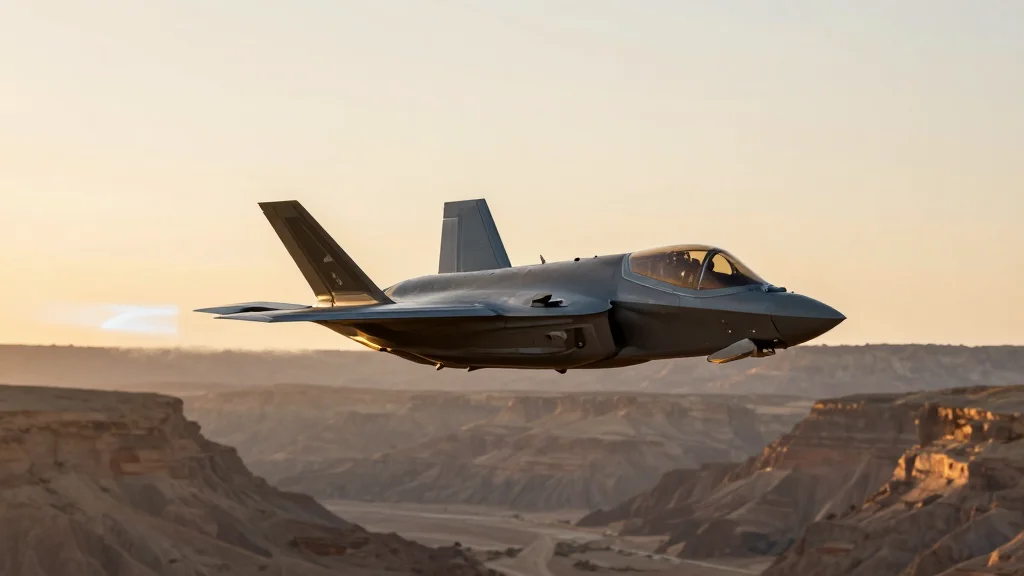
Israel Approves $118 B Expansion of F‑35 and F‑15 Squadrons

Companies Mentioned
Why It Matters
The expansion cements Israel’s qualitative edge in the Middle East, giving it a larger stealth fleet capable of deep‑strike missions and a heavy‑payload platform for long‑range engagements. By doubling both F‑35I and F‑15IA numbers, Israel can sustain multi‑theater operations, deter adversaries, and maintain a credible second‑strike capability, especially as Iran’s missile and drone programs evolve. The deal also deepens U.S.–Israel defence ties, ensuring continued American influence over Israeli procurement choices and technology integration. Beyond regional security, the contracts underscore the resilience of the U.S. defence export ecosystem. Lockheed Martin and Boeing secure high‑value, back‑log‑relieving orders at a time when global demand for advanced fighters is outpacing production capacity. The financing structure, hinging on future U.S. aid frameworks, will test the durability of American security assistance as Israel moves toward greater fiscal self‑reliance.
Key Takeaways
- •Ministerial committee approved a fourth F‑35I squadron and a second F‑15IA squadron.
- •Total programme budget: 350 billion shekels (~$118 billion) over the next decade.
- •F‑35I fleet to reach ~100 aircraft; F‑15IA fleet to double to ~50 aircraft.
- •Contracts valued at tens of billions of shekels (~$30‑$40 billion) pending final pricing.
- •Financing mix of U.S. security assistance and Israeli domestic budget; new aid framework negotiations underway.
Pulse Analysis
Israel’s decision to double its premier fighter fleets reflects a strategic calculus that blends deterrence with operational flexibility. The F‑35I provides stealth penetration, while the F‑15IA offers unmatched payload capacity for conventional and long‑range precision weapons. By fielding both platforms in comparable numbers, the Israeli Air Force can allocate missions based on cost‑effectiveness and threat environment, preserving the high‑cost stealth jets for the most contested airspaces.
From a market perspective, the timing is crucial. Global fighter production lines are already stretched by competing orders from Europe, Asia and the Middle East. Securing these slots now protects Israel from potential delivery delays that could arise from supply‑chain bottlenecks or shifting U.S. export policies. For Lockheed Martin and Boeing, the contracts not only deliver immediate revenue but also lock in long‑term support and upgrade pathways, reinforcing their foothold in a region where rival suppliers, such as Russia’s Sukhoi or France’s Dassault, are seeking inroads.
Looking ahead, the key uncertainty lies in financing. If the forthcoming U.S. aid package excludes procurement funding, Israel may need to absorb the full cost domestically, potentially slowing the acquisition tempo. Conversely, a favorable aid renewal could accelerate deliveries and cement the U.S. as the primary supplier for the next generation of Israeli combat aircraft. Either scenario will shape the balance of power in the Eastern Mediterranean and influence how neighboring states, notably Iran and Saudi Arabia, calibrate their own air‑defence investments.
Israel Approves $118 B Expansion of F‑35 and F‑15 Squadrons
Comments
Want to join the conversation?
Loading comments...