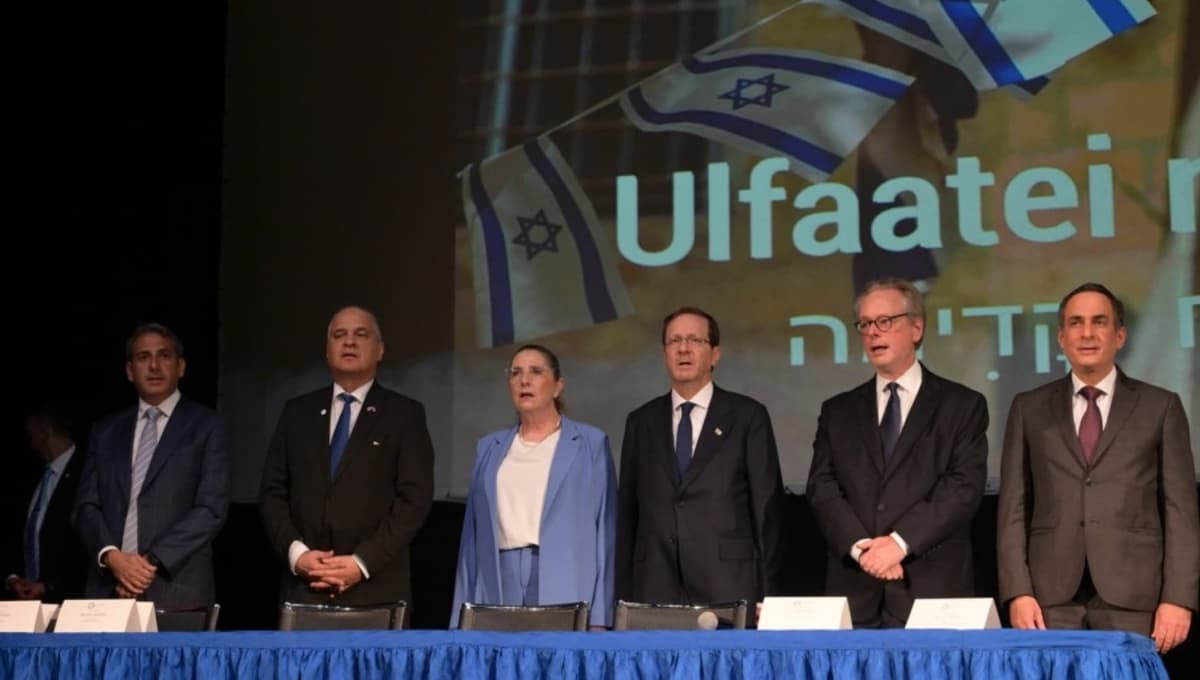
Israel Courts Panama at Moment of Deep Isolation and Maritime Crisis
Companies Mentioned
Why It Matters
The mission ties Israel to a pivotal maritime chokepoint and a UN voting ally, reshaping regional power dynamics and opening a lucrative water‑technology market while signaling a broader Israel‑Latin America security partnership.
Key Takeaways
- •Panama’s UN seat aligns with Israel on Iran‑related resolutions
- •Canal’s water crisis creates demand for Israeli desalination tech
- •Port‑concession dispute pits Chinese firms against U.S.-backed consortium
- •Herzog’s tour knits a conservative Latin‑American security network
Pulse Analysis
The closure of the Strait of Hormuz after the May 2026 Israel‑U.S. strikes on Iran has forced global shippers to reroute through the Panama Canal, instantly boosting its strategic value. With roughly 20% of the world’s oil and LNG previously flowing through Hormuz, the Canal now handles a disproportionate share of Western‑hemisphere trade, making it a focal point for any nation seeking influence over global energy logistics. Israel’s high‑profile visit to the Miraflores locks was a calculated move to portray itself as a champion of maritime freedom, a narrative that resonates with carriers desperate for reliable routes amid the Gulf’s volatility.
Beyond symbolism, Panama’s two‑year non‑permanent seat on the UN Security Council offers Israel a rare diplomatic lever. Panama’s recent abstentions on pro‑Palestinian resolutions and its affirmative vote on a 2026 anti‑Iran resolution signal a shift toward the Washington‑Israel axis. Simultaneously, the island nation grapples with a legal showdown over its Balboa and Cristóbal ports, where Chinese‑backed COSCO’s interests clash with a BlackRock‑led consortium backed by Denmark’s A.P. Møller‑Mærsk and MSC. Israel’s alignment with the Trump‑Washington bloc adds another layer, positioning it as a potential arbitrator in the dispute and a partner in securing the Canal’s operational continuity.
The broader picture is a nascent security and trade coalition across Latin America, anchored by the 2026 "Acuerdos de Isaac" framework first signed by Argentina and Israel. Panama’s water‑management talks with Israel aim to import desalination expertise to alleviate the Canal’s drought‑induced shortfall, a sector where Israel leads globally with 90% wastewater recycling. If successful, the partnership could embed Israeli technology in a critical infrastructure asset, deepening economic ties while reinforcing a geopolitical bloc that aligns with U.S. interests and counters Chinese influence in the region.
Israel courts Panama at moment of deep isolation and maritime crisis
Comments
Want to join the conversation?
Loading comments...