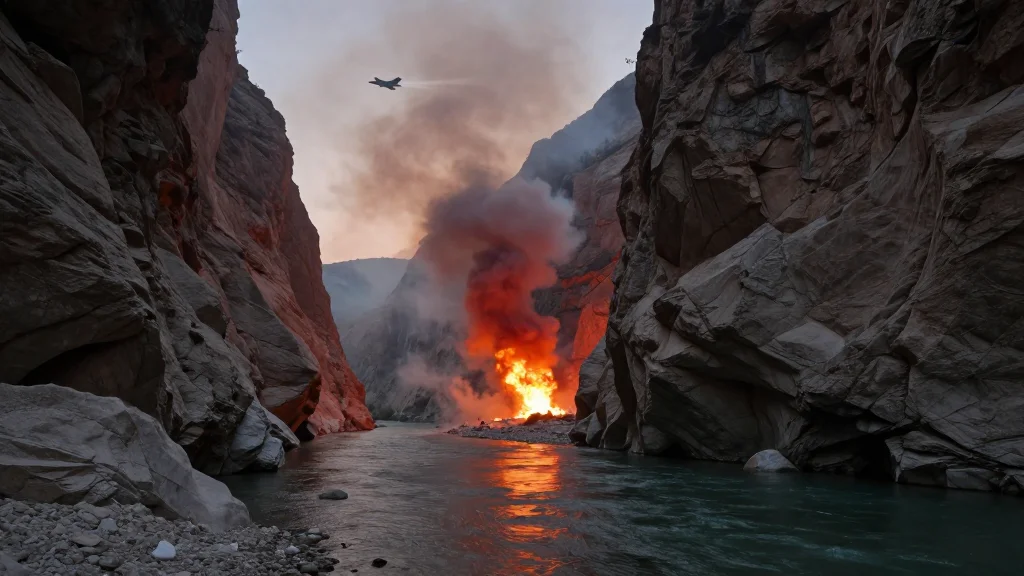
Israel Launches 120+ Airstrikes and Ground Assault Along Litani River, Killing 31 in Lebanon

Why It Matters
The renewed fighting along the Litani River raises the risk of a broader regional conflagration that could involve Iran, Hezbollah, and U.S. forces stationed in the Middle East. For the defense sector, the clash highlights the growing importance of low‑observable drone technology, as Hezbollah’s fiber‑optic drones test Israel’s Iron Dome and other air‑defence systems. The escalation also pressures U.S. policymakers to reconcile support for Israel with the pursuit of a diplomatic settlement with Iran, potentially reshaping arms sales, security assistance, and regional force postures. Moreover, the civilian toll and damage to heritage sites amplify humanitarian concerns, which could trigger international calls for stricter enforcement of cease‑fire agreements. The conflict’s trajectory will influence defense procurement decisions, especially in counter‑UAS capabilities, and could spur renewed investment in intelligence, surveillance, and reconnaissance (ISR) assets to monitor fluid front‑line dynamics.
Key Takeaways
- •Israel conducted >120 airstrikes and ground incursions along Lebanon's Litani River on May 27, 2026.
- •At least 31 civilians killed and 40 wounded, including women and children, per Lebanon's Health Ministry.
- •Hezbollah responded with rockets, artillery and fiber‑optic drones designed to evade Israeli defenses.
- •Prime Minister Benjamin Netanyahu said the IDF is "seizing dominant terrain" and fortifying a security strip.
- •The clash threatens to derail U.S.–Iran cease‑fire talks and could expand the regional conflict.
Pulse Analysis
The Litani River flashpoint underscores a shift in how asymmetric forces are leveraging emerging drone technologies to offset conventional military superiority. Hezbollah’s deployment of fiber‑optic drones—essentially low‑cost, high‑speed projectiles that can slip through radar gaps—poses a new challenge for Israel’s layered air‑defence architecture, which has historically relied on systems like Iron Dome and David's Sling. Defense contractors will likely see a surge in demand for counter‑UAS solutions that can detect and neutralise such low‑observable threats, prompting accelerated R&D in AI‑driven sensor fusion and directed‑energy weapons.
Strategically, the escalation tests the limits of U.S. diplomatic leverage. Washington’s dual track—supporting Israel’s right to self‑defence while negotiating a cease‑fire with Tehran—faces a classic security dilemma: any perceived weakening of Israel’s posture could embolden Hezbollah, yet a hard‑line Israeli approach risks pulling the United States into a wider confrontation with Iran’s proxy network. The outcome may reshape future U.S. arms sales to Israel, potentially conditioning further deliveries on de‑escalation milestones.
Finally, the civilian casualties and damage to cultural heritage sites amplify the political cost of continued hostilities. International pressure could force both sides back to the negotiating table, but only if a credible enforcement mechanism is established. For defense planners, the episode serves as a reminder that kinetic operations in densely populated, politically sensitive environments must be paired with robust diplomatic outreach to prevent strategic overreach and unintended escalation.
Israel launches 120+ airstrikes and ground assault along Litani River, killing 31 in Lebanon
Comments
Want to join the conversation?
Loading comments...