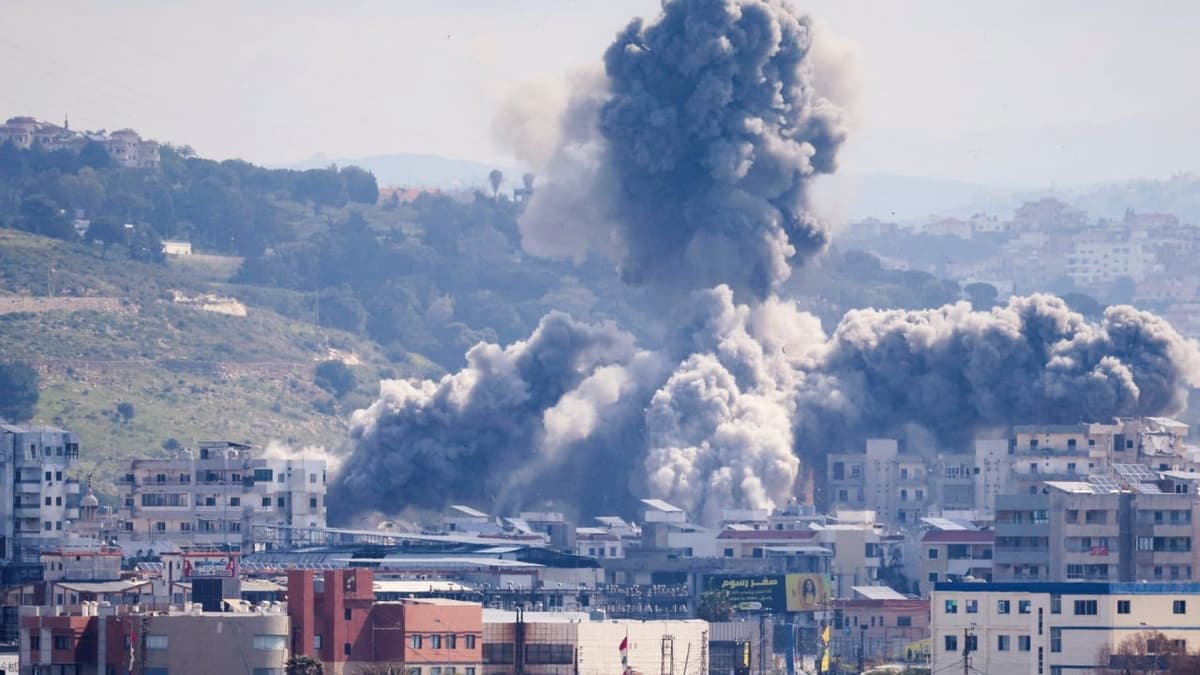
Israel Says Battle in Lebanon Continues Despite Iran War Truce
Why It Matters
The clash underscores how narrowly scoped cease‑fires can leave flashpoints like Lebanon vulnerable, threatening broader regional stability and global energy supplies. Continued Israeli operations risk escalating the Israel‑Iran‑Hezbollah nexus despite diplomatic progress elsewhere.
Key Takeaways
- •Israel renewed airstrikes in southern Lebanon April 8, 2026
- •US‑Iran cease‑fire excludes Lebanon, Netanyahu says conflict continues
- •Over 1,500 killed, more than 1 million displaced in Lebanon
- •Hezbollah claims “historic victory” while urging civilians to stay put
- •International leaders press for Lebanon’s inclusion in cease‑fire talks
Pulse Analysis
The April 8 Israeli offensive illustrates a critical loophole in the newly brokered U.S.–Iran cease‑fire. While Washington and Tehran agreed to suspend hostilities for two weeks, the language explicitly omits Lebanon, allowing Israel to pursue its stated objective of a security zone up to the Litani River. This selective application highlights the challenges of crafting multilateral truces in a fragmented Middle‑East where bilateral agreements often fail to bind third‑party actors, especially non‑state militias like Hezbollah.
Humanitarian fallout in Lebanon is intensifying as strikes resume. Casualties have risen past 1,500, and more than one‑million civilians remain displaced, straining already overburdened shelters and health services. Hezbollah’s rhetoric of a "historic victory" seeks to rally domestic support, yet its pause in rocket fire suggests a tactical alignment with the broader Iran‑U.S. de‑escalation. The dual narrative fuels uncertainty among displaced families, complicating return decisions and risking a protracted humanitarian crisis that could spill over into neighboring Syria and Jordan.
Diplomatically, the episode tests the resolve of key international actors. France and the United Nations have urged that any lasting cease‑fire must explicitly include Lebanon, warning that exclusion could reignite a wider conflagration. For U.S. policymakers, balancing the Iran truce with Israel’s security concerns will shape future negotiations and influence global oil markets, as renewed fighting threatens supply routes in the Eastern Mediterranean. Observers predict that unless a comprehensive, region‑wide agreement is reached, Lebanon will remain a volatile flashpoint capable of derailing broader peace efforts.
Israel says battle in Lebanon continues despite Iran war truce
Comments
Want to join the conversation?
Loading comments...