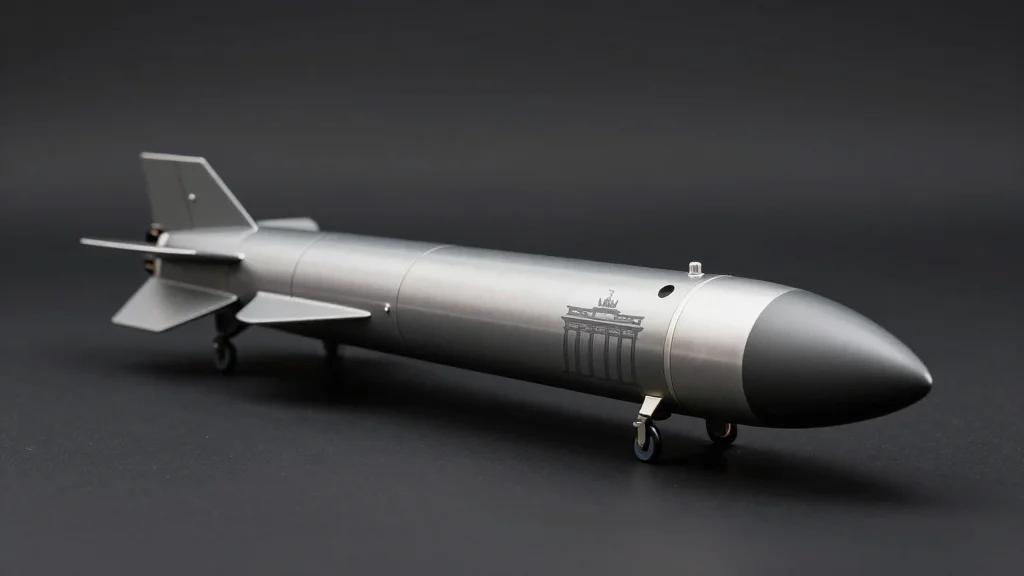
Israel Sends Arrow Missiles to Germany Amid Iran War, Sparking Domestic Outcry

Why It Matters
The Arrow shipments illustrate how high‑value defence exports can create strategic dependencies while exposing exporting nations to domestic political risk. For Israel, the $6.7 billion deal secures a vital revenue stream and expands its industrial base, but it also raises questions about the trade‑off between export income and the readiness of its own missile shield. In Europe, Germany’s acquisition of exo‑atmospheric capability signals a shift toward diversified, multilateral defence architectures that rely on Israeli technology, potentially altering NATO’s procurement calculus. The controversy may prompt tighter export‑control scrutiny and spark broader debates about the ethics of selling life‑saving weapons during active conflicts. The episode also underscores the growing importance of missile‑defence interoperability in a region where long‑range ballistic threats are proliferating. By integrating Arrow‑3 into its air‑defence network, Germany not only enhances its own security but also contributes to a layered European shield that could deter future missile attacks. However, the domestic backlash in Israel highlights the political cost of such arrangements, suggesting that future deals will need to balance commercial incentives with transparent risk assessments to maintain public trust.
Key Takeaways
- •Israel delivered Arrow missiles to Germany during the Iran‑Israel war, a $6.7 billion contract.
- •The deals are projected to increase Israel's Arrow production capacity by 7‑10×.
- •German Air Defence Commander Col. Dennis Kruger said the system will enable further European sales.
- •Critics argue using David’s Sling instead of Arrow contributed to civilian casualties in Iran attacks.
- •The Arrow‑3 system gives Germany exo‑atmospheric interception capability, reshaping NATO defence planning.
Pulse Analysis
The Arrow export saga reveals a classic dilemma for small‑state defence exporters: leverage lucrative contracts to sustain a high‑tech industrial base, while safeguarding the very assets that underpin national security. Israel’s decision to honour the German order, despite an active missile threat from Iran, reflects a calculated gamble that the long‑term production boost and strategic partnership outweigh the short‑term operational risk. Historically, Israel has used export revenue to fund R&D and maintain a competitive edge; the current deal continues that pattern, but the public backlash suggests a growing intolerance for perceived sacrifice of civilian safety.
From a market perspective, the influx of German capital could accelerate the Arrow’s evolution, potentially spawning new variants (Arrow‑4, Arrow‑5) that could be marketed to other NATO members. This could erode the United States’ dominance in high‑altitude missile defence, prompting a re‑evaluation of U.S. export policies and collaborative programmes. Yet the political cost in Israel may force a recalibration of export‑control frameworks, perhaps introducing clauses that reserve a minimum stockpile for domestic use during crises. For Germany, the acquisition cements its role as a hub for European missile‑defence integration, but it also ties Berlin to the geopolitical fortunes of Israel, a factor that could complicate its diplomatic posture amid Middle‑East volatility.
In the coming months, parliamentary hearings in Israel and strategic reviews within the Bundeswehr will likely test the durability of this partnership. If the Arrow deliveries prove operationally successful for Germany, they could pave the way for a broader European‑Israeli defence corridor, reshaping procurement dynamics across the continent. Conversely, sustained domestic opposition in Israel could pressure the government to impose stricter limits on future exports, potentially curbing the growth trajectory of its defence industry.
Israel Sends Arrow Missiles to Germany Amid Iran War, Sparking Domestic Outcry
Comments
Want to join the conversation?
Loading comments...