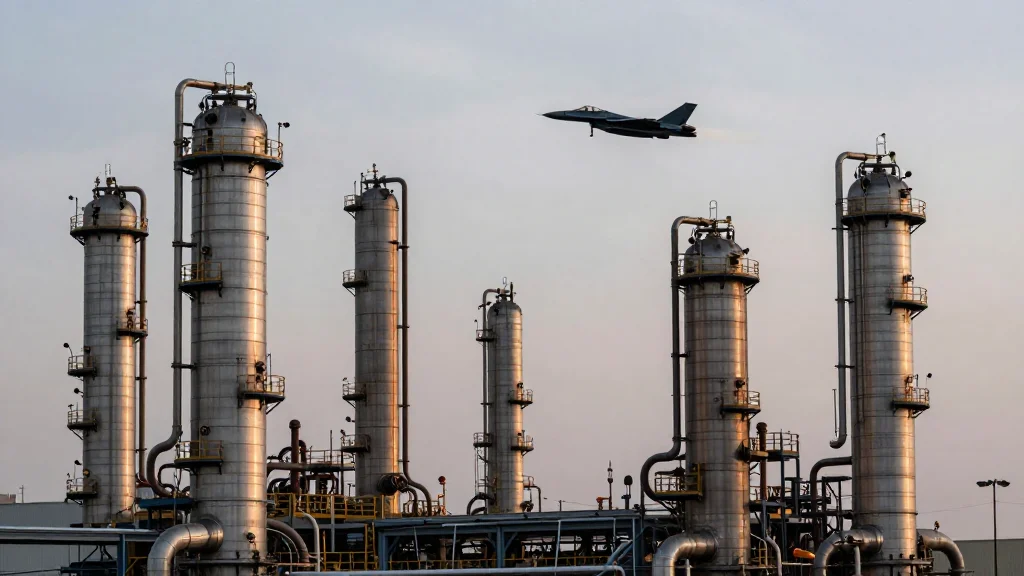
Israel Strikes Iran’s South Pars Gas Complex as Trump Threatens Nationwide Bombing

Why It Matters
The convergence of Israeli strikes on Iran’s energy backbone, U.S. threats to annihilate civilian infrastructure, and Tehran’s mass mobilization of civilians marks a pivotal escalation in a conflict that already threatens global oil supplies. Disruption of South Pars could cripple Iran’s domestic power generation and petrochemical export revenues, while a U.S. bombing campaign would set a precedent for targeting civilian infrastructure, potentially redefining the legal limits of modern warfare. Beyond immediate military outcomes, the standoff threatens to destabilize the Strait of Hormuz, a chokepoint through which roughly one‑fifth of the world’s oil passes. Prolonged disruption could trigger a sharp spike in energy prices, strain global supply chains, and force major economies to reassess energy security strategies, accelerating shifts toward alternative fuels and strategic reserves.
Key Takeaways
- •Israel’s second strike on South Pars disables facilities responsible for 85% of Iran’s petrochemical exports.
- •President Trump threatens to bomb every Iranian power plant and bridge by 8 p.m. EDT Tuesday.
- •Iran calls on 14 million citizens to form human chains around power plants as a civilian defense measure.
- •Saudi Arabia closed the King Fahd Causeway after Iranian missile attacks, highlighting regional spillover.
- •Brent crude rose above $111 per barrel, reflecting market anxiety over potential Strait of Hormuz disruptions.
Pulse Analysis
The latest Israeli attack on South Pars underscores a strategic shift from targeting Iranian military assets to crippling the economic lifelines that fund the IRGC’s regional proxies. By striking the petrochemical hub, Israel aims to erode Iran’s revenue streams, a tactic reminiscent of the 1999 NATO campaign in Yugoslavia where power distribution, not generation, was targeted to limit civilian hardship while preserving essential services. However, the current threat level is markedly higher; President Trump’s explicit promise to annihilate all power plants and bridges crosses the threshold from strategic pressure to indiscriminate devastation, raising the specter of a new doctrine of total war.
Legal experts warn that such a campaign would likely violate the Geneva Conventions, which prohibit collective punishment and the targeting of civilian infrastructure unless it offers a definite military advantage. The U.S. administration’s rhetoric, therefore, risks isolating Washington diplomatically, especially as European allies like France have already condemned the potential attacks as breaches of international law. This diplomatic friction could limit coalition support for any U.S. operation, constraining the president’s options and potentially emboldening Iran’s retaliatory posture.
Looking ahead, the conflict’s trajectory will hinge on whether diplomatic overtures can bridge the widening gap between Tehran’s demands and Washington’s ultimatum. A failure to reach a settlement before the deadline could trigger a cascade of strikes, drawing in regional actors such as Saudi Arabia and the United Arab Emirates, and possibly prompting NATO to reconsider its engagement rules in the Middle East. For defense planners, the situation highlights the need to reassess contingency plans for energy infrastructure protection and to prepare for rapid escalation scenarios that could involve both kinetic and cyber dimensions.
Israel Strikes Iran’s South Pars Gas Complex as Trump Threatens Nationwide Bombing
Comments
Want to join the conversation?
Loading comments...