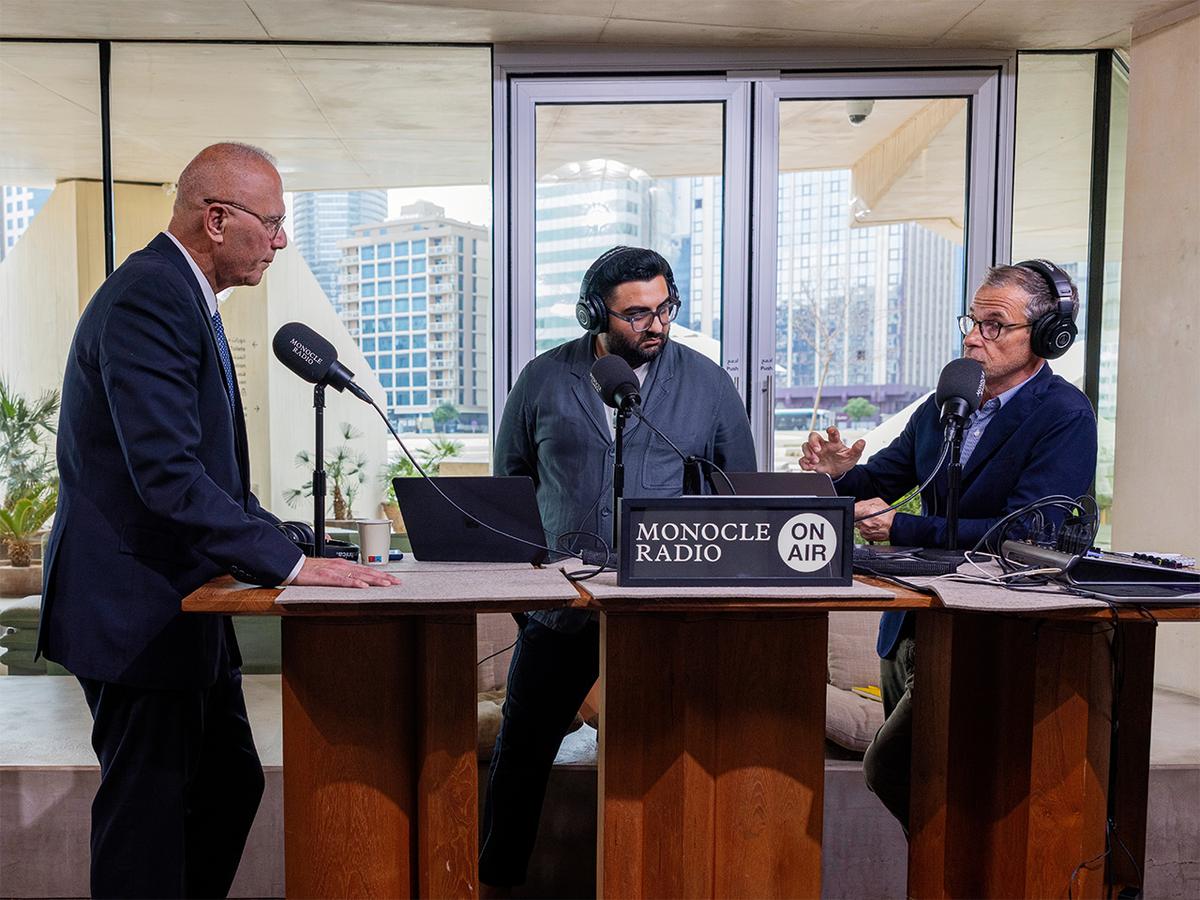
Israeli Ambassador to the UAE, Yossi Avraham Shelley, on What It Will Take to End Strikes on Lebanon
Why It Matters
The stance signals prolonged regional instability, affecting defense spending, energy markets, and cross‑border trade, while the resilience of the Abraham Accords underpins economic ties and investment flows between Israel and Gulf states.
Key Takeaways
- •Israel says strikes on Lebanon continue despite ceasefire announcement
- •Ambassador Shelley links Lebanon conflict to Hezbollah's Iranian ties
- •First Israeli‑Lebanese high‑level talks scheduled in Washington
- •Abraham Accords remain strong, with UAE ties deepening amid war
- •Israel warns civilians before strikes, citing Hezbollah embedded in populated areas
Pulse Analysis
The interview with Yossi Avraham Shelley comes at a pivotal moment in the Middle East’s security landscape. Israel’s campaign against Iran’s nuclear enrichment facilities and its long‑range ballistic‑missile program has already reduced Tehran’s capability by an estimated 60‑70%, according to Israeli officials. Yet the conflict has spilled over into Lebanon, where Hezbollah operates as a de‑facto extension of Iranian strategy. Shelley insists that any cease‑fire that excludes Hezbollah is merely a tactical pause, because the militia’s entrenched political role and access to sophisticated weaponry keep the front line volatile.
Simultaneously, diplomatic channels are testing their resilience. For the first time in decades, Israeli and Lebanese representatives are meeting in Washington, a signal that back‑channel negotiations may be gaining traction despite ongoing hostilities. Shelley also highlighted the durability of the Abraham Accords, noting that Israel‑UAE economic cooperation—ranging from technology joint ventures to energy projects—has not only survived but is deepening. This continuity reassures multinational corporations and investors that the Gulf‑Israel corridor remains a viable conduit for trade, talent exchange, and regional supply‑chain diversification.
The broader business implications are significant. Persistent uncertainty drives defense contractors to seek new contracts, while energy markets watch for disruptions that could affect oil and gas flows from the Eastern Mediterranean. Moreover, the prospect of a stabilized Lebanon, contingent on curbing Hezbollah’s influence, could unlock reconstruction funds and infrastructure projects worth billions of dollars. Investors therefore monitor diplomatic breakthroughs and Israel’s military objectives closely, as each development reshapes risk assessments across sectors such as aerospace, commodities, and cross‑border finance.
Israeli ambassador to the UAE, Yossi Avraham Shelley, on what it will take to end strikes on Lebanon
Comments
Want to join the conversation?
Loading comments...