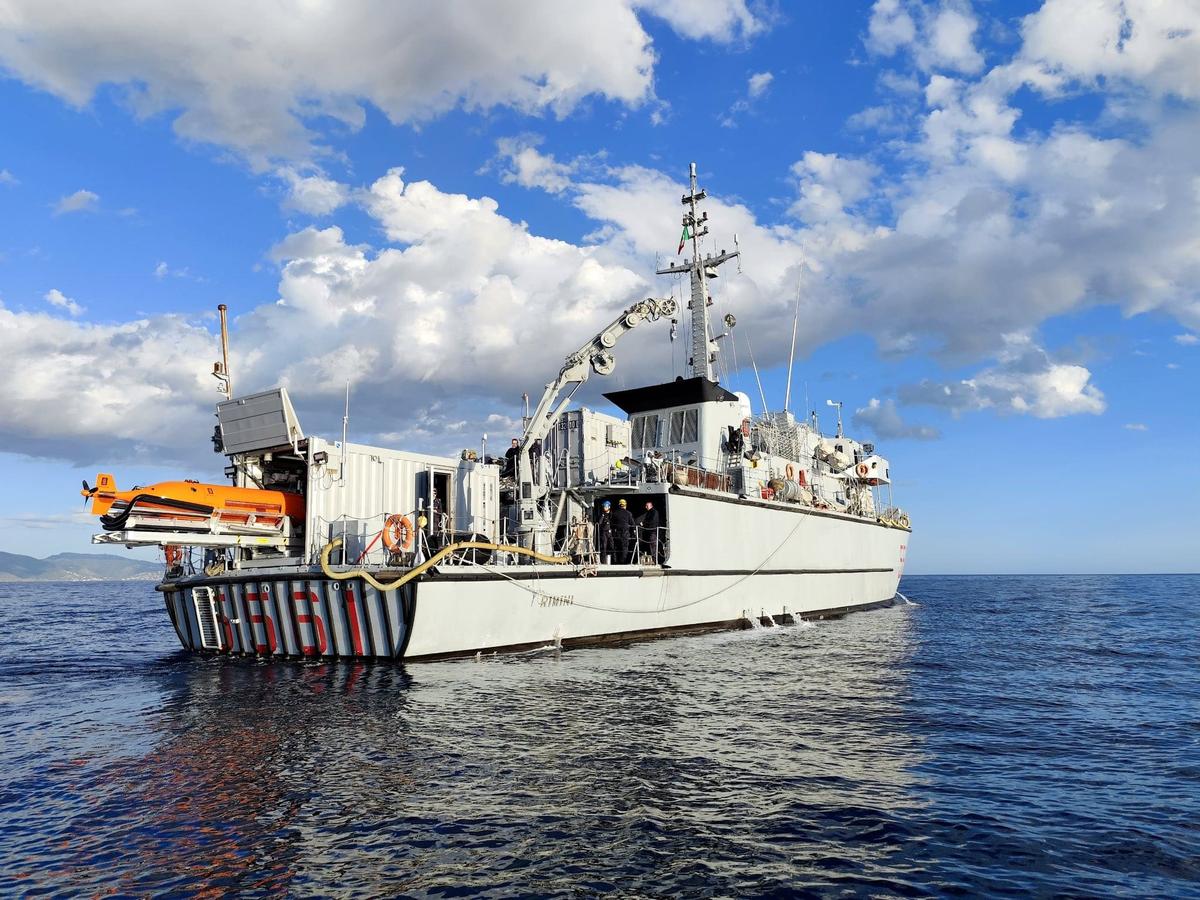
Italy Is Forward-Deploying Mine Countermeasures Assets in the Middle East
Companies Mentioned
Why It Matters
Clearing mines from the Hormuz corridor is critical to restoring safe oil transit and preventing a chokepoint‑driven escalation in global energy markets. Italy’s contribution bolsters NATO’s collective maritime security posture and showcases European readiness to protect vital sea lanes.
Key Takeaways
- •Italy deployed two Gaeta-class MCMVs to Middle East
- •Vessels left Augusta on 15 May, bound for Djibouti
- •Task group may add air‑defence frigate Montecuccoli and Atlante
- •MCMVs carry HUGIN AUVs, REMUS drones, and diver hyperbaric chambers
- •Supports coalition effort to clear mines in Strait of Hormuz
Pulse Analysis
The Strait of Hormuz, through which roughly 20% of global oil passes, has long been a flashpoint for geopolitical tension. Recent escalations have revived concerns that naval mines could be used to disrupt shipping, prompting an ad‑hoc coalition of allied navies to coordinate clearance operations. Mine threats not only endanger commercial vessels but also raise insurance premiums and force rerouting, amplifying supply‑chain volatility. By committing specialized assets, the coalition signals a proactive stance to preserve the free flow of energy and mitigate the risk of a broader maritime confrontation.
Italy’s deployment centers on the Gaeta‑class mine‑countermeasure vessels Crotone (M 5558) and Rimini (M 5561), both upgraded with the Kongsberg HUGIN long‑range AUV and Leonardo’s Thales 2093 variable‑depth sonar. These platforms can launch ROVs, operate at depths up to 3,000 metres, and support divers via onboard hyperbaric chambers, making them uniquely suited for complex seabed clearance. The anticipated addition of the Raimondo Montecuccoli, a Light Plus‑configuration Thaon di Revel‑class air‑defence ship, and the Vulcano‑class logistic vessel Atlante will provide layered protection and sustainment, ensuring the MCMVs can operate continuously in the high‑risk environment of the Persian Gulf and Red Sea.
Strategically, the forward‑deployment underscores Italy’s commitment to NATO’s maritime security agenda and its ability to project specialized capabilities beyond the Mediterranean. Operating from the Djibouti base, Italian forces can integrate with existing NATO Mine Counter‑Measures Group 2 and regional partners, enhancing data sharing through the Mine Warfare Data Centre. This move also reflects a broader shift toward modular, unmanned systems that extend the reach of traditional mine‑hunting vessels. As the coalition works toward a durable truce, Italy’s assets will likely remain on standby, ready to transition from precautionary presence to active clearance, thereby reinforcing the resilience of a chokepoint that underpins global trade.
Italy is forward-deploying mine countermeasures assets in the Middle East
Comments
Want to join the conversation?
Loading comments...