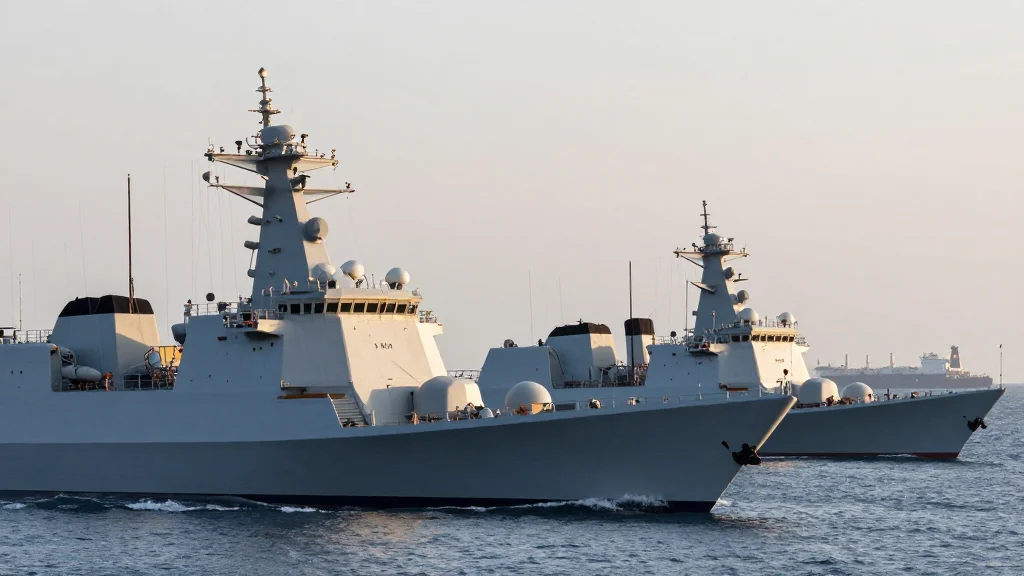
Japan and Malaysia Agree on Deeper Maritime Defense Cooperation
Companies Mentioned
Why It Matters
The pact strengthens Japan’s strategic foothold in Southeast Asia, bolstering its maritime security and diversifying energy sources amid rising geopolitical tensions. It also positions Malaysia as a key partner in the Indo‑Pacific supply chain for defense and critical minerals.
Key Takeaways
- •Japan and Malaysia will expand joint naval exercises and hardware sharing
- •Japan to receive 2 million tons of LNG annually from Malaysia starting 2028
- •Cooperation targets critical minerals, leveraging Malaysia’s rare‑earth processing capacity
- •Moves counter China’s maritime pressure and diversify Japan’s energy security
Pulse Analysis
Japan’s renewed partnership with Malaysia reflects a broader shift in Indo‑Pacific security dynamics. As Beijing tightens its grip on maritime routes and leverages economic coercion, Tokyo is seeking like‑minded allies to uphold a free and open region. The agreement to deepen joint naval drills and explore further hardware transfers signals Japan’s intent to project power beyond its immediate waters, while reinforcing Malaysia’s role as a regional security collaborator. This alignment dovetails with Japan’s Free and Open Indo‑Pacific initiative, which aims to counterbalance China’s assertiveness through multilateral defense ties.
Energy security sits at the core of the new accord, highlighted by the 20‑year LNG supply contract between Petronas and Japan’s Jera Co. Delivering 2 million tonnes per year, the deal will cover roughly 6 % of Japan’s total LNG imports and reduce reliance on volatile routes such as the Strait of Hormuz. For a resource‑poor nation that imports over 80 % of its energy, securing a stable, long‑term source from Malaysia—its second‑largest LNG supplier—mitigates supply shocks and supports Japan’s broader decarbonisation goals. The agreement also underscores the strategic value of diversifying energy partners amid geopolitical uncertainty.
Beyond defense and fuel, the partnership targets critical minerals, an arena where supply chain resilience is paramount. Malaysia hosts one of the world’s largest rare‑earth processing facilities outside China, offering Japan a viable alternative to Chinese dominance in this sector. By collaborating on mineral extraction and processing, both countries can develop a more secure supply chain for high‑tech industries, from semiconductors to renewable‑energy components. This multifaceted cooperation not only cushions Japan against potential export restrictions but also positions Malaysia as a pivotal node in the emerging Indo‑Pacific technology ecosystem, reinforcing economic interdependence that can temper geopolitical frictions.
Japan and Malaysia Agree on Deeper Maritime Defense Cooperation
Comments
Want to join the conversation?
Loading comments...