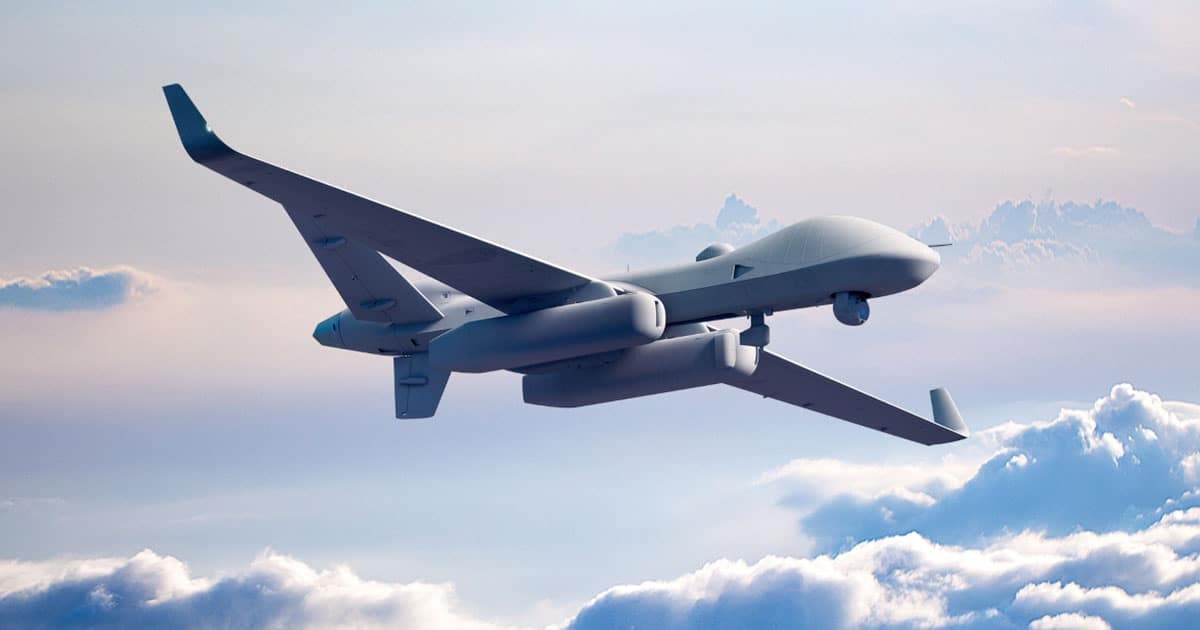
Japan Considers AEW Radar Pod for MQ-9B SeaGuardian Drones
Companies Mentioned
Why It Matters
Equipping unmanned MQ‑9Bs with AEW capability gives Japan a persistent, cost‑effective eye on Chinese movements, strengthening deterrence without expanding manned fleets. The shift also addresses looming crew shortages in Japan’s aging maritime patrol squadrons.
Key Takeaways
- •Japan eyes AEW pods on MQ‑9B to monitor Chinese activity
- •Initial four MQ‑9Bs will operate by FY2028, total 23 planned
- •Pods detect targets beyond 300 km, share data via Link 16
- •AEW integration may reduce endurance or limit other sensor payloads
- •ASW sonobuoy pods could extend MQ‑9B role, easing crew shortages
Pulse Analysis
Japan’s security strategy is increasingly focused on the western Pacific, where Chinese bombers have repeatedly transited the Bashi Channel and carriers have staged extended deployments. To counter this, the Self‑Defense Forces are turning to the MQ‑9B SeaGuardian, a long‑endurance UAV already slated to supplement the manned Kawasaki P‑1 fleet. By pairing the drone with a Saab‑GA‑ASI podded radar, Japan aims to achieve near‑360‑degree airborne early‑warning coverage, a capability traditionally reserved for larger, crewed platforms.
The proposed AEW pod offers detection of aircraft and missiles at ranges exceeding 300 km and integrates with Link 16 and satellite communications for real‑time data sharing. While this expands situational awareness, mounting the pods under the wings could trim the MQ‑9B’s 24‑hour endurance and limit simultaneous use of its maritime surveillance radar. Early trials will involve two drones operated by a civilian contractor at Kanoya Air Base in FY2027, with two more added in FY2028, paving the way for a total of 23 units. Balancing AEW duties with existing patrol missions will be a key operational challenge.
Beyond early warning, the MQ‑9B’s modular design opens pathways for anti‑submarine warfare upgrades, such as sonobuoy‑dispensing pods already tested by the U.S. Navy. These additions could offset Japan’s demographic‑driven crew shortages, as the unmanned system requires fewer personnel than the P‑1’s eleven‑member crew. If successful, the integration of AEW and ASW capabilities could redefine Japan’s maritime surveillance architecture, offering a flexible, lower‑cost alternative to expanding its manned fleet while reinforcing deterrence against regional threats.
Japan considers AEW radar pod for MQ-9B SeaGuardian drones
Comments
Want to join the conversation?
Loading comments...