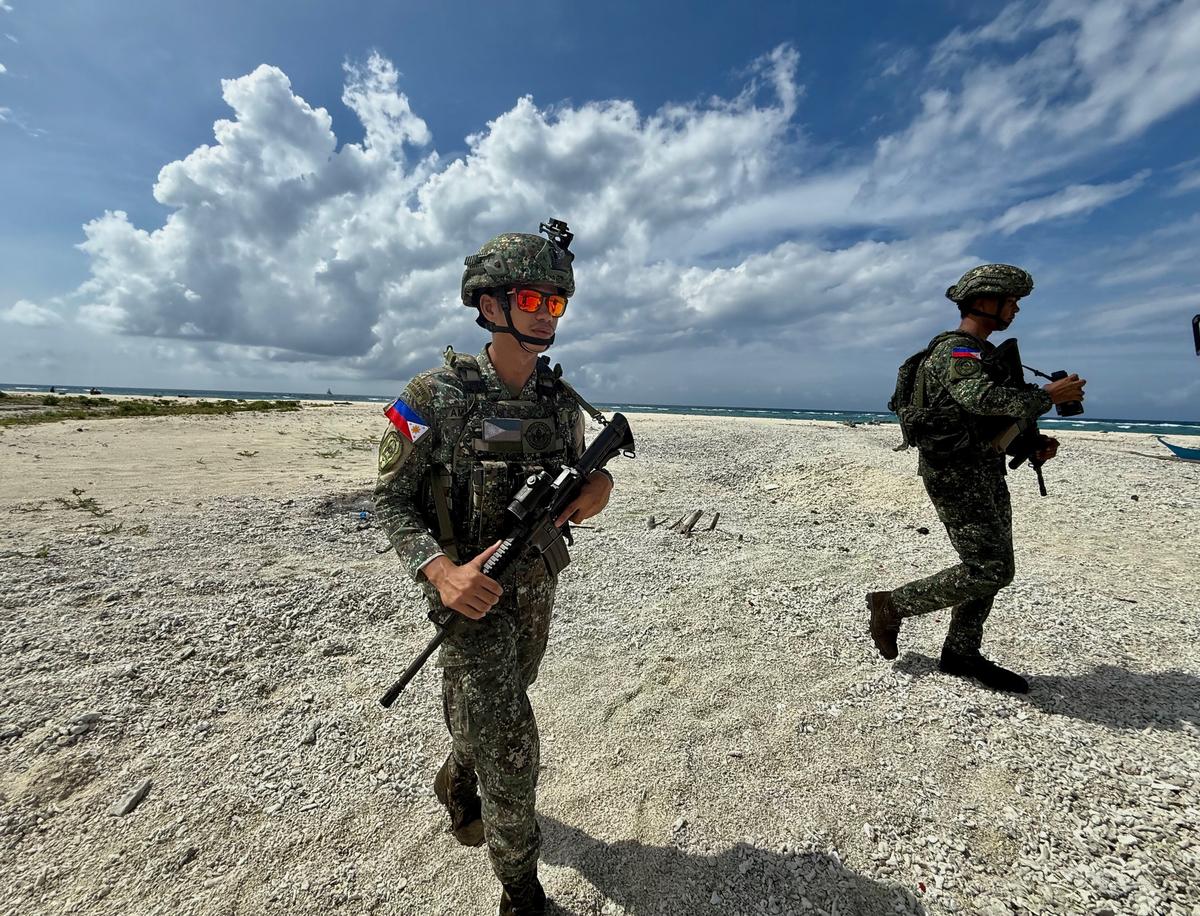
The radar handover strengthens the Philippines’ ability to monitor Chinese activity, contributing to a more balanced security architecture in the contested South China Sea. It also demonstrates Japan’s commitment to a free and open Indo‑Pacific, encouraging greater multilateral cooperation.
Japan’s latest Official Security Assistance shipment reflects a strategic shift toward deeper defense collaboration with Manila. By providing five state‑of‑the‑art coastal radars, Japan not only upgrades the Philippines’ surveillance infrastructure but also signals a willingness to share advanced technology with like‑minded partners. The move follows a series of joint exercises and capacity‑building initiatives that have steadily aligned the two nations’ security postures, positioning them as a counterweight to Beijing’s expanding maritime footprint.
The radar systems integrate high‑resolution surface tracking, real‑time data links, and robust communications suites, dramatically expanding the Philippine Navy’s maritime domain awareness. Enhanced early‑warning capabilities enable quicker identification of vessels operating near contested features, supporting intelligence, surveillance, and reconnaissance (ISR) missions as well as humanitarian assistance and disaster response (HADR) efforts. For a country frequently hit by typhoons and reliant on sea‑borne trade, the ability to monitor both security threats and natural hazards in a unified platform represents a substantial operational upgrade.
Regionally, the handover underscores a broader Indo‑Pacific strategy aimed at preserving a free, open sea lane system. As China intensifies its claims in the South China Sea, the bolstered Philippine radar network contributes to a collective deterrence framework that includes the United States, Australia, and other maritime democracies. Japan’s commitment to such partnerships not only reinforces its own security interests but also encourages a multilateral approach to upholding international law, potentially reshaping power dynamics in one of the world’s most vital trade corridors.
By Jason Gutierrez · February 11, 2026
MANILA – The government of Japan on Wednesday officially turned over five coastal radar systems to the Philippines in what is seen as a milestone in defense ties amid China’s rising aggression in the South China Sea.
The defense articles are under Tokyo’s Official Security Assistance (OSA) for fiscal year 2023, and are envisioned to “significantly enhance the Philippine Navy’s Maritime Domain Awareness” initiatives, Manila’s defense department said.
The project includes radar units, surveillance and monitoring equipment, communications systems and other support components designed to strengthen coastal monitoring and maritime security operations.
“The integration of these systems is expected to expand surveillance coverage, improve early detection and tracking of surface contacts, and enhance coordination in maritime operations.
The capability will support intelligence, surveillance, and reconnaissance (ISR) missions, humanitarian assistance and disaster response (HADR), and other lawful security operations,” the department said in a statement.
The ceremonial handover was witnessed by Philippine Defense Secretary Gilberto Teodoro Jr. and Japan’s envoy to Manila, Endo Kazuya. “This occasion marks not only the transfer of critical equipment from Japan to the Philippines, but also a meaningful milestone in the steadily deepening partnership between our two countries,” Endo said.
He stressed that the OSA framework “reflects Japan’s resolute commitment to working closely with like‑minded partners” in pushing for peace and security in the region.
“At a time when the security environment is becoming increasingly complex and difficult, strategic challenges in the region serve as a clear reminder that peace and stability cannot be taken for granted. It must be actively and collectively sustained,” Endo added.
“As maritime democracies positioned along vital sea lanes, Japan and the Philippines are natural partners,” he continued, noting that the Philippines is seen by Japan as a “strategic partner” and shares its commitment.
Wednesday’s handover of the critical defense equipment marked the culmination of the two countries’ cooperation, and, once operational, is expected to “significantly enhance the country’s maritime domain awareness by improving the ability to monitor activities in the surrounding waters.”
“Such awareness is indispensable for safeguarding maritime security, protecting lawful activities at sea, and responding effectively to potential risks,” Endo said.
Without specifically naming China, Endo alluded to the challenges in the South China Sea, which Beijing claims almost in its entirety, including waters within the exclusive economic zones of smaller neighbors such as the Philippines.
“The South China Sea is a vital sea lane for many countries through which a large portion of our trade and energy supplies pass. Safety, openness, and stability of these waters are therefore of direct importance to our own security and prosperity,” he stressed.
For his part, Teodoro echoed the Philippines’ appreciation for Japan’s “principled partnership.”
“I would like to thank the Government of Japan for the concrete contributions in widening and deepening our bilateral and multilateral ties, with the end in view of a free and open Indo‑Pacific and maintaining regional peace and stability,” he said.
“There is mutual trust and sincerity. Japan’s approach to its bilateral relations with the Philippines has been rooted in fundamental sincerity and values,” Teodoro added.
At the same time, Beijing is engaged in an escalating war of words with Manila over its envoy’s criticisms of Filipino senators. Ji Linpeng, an embassy spokesman, said earlier this week that the Filipino senators knew “little about how diplomacy works” as Beijing rejected the Philippine position.
“We firmly reject and strongly condemn the said anti‑China resolution. Some Philippine legislators repeatedly resort to threats and intimidation against Chinese diplomats,” Ji said.
President Ferdinand Marcos Jr. has sought to calm tensions and ruled out the possibility of expelling Chinese envoy to Manila Huang Xilian, who has been declared a “persona non grata” in Kalayaan, a far‑flung municipality that has jurisdiction over Pag‑asa Island (Thitu Island) in the contested Spratly archipelago.
Opposition Senator Francis Pangilinan on Wednesday urged Manila’s foreign office to “take the necessary diplomatic measures” in upholding the dignity of the country by censuring the Chinese embassy officials who have criticized the Philippine Senate for passing a resolution condemning the embassy’s actions.
“The Chinese Embassy’s undiplomatic and boorish response to the official act of the Philippine Senate, in violation of the Vienna Convention on Diplomatic Relations, only proves that China is indeed a bully, has no respect for international law and its acts deserve condemnation,” Pangilinan said.
“We rest our case. We will never tolerate nor be cowed by foreigners disrespecting us in our land,” the senator added.
Jason Gutierrez was head of Philippine news at BenarNews, an online news service affiliated with Radio Free Asia (RFA), a Washington‑based news organization that covered many under‑reported countries in the region. A veteran foreign correspondent, he has also worked with The New York Times and Agence France‑Press (AFP).
Comments
Want to join the conversation?
Loading comments...