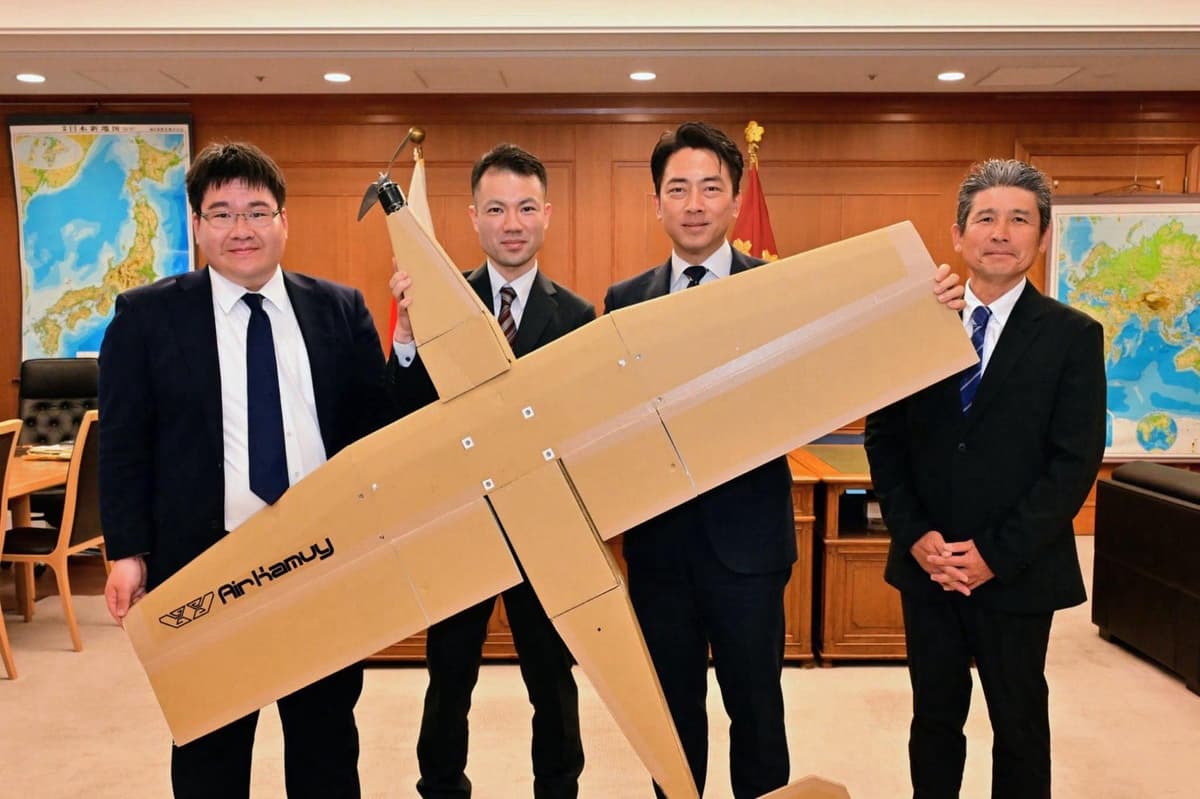
Japan Is Building Cardboard Suicide Drones
Companies Mentioned
Why It Matters
Adopting ultra‑cheap expendable drones could reshape procurement, allowing Japan to field massive unmanned fleets while keeping costs low, a model other militaries may emulate.
Key Takeaways
- •Japan's Defense Minister showcased AirKamuy 150, a cardboard suicide drone.
- •Drone is pre‑fab, flat‑pack, designed to be destroyed in combat.
- •JMSDF already employs them as low‑cost training targets.
- •Strategy aims to make Japan the world’s most unmanned‑heavy force.
Pulse Analysis
The emergence of cardboard suicide drones marks a radical shift in how armed forces approach expendable aerial assets. Traditional loitering munitions and training targets often cost thousands of dollars per unit, limiting the number that can be deployed for routine exercises. By using recyclable cardboard and simple assembly, the AirKamuy 150 can be produced for a fraction of that price, enabling the Japan Maritime Self‑Defense Force to conduct high‑frequency live‑fire drills without straining budgets. This cost‑centric model reflects a broader trend toward ultra‑low‑cost unmanned systems that prioritize quantity over sophistication.
Japan’s defence strategy has long grappled with the need to counter sophisticated maritime threats while adhering to constitutional constraints on offensive capabilities. Leveraging startups like AirKamuy allows the Self‑Defense Forces to rapidly integrate innovative technologies without the lengthy procurement cycles typical of legacy contractors. The flat‑pack design also simplifies logistics, as the drones can be stored compactly and assembled on‑site. Koizumi’s emphasis on becoming the most unmanned‑heavy force signals a strategic pivot: rather than relying on a few high‑end platforms, Japan aims to saturate its operational environment with swarms of inexpensive, disposable UAVs that can overwhelm adversary sensors and provide abundant training data.
Globally, the AirKamuy concept could spark a wave of similar low‑cost solutions, especially among nations with constrained defence budgets. Start‑up ecosystems may see increased investment as militaries seek scalable, affordable options for both training and combat roles. However, the proliferation of disposable drones raises concerns about environmental waste and the ease of acquisition by non‑state actors. Policymakers will need to balance the operational advantages of cheap swarms with responsible end‑of‑life disposal and export controls, ensuring that the benefits of such technology do not inadvertently undermine security objectives.
Japan Is Building Cardboard Suicide Drones
Comments
Want to join the conversation?
Loading comments...