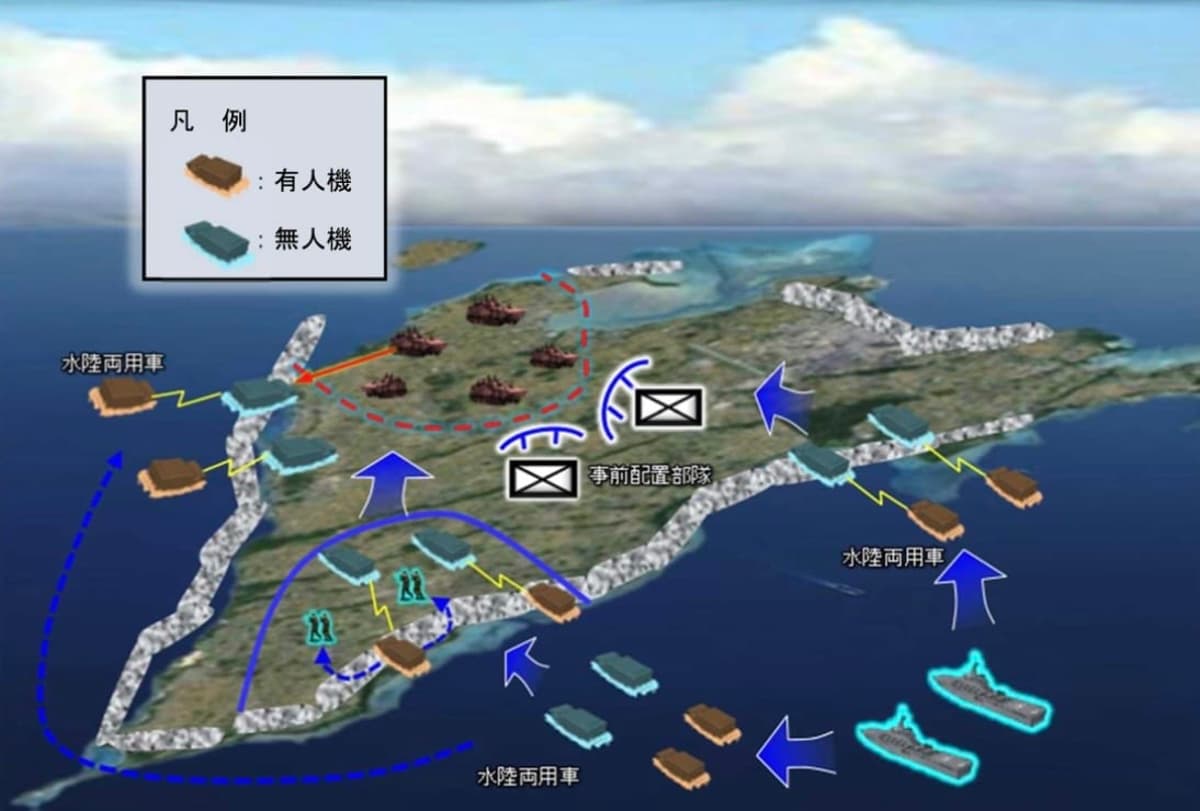
Japan Is Developing a New Unmanned AAV Which Will Bring MUM-T to Amphibious Operations
Why It Matters
The AAV gives Japan a sovereign, more capable amphibious platform, reducing reliance on aging U.S. equipment and enhancing deterrence against regional threats. Its MUM‑T architecture could lower casualty risk and set a benchmark for future unmanned ground combat systems.
Key Takeaways
- •Japan plans 97 domestically produced AAVs by 2028.
- •New AAV combines tracks and rear water jets for reef traversal.
- •Remote weapon station can mount 30 mm cannon, boosting firepower.
- •MUM‑T enables crew‑less first wave and autonomous navigation.
- •Four prototypes to begin testing in 2027, one with extra power.
Pulse Analysis
Japan’s strategic focus on island defense has intensified as Beijing expands its maritime posture. The Amphibious Rapid Deployment Brigade, modeled after a Marine Corps‑style force, currently relies on 52 U.S.-made AAV‑7s that struggle with coral reefs and limited armament. By developing a home‑grown AAV, Tokyo aims to overcome these constraints, ensuring landing forces can access a broader range of beachheads and confront armored threats with a 30 mm cannon. This shift reflects a broader trend of Japan seeking greater self‑sufficiency in critical defense technologies.
The indigenous AAV blends traditional tracked mobility with rear‑mounted water jets, delivering the thrust needed to breach reef‑lined shorelines. Integrated visible‑light and infrared sensors feed data to a networked command system derived from the Type 10 tank, enabling both remote piloting and pre‑programmed autonomous routes. A remote weapon station offers modular firepower, allowing operators to switch between a 12.7 mm machine gun and a heavier 30 mm cannon. One of the four prototype units will feature an upgraded power‑generation module, positioning the platform for future upgrades such as directed‑energy weapons or advanced communications suites.
Fielding roughly 97 of these vehicles by 2028 will markedly boost the JGSDF’s amphibious capability and reduce dependence on foreign platforms. The MUM‑T concept, which unmanned the initial assault wave, could lower personnel casualties and provide a template for other services exploring unmanned ground combat. Regionally, a more capable Japanese amphibious force adds a credible deterrent to the contested East China Sea, signaling to Beijing that island‑defense operations can be conducted with advanced, indigenous technology. The program also stimulates domestic defense industry growth, potentially opening export opportunities for allied nations seeking similar amphibious solutions.
Japan is developing a new unmanned AAV which will bring MUM-T to Amphibious Operations
Comments
Want to join the conversation?
Loading comments...