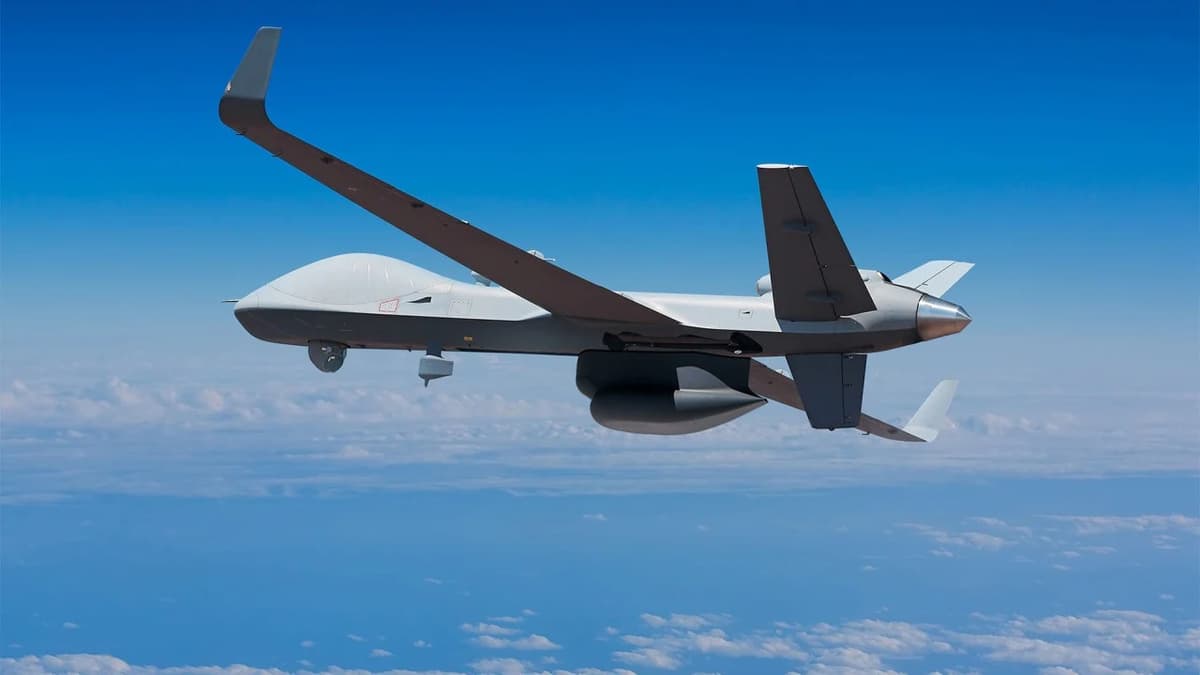
Japan Plans Island Drone Deployment to Monitor Chinese Naval Activity
Why It Matters
By extending real‑time maritime surveillance, Japan strengthens its deterrence against an increasingly assertive Chinese navy and reinforces the US‑Japan security partnership in a volatile Indo‑Pacific theater.
Key Takeaways
- •MQ‑9B SeaGuardian drones to be stationed on Iwo Jima and Chichijima
- •30‑hour endurance, satellite‑guided, equipped with AIS and anti‑submarine kit
- •Deployment aims to close surveillance blind spot beyond the first island chain
- •Mobile radar units on islands will boost early warning
- •Liberal Democratic Party pushes development of interceptor drones after Ukraine lessons
Pulse Analysis
Japan’s decision to deploy MQ‑9B SeaGuardian drones on remote Ogasawara islands marks a decisive shift in its maritime domain awareness strategy. The islands of Iwo Jima and Chichijima sit just beyond the traditional first island chain, a geopolitical line that has long defined U.S. and allied defense planning. By placing long‑range, 30‑hour endurance UAVs equipped with automatic identification systems and anti‑submarine warfare kits, Tokyo aims to illuminate a surveillance gap that Chinese carrier groups have been exploiting in recent drills near Minamitorishima. This capability not only provides continuous over‑the‑horizon tracking of surface vessels but also integrates with mobile radar arrays, creating a layered early‑warning network that can feed data directly to both Japanese and U.S. command centers.
The operational rollout dovetails with Japan’s broader defence modernization, which has accelerated since 2021 with the testing of U.S.-built MQ‑9 Reapers and the establishment of drone units at Kanoya. The upcoming acquisition of SeaGuardian platforms for the 2027 fiscal year underscores a commitment to indigenous control of high‑end ISR assets, reducing reliance on allied platforms while enhancing interoperability. For the United States, the move reinforces the bilateral security architecture in the Indo‑Pacific, offering a forward‑deployed sensor suite that complements American carrier strike groups and bolsters collective situational awareness against a navy that now routinely operates east of Okinawa.
Strategically, the drone deployment signals Japan’s willingness to assume a more proactive defensive role amid uncertainties about U.S. policy continuity in the region. While Tokyo remains cautious about overt militarisation of its islands, the addition of interceptor‑drone development—spurred by lessons from Ukraine—suggests a trajectory toward kinetic capabilities that could deter aggression before it reaches Japanese waters. This nuanced escalation may reshape the security calculus for Beijing, prompting a reassessment of its maritime posture while providing regional allies with a clearer picture of potential flashpoints, ultimately contributing to a more stable balance of power in the western Pacific.
Japan plans island drone deployment to monitor Chinese naval activity
Comments
Want to join the conversation?
Loading comments...