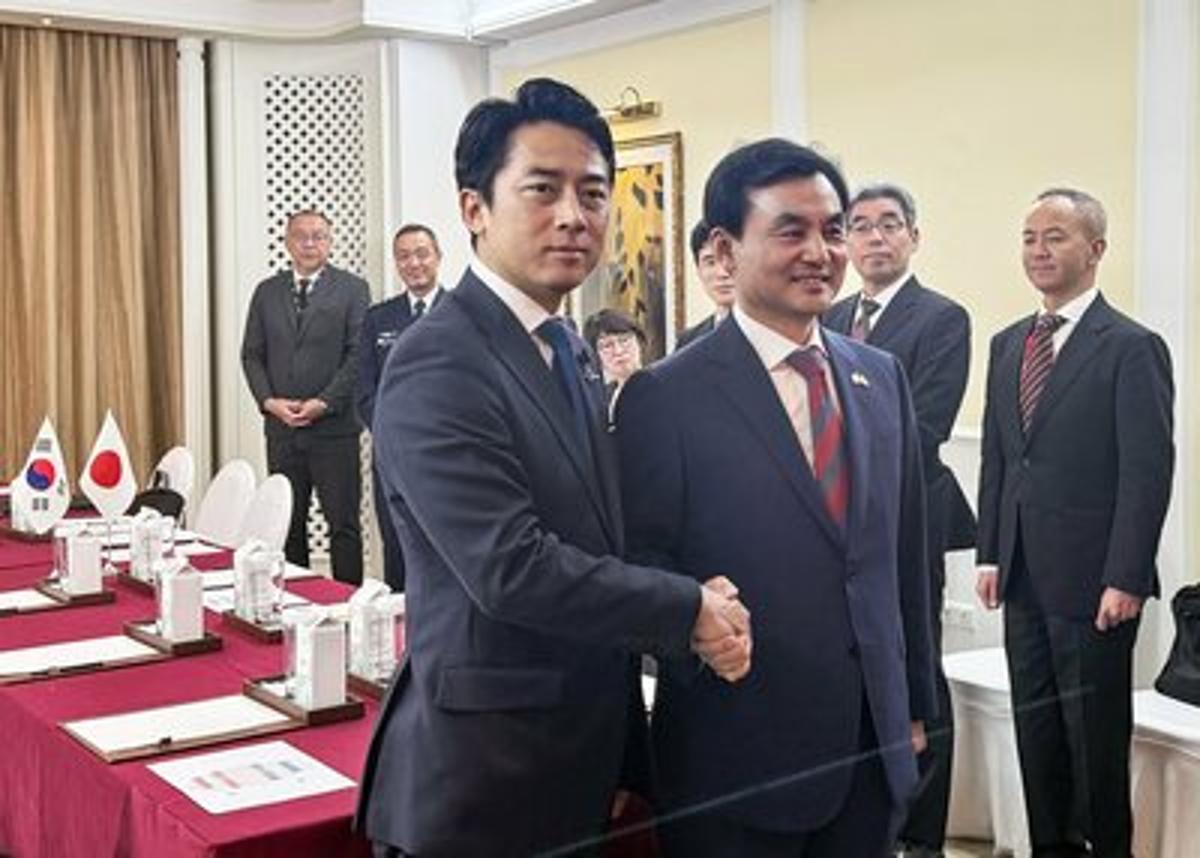
Japan, S. Korea to Resume Search-and-Rescue Drill After About 9 Years
Why It Matters
Reinstating the SAR drill demonstrates a tangible thaw in Japan‑South Korea security cooperation, reinforcing deterrence frameworks anchored by the U.S. alliance. It signals a coordinated response to rising regional challenges, especially from China.
Key Takeaways
- •Joint SAR drill scheduled for June 7, first since 2017
- •Exercise signals thaw in Japan‑South Korea defense relations
- •U.S. and Britain discussed missile cooperation alongside the drill
- •Japan easing export restrictions to boost defense industry
- •Upcoming G7 summit may feature Japan‑UK defense talks
Pulse Analysis
The revival of a joint search‑and‑rescue exercise between Japan and South Korea marks a subtle but significant shift in East Asian security dynamics. After a 2018 incident that halted most defense exchanges, both nations have used diplomatic channels to rebuild trust, recognizing that humanitarian cooperation can serve as a low‑stakes platform for broader military dialogue. By scheduling the drill for June 7, the two navies signal a willingness to move beyond past grievances and focus on shared maritime safety, a cornerstone of regional stability.
Beyond the SAR drill, the talks in Singapore highlighted an expanding security architecture that includes the United States and the United Kingdom. U.S. Defense Secretary Pete Hegseth and British Defense Secretary John Healey discussed accelerated missile development, reflecting a collective effort to counterbalance China’s growing assertiveness in the Indo‑Pacific. Japan’s recent easing of defense‑export restrictions further signals its intent to become a more active supplier within this network, potentially reshaping the regional arms market and encouraging deeper interoperability among allies.
Looking ahead, the timing of the exercise aligns with the upcoming G7 summit in France, where Japan’s Prime Minister Sanae Takaichi is expected to meet British officials. Such high‑level engagements suggest that the SAR drill is part of a broader diplomatic choreography aimed at cementing trilateral and multilateral defense projects, from missile systems to the Global Combat Air Program. For businesses and policymakers, the renewed cooperation signals a more predictable security environment, which could encourage investment in the region’s defense and technology sectors.
Japan, S. Korea to resume search-and-rescue drill after about 9 years
Comments
Want to join the conversation?
Loading comments...