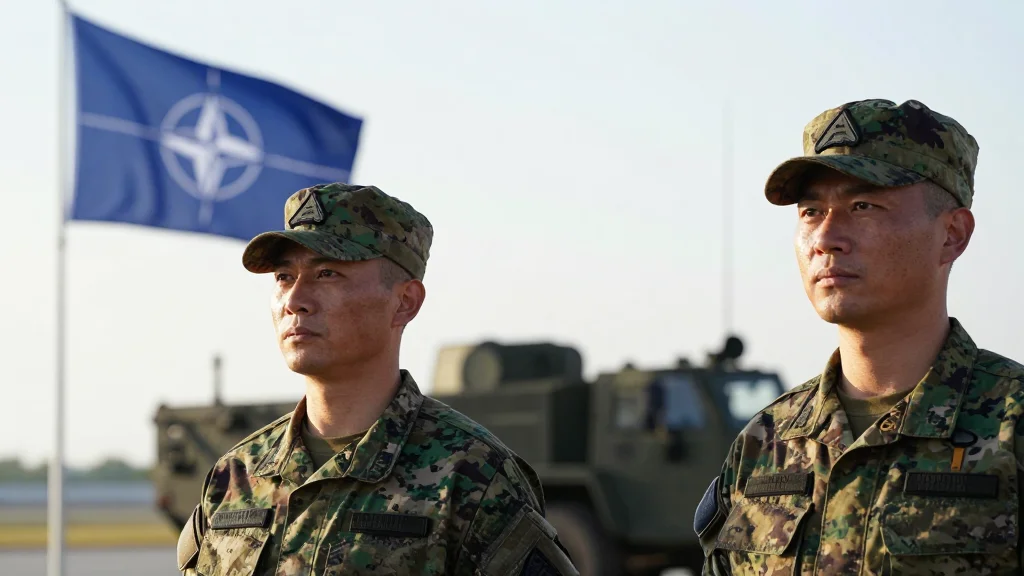
Japan Sends Four SDF Personnel to NATO Ukraine Training Hub in Germany

Why It Matters
The deployment marks the first time Japan has placed uniformed SDF members inside a NATO‑run training facility, blurring the traditional divide between Euro‑Atlantic and Indo‑Pacific security spheres. By embedding troops in the Ukraine hub, Japan gains direct exposure to NATO’s operational doctrines, which could accelerate the integration of Japanese forces into future coalition missions. The move also heightens diplomatic friction with China, which views any NATO expansion as a strategic encroachment, potentially influencing Beijing’s posture in the South China Sea and Taiwan Strait. For the broader defence industry, the partnership opens a channel for Japanese firms to supply NATO‑standard equipment and services, while NATO members gain a reliable Asian partner with advanced maritime and cyber capabilities. This convergence could reshape procurement patterns and spur joint research into next‑generation defence technologies.
Key Takeaways
- •Four SDF personnel deployed to NATO’s Ukraine training centre in Germany.
- •Japan aims to learn from Ukraine’s battlefield experience and deepen NATO ties.
- •China’s Foreign Ministry labeled the move "colluding with NATO" and "stoking regional tensions."
- •Defence Minister Shinjiro Koizumi rejected accusations of "new militarism" and warned about China’s military expansion.
- •The deployment could create new procurement opportunities for Japanese defence firms and NATO allies.
Pulse Analysis
Japan’s decision to embed SDF staff within a NATO‑run facility reflects a strategic calculus that the benefits of interoperability outweigh the diplomatic costs of antagonising Beijing. Historically, Japan has limited its overseas deployments to UN peacekeeping and humanitarian missions; this shift signals a willingness to engage in high‑intensity security cooperation, a trend accelerated by the perceived threat from China’s rapid military buildup. By positioning itself alongside NATO, Tokyo not only gains tactical insights from the Ukraine conflict but also signals to regional allies that it can serve as a bridge between the Euro‑Atlantic and Indo‑Pacific security architectures.
From a market perspective, the move is likely to stimulate demand for joint‑training platforms, secure communications gear, and cyber‑defence solutions that meet NATO standards. Japanese firms such as Mitsubishi Heavy Industries and Fujitsu, already active in NATO‑related projects, stand to benefit from increased orders for interoperable systems. Conversely, Chinese defence exporters may see a contraction in their European market share as NATO members look to diversify supply chains away from Beijing’s influence.
Looking forward, the real test will be whether Japan can sustain this deeper engagement without triggering a broader strategic backlash. If Beijing escalates its diplomatic or economic pressure, Tokyo may need to balance its alliance commitments with domestic political constraints. The upcoming NATO summit will be a litmus test for how the alliance incorporates Asian partners into its collective security agenda, and whether Japan’s modest troop contribution can evolve into a more substantive role in future coalition operations.
Japan Sends Four SDF Personnel to NATO Ukraine Training Hub in Germany
Comments
Want to join the conversation?
Loading comments...