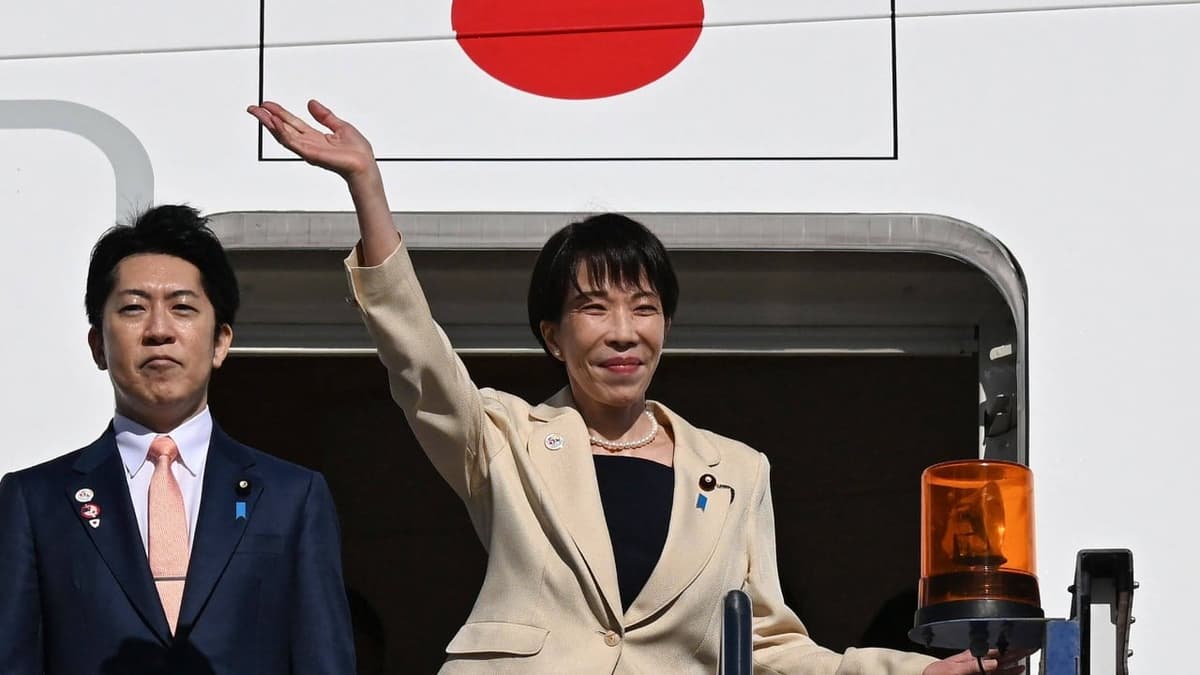
Japan’s New Spy Agency Receives FBI Backing with Eyes on China and Russia
Why It Matters
A unified intelligence body strengthens Japan’s ability to counter sophisticated espionage and cyber threats, bolstering regional security and U.S. alliance coordination. It also signals a shift toward more proactive defense postures that could affect multinational businesses operating in East Asia.
Key Takeaways
- •Japan to launch first central intelligence agency since WWII.
- •Agency will start with ~700 staff, scaling rapidly.
- •FBI backs plan, offering cyber and counter‑intelligence support.
- •Focus on China, Russia, North Korea, AI‑driven analysis.
- •Critics warn of privacy risks and pre‑war surveillance echoes.
Pulse Analysis
Japan’s decision to consolidate its fragmented intelligence apparatus reflects a broader strategic recalibration in response to heightened regional tensions. Since the end of World War II, Japan has relied on a patchwork of ministries for security analysis, a structure that analysts argue hampers rapid threat assessment. By elevating the Cabinet Intelligence and Research Office into a central agency, Tokyo aims to streamline data collection, improve inter‑agency communication, and integrate cutting‑edge technologies such as artificial intelligence to process massive information flows.
The partnership with the U.S. Federal Bureau of Investigation adds a critical layer of expertise and resources. FBI Director Kash Patel’s endorsement underscores Washington’s willingness to share cyber‑defense tools, counter‑espionage tactics, and training programs, reinforcing the long‑standing U.S.–Japan security alliance. With an initial cadre of roughly 700 personnel—including analysts fluent in Mandarin, Russian and Korean, as well as AI specialists—the agency is positioned to monitor China’s covert operations, Russian influence campaigns, and North Korean cyber activities more effectively than the siloed system of the past.
For businesses operating in East Asia, the new agency could translate into a more predictable security environment but also heightened scrutiny of foreign investments and technology transfers. Enhanced intelligence capabilities may deter state‑sponsored espionage targeting proprietary data, yet the agency’s broad mandate raises concerns about privacy and potential overreach. Stakeholders should monitor how Japan balances intelligence gathering with civil liberties, as regulatory outcomes will shape compliance requirements for multinational firms navigating the region’s evolving geopolitical landscape.
Japan’s new spy agency receives FBI backing with eyes on China and Russia
Comments
Want to join the conversation?
Loading comments...