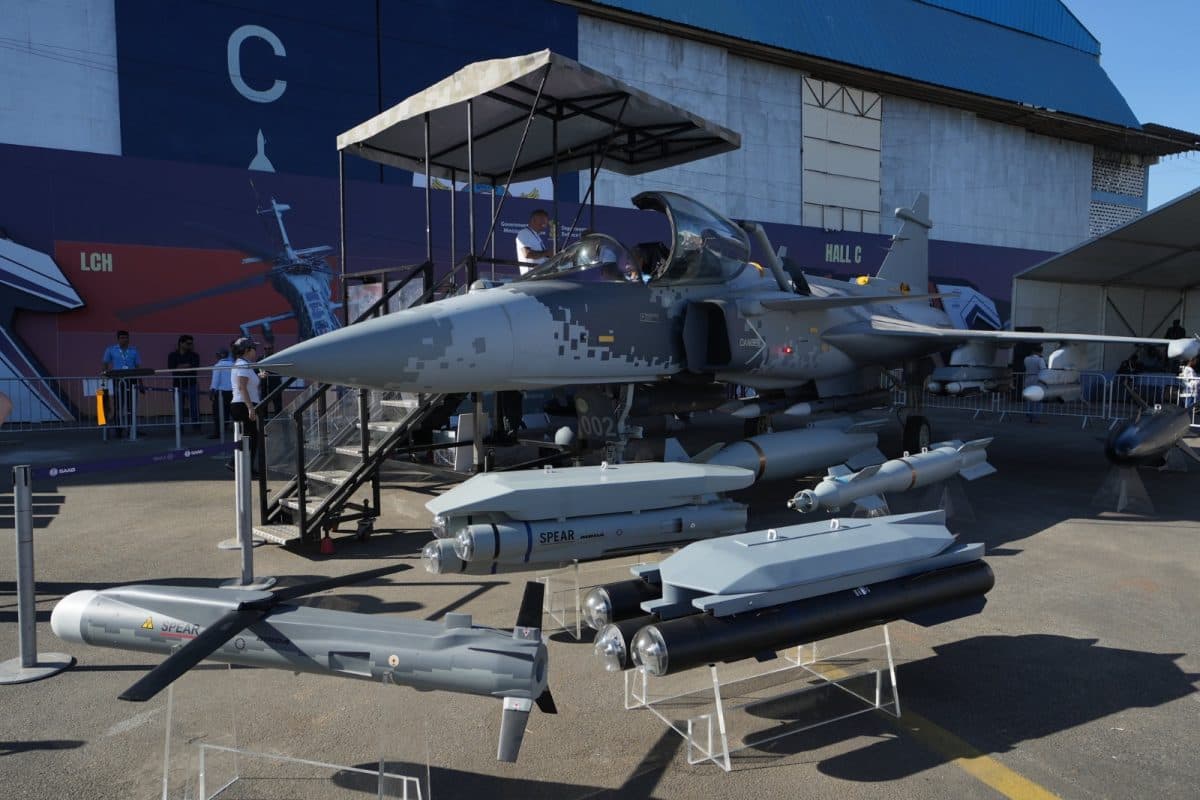
JAS-39 Gripen Effectively ‘Eliminated’ From IAF Race Despite Active Talks Claim: Ex-Air Marshal Says
Companies Mentioned
Why It Matters
India’s choice will shape the regional fighter market and determine whether Saab can break into one of the world’s biggest defense buyers. The decision also influences the balance of Western versus Russian/Chinese platforms in South Asia.
Key Takeaways
- •Gripen E/F secured over $10 bn in export orders within a year.
- •India prefers twin‑engine Rafale over single‑engine Gripen for commonality.
- •Saab offered 114 Gripens with local production and MRO transfer in India.
- •Rafale deal includes 18 off‑the‑shelf jets and 96 built in India.
Pulse Analysis
Saab’s recent surge in Gripen E/F sales marks a turning point for the Swedish aerospace firm, which had struggled to find buyers after the 2010s. Orders from Thailand, Colombia and a €2.5 bn (≈$2.9 bn) Ukrainian loan demonstrate the platform’s appeal to nations seeking a cost‑effective, 4.5‑generation fighter with low operating costs. The Gripen’s modular design and the newly unveiled two‑seat Gripen‑F further broaden its export prospects, positioning it as a viable alternative to the F‑35 in markets where budget and runway constraints matter.
India’s multi‑role combat aircraft (MRCA) competition has long been a litmus test for any fighter manufacturer eyeing the sub‑continent’s $10‑plus bn defense spend. While Saab’s proposal promised 114 Gripens, local component manufacturing, and a design centre in Bangalore, Indian decision‑makers remain fixated on twin‑engine platforms. The Rafale’s existing presence—36 operational jets and a pending 114‑jet deal that mixes off‑the‑shelf and indigenously built units—offers logistical simplicity, shared training pipelines, and a proven combat record, outweighing Gripen’s performance advantages in the eyes of the IAF.
The exclusion of the Gripen from India’s shortlist has broader strategic implications. For Saab, losing the world’s second‑largest defense market curtails its ambition to rival the F‑35 and limits its foothold in a region where Russian and Chinese aircraft are gaining traction. Conversely, India’s tilt toward French and potentially Russian platforms underscores a diversification strategy that balances Western technology with domestic indigenization goals. The outcome will influence future procurement cycles, affect supply‑chain dynamics for allied nations, and shape the competitive landscape among Western fighter manufacturers vying for market share in Asia.
JAS-39 Gripen Effectively ‘Eliminated’ from IAF Race Despite Active Talks Claim: Ex-Air Marshal Says
Comments
Want to join the conversation?
Loading comments...