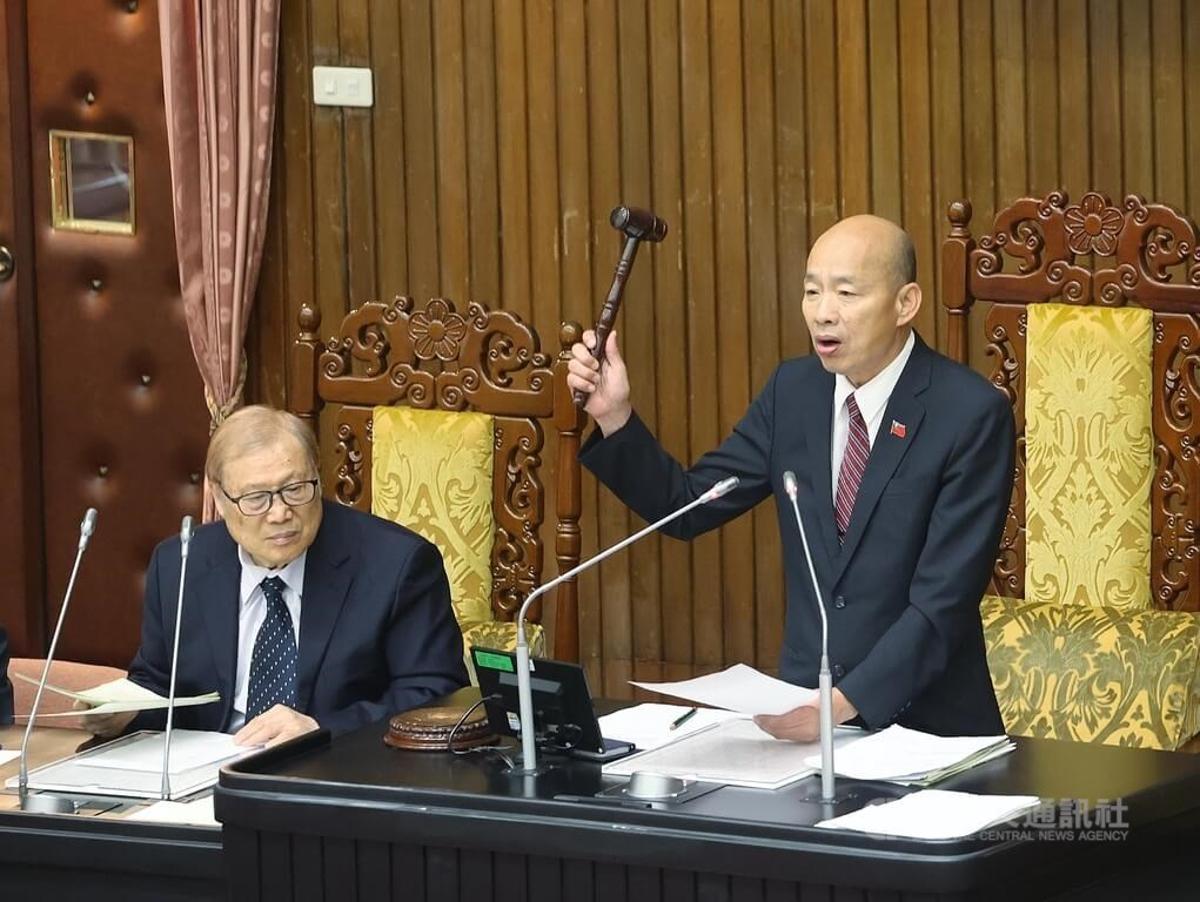
KMT Deputy Chair Attacks Speaker Han over Special Defense Budget
Why It Matters
The dispute underscores Taiwan’s delicate balance between bolstering defense against China and managing fiscal pressures, while exposing deep fissures within the KMT that could affect legislative outcomes.
Key Takeaways
- •KMT deputy chair threatens expulsion of Speaker Han over NT$800 bn budget.
- •Han reportedly backs larger budget, opposing KMT’s NT$380 bn + N plan.
- •Party chair Cheng Li‑wun urges unity, cites fiscal discipline, U.S. arms sales.
- •Internal KMT factions clash, highlighting Taiwan’s defense spending debate.
- •Cross‑party negotiations set for May 6 amid unresolved budget split.
Pulse Analysis
Taiwan’s special defense budget has become a flashpoint for political and strategic debate. President Lai Ching‑te’s eight‑year proposal, amounting to roughly US$39.5 billion, aims to secure advanced weaponry from the United States and develop domestic systems to deter an increasingly assertive China. While the plan promises a stronger deterrent posture, critics argue that the scale could strain Taiwan’s public finances, especially amid a global economic slowdown. The budget’s size also raises questions about the sustainability of U.S. arms sales and the island’s ability to fund indigenous research and development.
Within the KMT, the budget controversy has exposed a rift between traditionalist, security‑focused members and those prioritizing fiscal prudence. Deputy chair Chi Lin‑lien, a retired Marine Corps general, publicly condemned Speaker Han Kuo‑yu, accusing him of betraying party loyalty for personal gain. The party’s official stance, articulated by chair Cheng Li‑wun, frames the NT$380 billion plus‑N proposal as a responsible compromise that balances defense needs with taxpayer protection. This internal discord threatens to weaken the KMT’s negotiating leverage in the legislature and could influence voter sentiment ahead of upcoming elections.
The upcoming cross‑party negotiations on May 6 will test whether Taiwan can reconcile divergent budgetary visions. A consensus could streamline procurement, ensuring timely delivery of critical systems such as missile defense and naval platforms. Conversely, prolonged stalemate may delay acquisitions, leaving Taiwan vulnerable to regional threats. Observers note that the outcome will signal to both Beijing and Washington how Taiwan navigates its security‑budget dilemma, with implications for regional stability and the island’s democratic resilience.
KMT deputy chair attacks Speaker Han over special defense budget
Comments
Want to join the conversation?
Loading comments...