KNDS Opens New Boxer Vehicle Production Line at Munich Site
Companies Mentioned
Why It Matters
Scaling Boxer production strengthens Europe’s defence industrial base and supports NATO allies’ modernization plans, while the civilian‑industry partnership accelerates capacity growth without new defence‑sector investments.
Key Takeaways
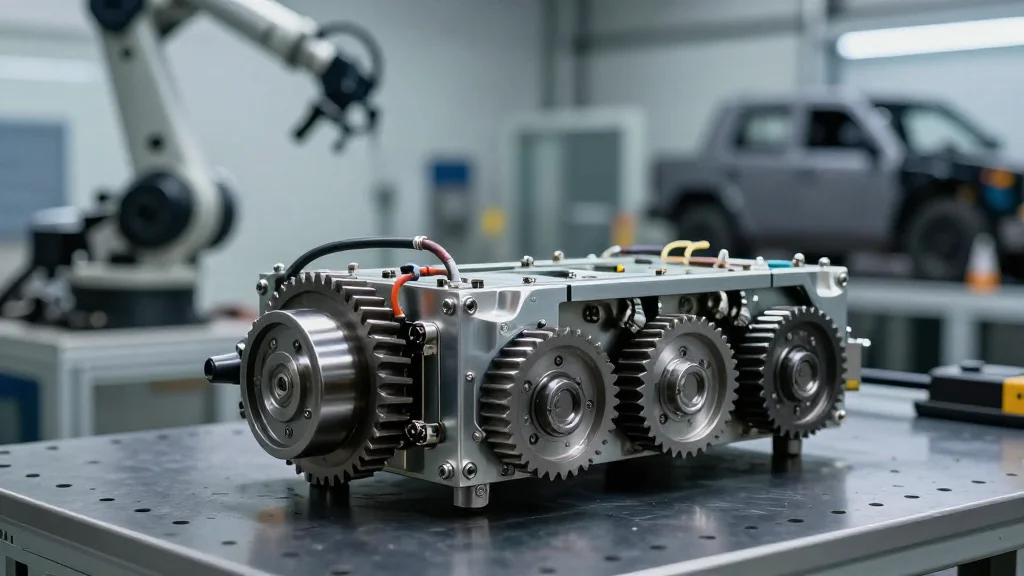
- •New line produces 10 Boxer drive modules monthly at Munich‑Allach.
- •Partnership with Dräxlmaier to build mission modules in Landau.
- •Goal to raise Boxer output sixfold by 2030.
- •Over 2,000 Boxers serve Germany, Netherlands, Lithuania, UK, Qatar, Australia, Ukraine.
- •Modular design allows ambulance, howitzer and APC configurations.
Pulse Analysis
The Boxer 8×8 has become a cornerstone of modern European mechanized forces thanks to its modular architecture, which separates the drive module from interchangeable mission modules. This flexibility lets operators field variants ranging from medical evacuation to fire‑support platforms, meeting diverse operational requirements while simplifying logistics. As NATO members and partner nations seek to replace aging fleets, demand for the Boxer has surged, prompting manufacturers like KNDS to reassess production strategies and invest in higher‑throughput facilities.
KNDS’s decision to partner with Dräxlmaier—a company traditionally rooted in automotive interiors—highlights a broader trend of leveraging civilian‑sector expertise to accelerate defence manufacturing. By signing an MOU and allocating mission‑module work to Dräxlmaier’s Landau plant, KNDS taps into established supply‑chain efficiencies, advanced robotics, and a skilled workforce accustomed to high‑volume automotive production. This cross‑industry collaboration reduces the need for new defence‑specific capital projects, shortens lead times, and spreads risk across multiple partners, positioning the Boxer program for rapid scaling.
The ambition to increase Boxer output sixfold by 2030 aligns with Germany’s strategic goal of bolstering European defence capabilities amid heightened geopolitical tensions. A larger production base not only satisfies domestic army requirements but also supports export customers—from the UK to Ukraine—enhancing interoperability among allies. The expanded capacity could also lower unit costs through economies of scale, making the Boxer more competitive against rival platforms. As the programme matures, the combined efforts of KNDS, Dräxlmaier, and other partners may set a precedent for future defence projects that rely on civilian industry partnerships to meet ambitious delivery schedules.
KNDS opens new Boxer vehicle production line at Munich site
Comments
Want to join the conversation?
Loading comments...